Keeping flooring work on schedule in Anaheim is not easy. Tight turnovers, holiday deadlines, and busy fall project cycles leave very little room for surprises. One hidden problem creates more delays than almost anything else in flooring: moisture trapped in the concrete slab.
Pre-flooring moisture testing in Anaheim is one of the simplest ways to protect your schedule before crews, materials, and tenants are lined up. When you know what is going on inside the slab, you can plan install dates with confidence, protect warranties, and avoid those painful last-minute schedule changes.
Keeping Anaheim Flooring Schedules on Track
Anaheim contractors, property managers, and flooring installers work under constant time pressure, especially as the calendar moves toward year end. Spaces need to be turned over, retailers want floors ready before the holidays, and schools, medical offices, and hospitality projects often have fixed opening dates.
Without solid moisture data, many teams rely on:
- How dry the surface feels
- A quick plastic sheet test
- Hope that the schedule was long enough for the slab to dry
The trouble is that moisture inside the slab does not follow the schedule on the wall. When it is not ready, you see problems like:
- Bubbling or blistering under resilient flooring
- Cupping in wood or engineered planks
- Adhesive softening or failure
Each of these issues can trigger callbacks, tear-outs, and strained relationships between owners, GCs, and installers. Pre-flooring moisture testing, done early and to ASTM standards, helps you spot risk before flooring is ordered or installers are committed, which keeps everyone on the same page.
Why Concrete Moisture Is the Silent Schedule Killer
Concrete holds and releases moisture over time. Moisture moves from deeper in the slab toward the surface, and that process changes as the space is closed in and HVAC is running. A slab can feel dry on top while still holding too much internal moisture for the flooring system you plan to install.
In Anaheim and across Orange County, a few local factors make this worse:
- Coastal humidity and marine air that slow drying
- Overnight temperature swings that change condensation and evaporation
- Tenant improvement jobs that push for fast turnarounds
- Aggressive build schedules that leave little buffer for slab drying
The real trouble often shows up after the flooring is installed:
- Bubbles, ridges, or hollow spots under resilient or rubber flooring
- Dark staining that telegraphs through carpet tiles or vinyl
- Surface alkalinity issues that attack adhesives or coatings
- Mold risk in trapped conditions where moisture has nowhere to go
Any one of these can shut down a space while people argue about responsibility. The schedule you carefully built then falls apart as everyone waits for testing, reports, and decisions that could have been handled early.
How Pre-Flooring Moisture Testing Protects Your Timeline
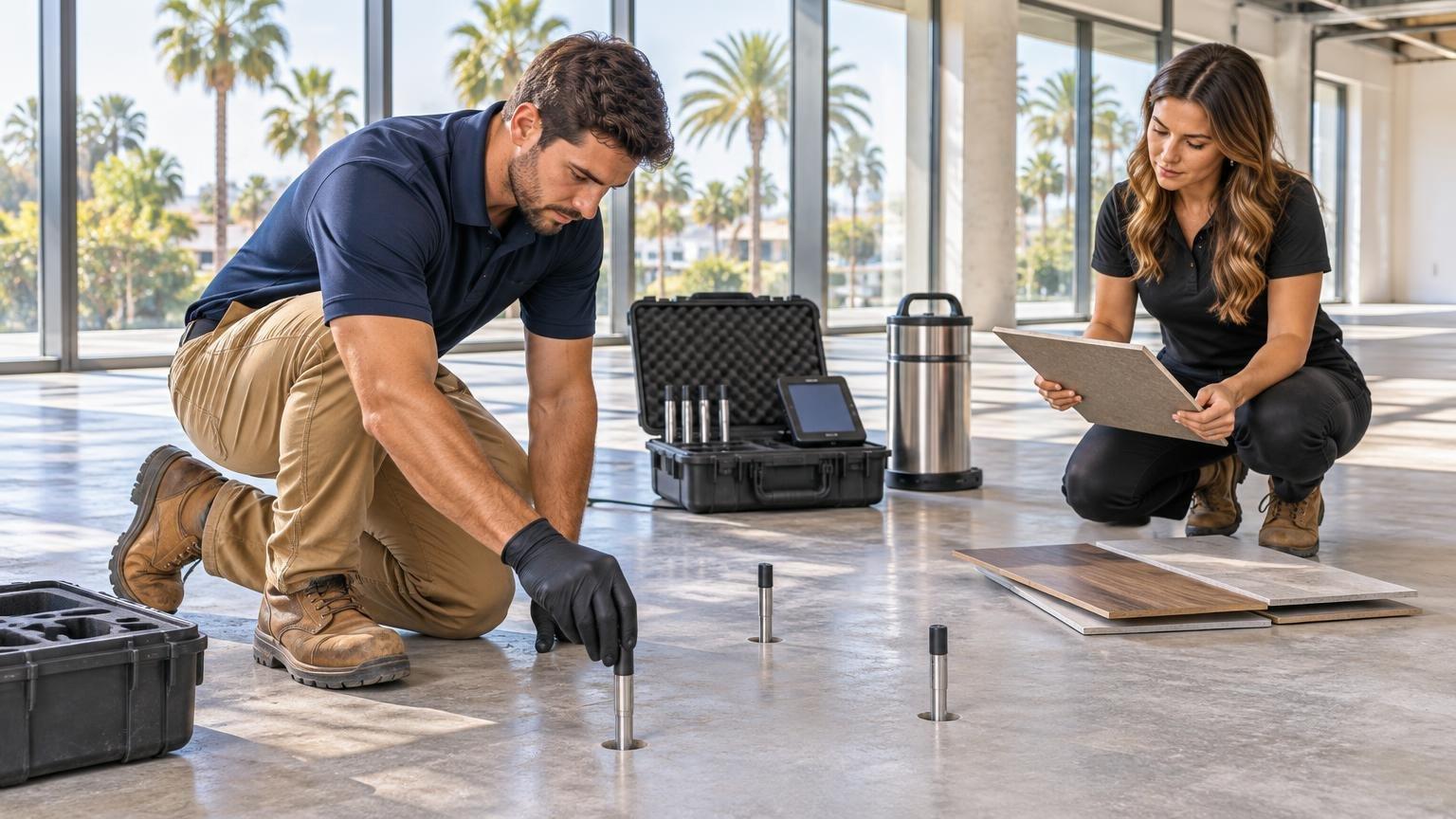
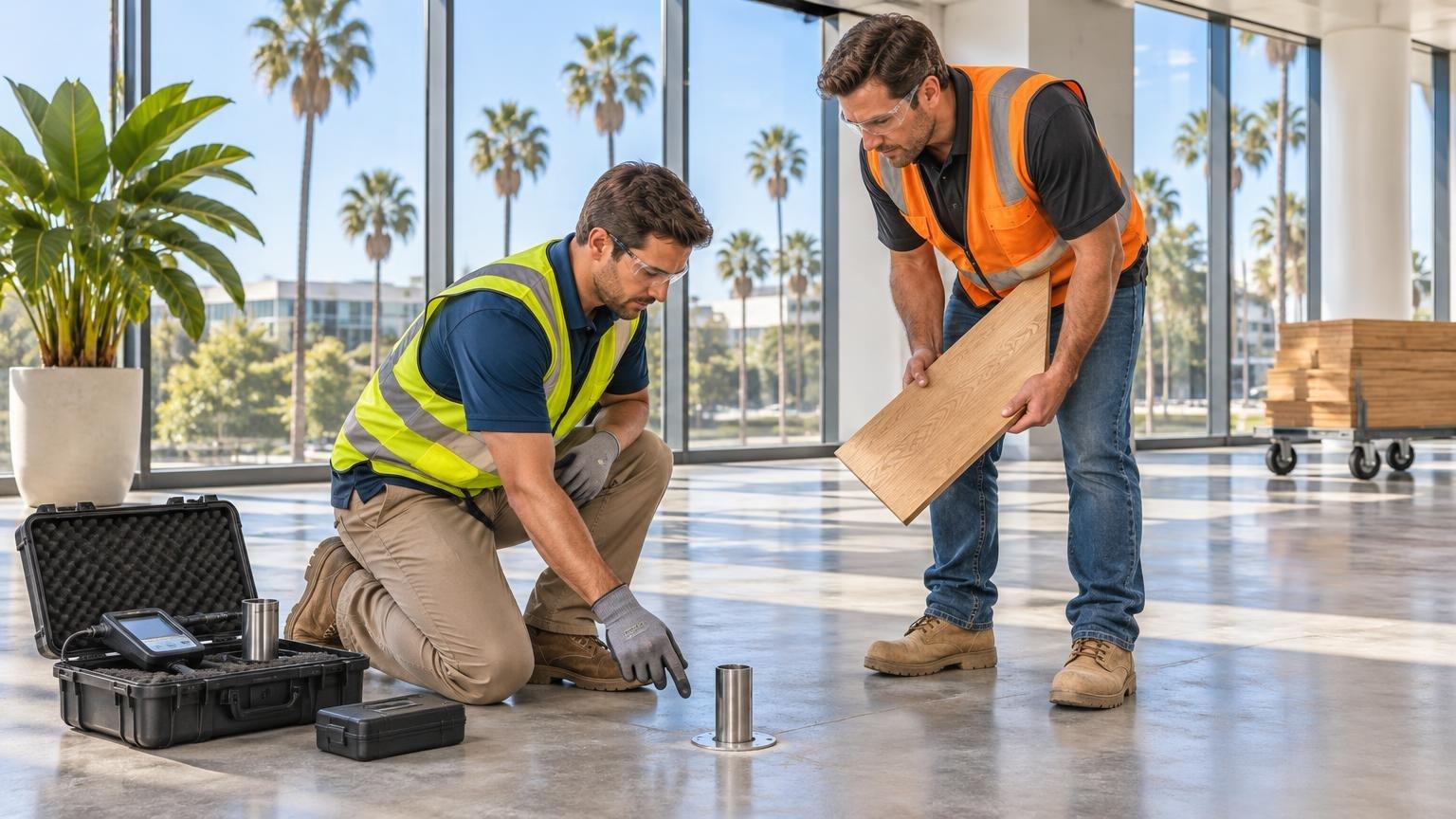
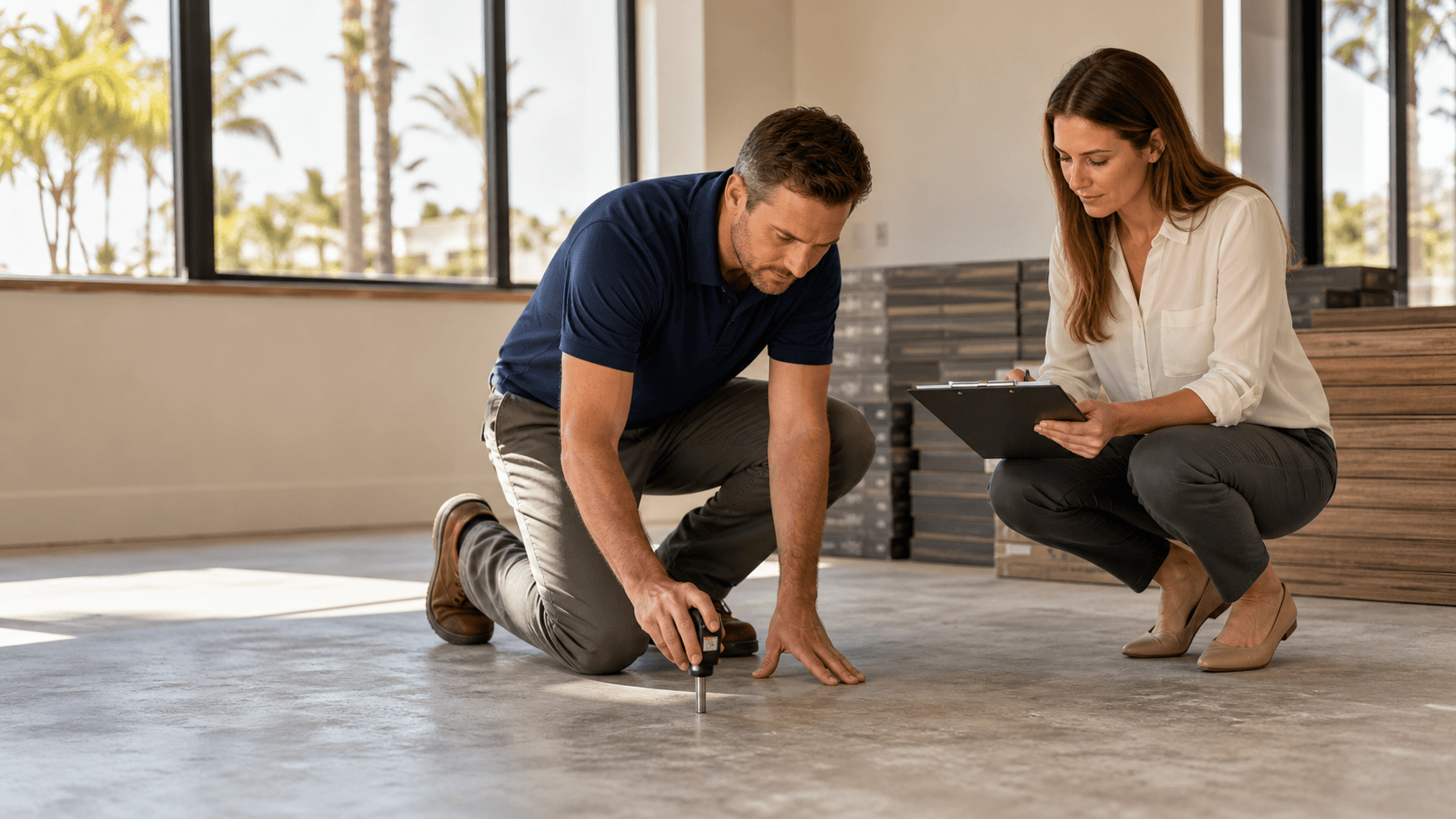
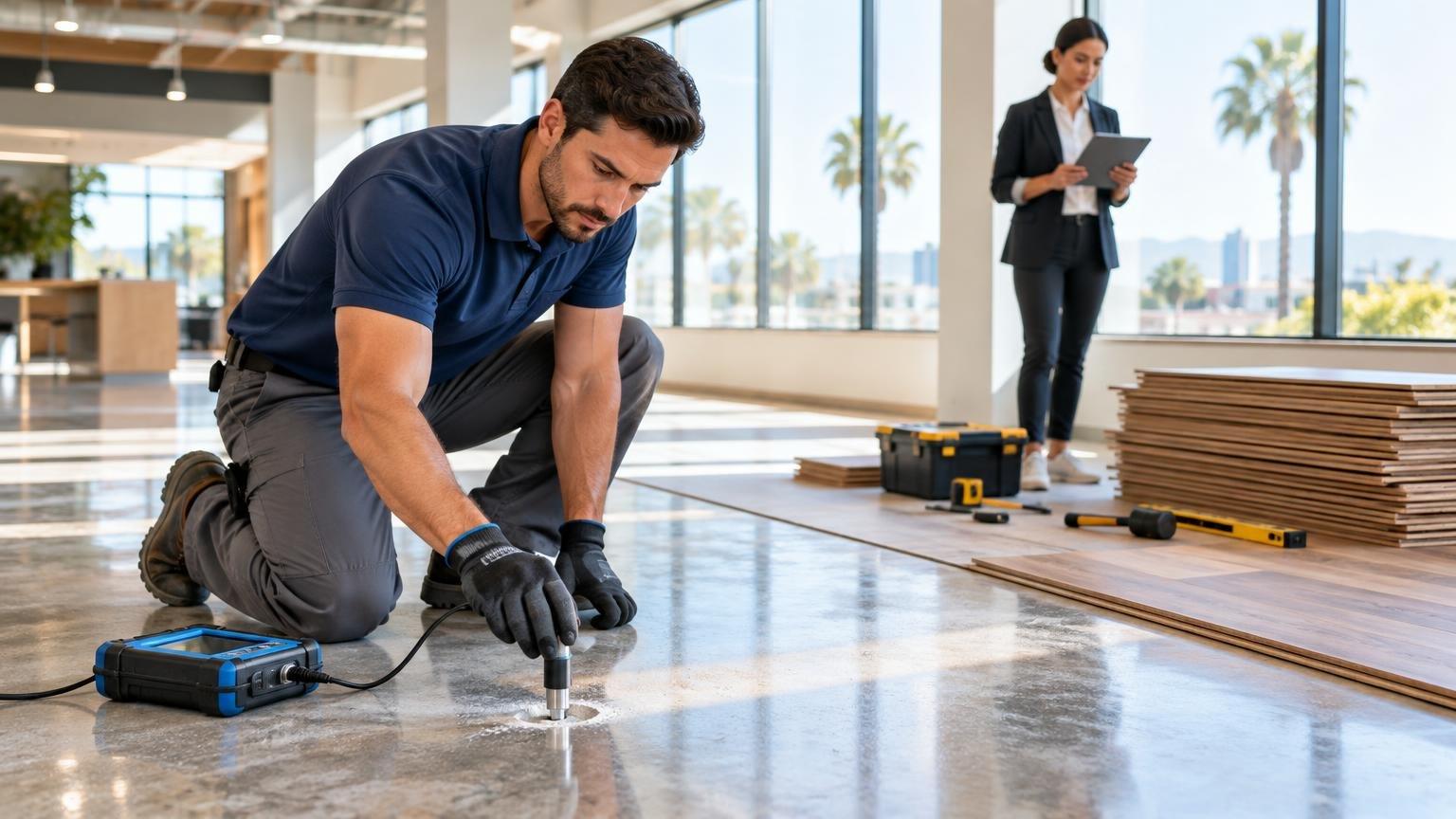
Pre-flooring moisture testing in Anaheim is about having real, measured data before you commit to an install date. A typical moisture evaluation includes:
- ASTM F2170 in-slab relative humidity (RH) testing
- ASTM F1869 testing when appropriate
- pH testing of the slab surface
- Visual assessment of slab condition by an independent, ICRI-certified technician
When you have accurate RH and pH numbers in hand, your team can:
- Align flooring installation with true slab readiness
- Confirm that site conditions meet flooring manufacturer requirements
- Decide early if moisture mitigation is needed
This early information helps you plan for:
- Vapor mitigation systems
- Primers or moisture-tolerant adhesives
- Self-leveling underlayments tied to moisture conditions
Doing this planning before materials are shipped or installers are booked keeps you away from last-minute changes that throw the whole schedule off.
Building a Moisture-Aware Flooring Schedule in Anaheim
A flooring schedule that respects moisture is easier to hold. It starts by building moisture checkpoints into the plan, not treating testing as a last step.
A practical order of events looks like this:
- Place the slab and meet normal curing requirements
- Get the building closed in and HVAC running to service conditions
- Allow a reasonable drying period based on thickness and project conditions
- Schedule pre-flooring moisture testing ahead of flooring delivery
For fall projects that must be ready before the holidays or year-end turnover, it helps to:
- Add specific moisture testing milestones into your Gantt charts
- Treat test results as a go or no-go requirement, just like inspections
- Share reports early with owners, GCs, and flooring installers
Good communication keeps surprises out of the mix. When everyone sees the same data, you can lock in realistic installation windows, adjust manpower, and make product decisions that match what the slab can actually support.
Independent Testing Versus "Free" in-House Checks
Some project teams rely on quick in-house checks or "free" testing offered by product reps or installers. While that can seem convenient, it often comes with limits.
Common issues with informal testing include:
- Limited test methods that do not meet ASTM standards
- Results that are not documented in a way manufacturers accept
- Potential conflicts of interest when the same party doing the testing is also selling or installing the floor
Independent third-party testing provides a different level of confidence. With ASTM-compliant testing performed by ICRI-certified technicians, you get:
- Unbiased results that are not tied to a specific product choice
- Clear, written reports that owners, insurers, and manufacturers can review
- Documentation that supports change orders for mitigation when needed
This kind of defensible report helps reduce disputes later and makes it easier for project teams in Anaheim to keep relationships positive while staying on schedule.
Seasonal Considerations for Fall Flooring Projects
Fall in Anaheim brings its own quirks for moisture. Days can be warm, evenings cooler, and indoor climate control can shift as building use changes. Santa Ana conditions, changing daylight hours, and holiday schedules all play a part.
For fall projects, it helps to plan around a few key ideas:
- Make sure HVAC is running to normal service conditions before testing
- Avoid testing while temporary climate control is in place if it will change later
- Understand that shifting indoor conditions can change moisture readings over time
For schools, retail, and hospitality projects with firm holiday deadlines, it is smart to:
- Schedule pre-flooring moisture testing earlier in the construction sequence
- Build a buffer in the flooring schedule for possible mitigation work
- Review test results quickly so decisions do not stall the next trade
Pre-flooring moisture testing in Anaheim is not only about numbers. It is about using those numbers to protect the dates that matter most to your project team and your end users.
Locking in Your Flooring Date with Confidence
When moisture, RH, and pH testing are standard parts of the plan, flooring no longer depends on luck. You know when the slab is ready, you know what products are appropriate, and you know whether mitigation is needed before anyone rolls out a single box of flooring.
By treating ASTM-compliant, independent moisture testing as a normal line item on every commercial and high-end residential project in Anaheim, you reduce risk, protect warranties, and keep your schedule steady, even when deadlines are tight and the calendar is full.
Get Started With Your Project Today
Protect your flooring investment by scheduling pre-flooring moisture testing in Anaheim with Concrete Moisture Testing Orange County before installation begins. Our team delivers accurate, detailed reports so you and your installers can move forward with confidence. If you are ready to discuss your project timeline or request a quote, contact us today.