Concrete slabs in Anaheim can look dry, feel solid, and still ruin a brand-new floor. Hidden moisture inside the slab can push up, break down adhesive, bubble vinyl, gap wood, and stain polished finishes. For property owners and project managers, the real question is simple: do you spend on pre-flooring moisture testing in Anaheim first, or jump straight to moisture mitigation systems, and hope you guessed right?
We see this choice on local projects all the time, especially as schedules get tight around the holiday season. The right call protects flooring, tenants, and warranties. The wrong call leads to repairs, upset clients, and rooms that cannot be used when you need them most. In this article, we walk through how concrete moisture works, how testing fits into smart planning, and when you really need mitigation versus when you do not.
Stop Guessing, Protect Anaheim Floors from Moisture Failure
A new commercial space gets its floors installed, looks great for a few weeks, then things start to go wrong. Tiles shift. Planks cup or crown. Adhesive softens and releases. The cause sits below the surface, in the concrete slab that was never properly tested.
When floors fail from moisture, the ripple effect is big:
- Wasted flooring materials and labor
- Business downtime and lost rent
- Frustrated owners, tenants, and facility teams
- Flooring manufacturers questioning warranty coverage
Most of this could be avoided with one early choice. Do you base your plan on clear moisture test data, or on guesswork and hoping? Some teams skip testing and go straight to a full mitigation system. Others skip both and just roll the dice. Both paths carry risk.
Pre-flooring moisture testing in Anaheim gives you real numbers before you commit to design, materials, and schedules. Independent test results help you see if mitigation is actually needed, or if the slab is already within limits for the flooring you want to use.
What Really Happens Inside Anaheim Concrete Slabs
Concrete slabs are not static. They keep moving moisture in and out over time. Even in a warm, sunny area like Anaheim, outdoor conditions, building use, and seasonal changes still affect how a slab dries.
A few key points about slab behavior:
- Concrete holds water from the original mix and slowly releases it
- Moisture can move upward if there is no proper vapor retarder under the slab
- Seasonal changes in humidity and daylight hours affect drying rates
Around late fall and early winter, cooler nights and seasonal rains can slow that drying process. Santa Ana wind events can dry surface layers quickly, but the deeper slab may still hold higher internal moisture. That is why a slab that looks light in color or feels dry to the touch can still be risky.
Real slab moisture is measured, not guessed. The main tools are:
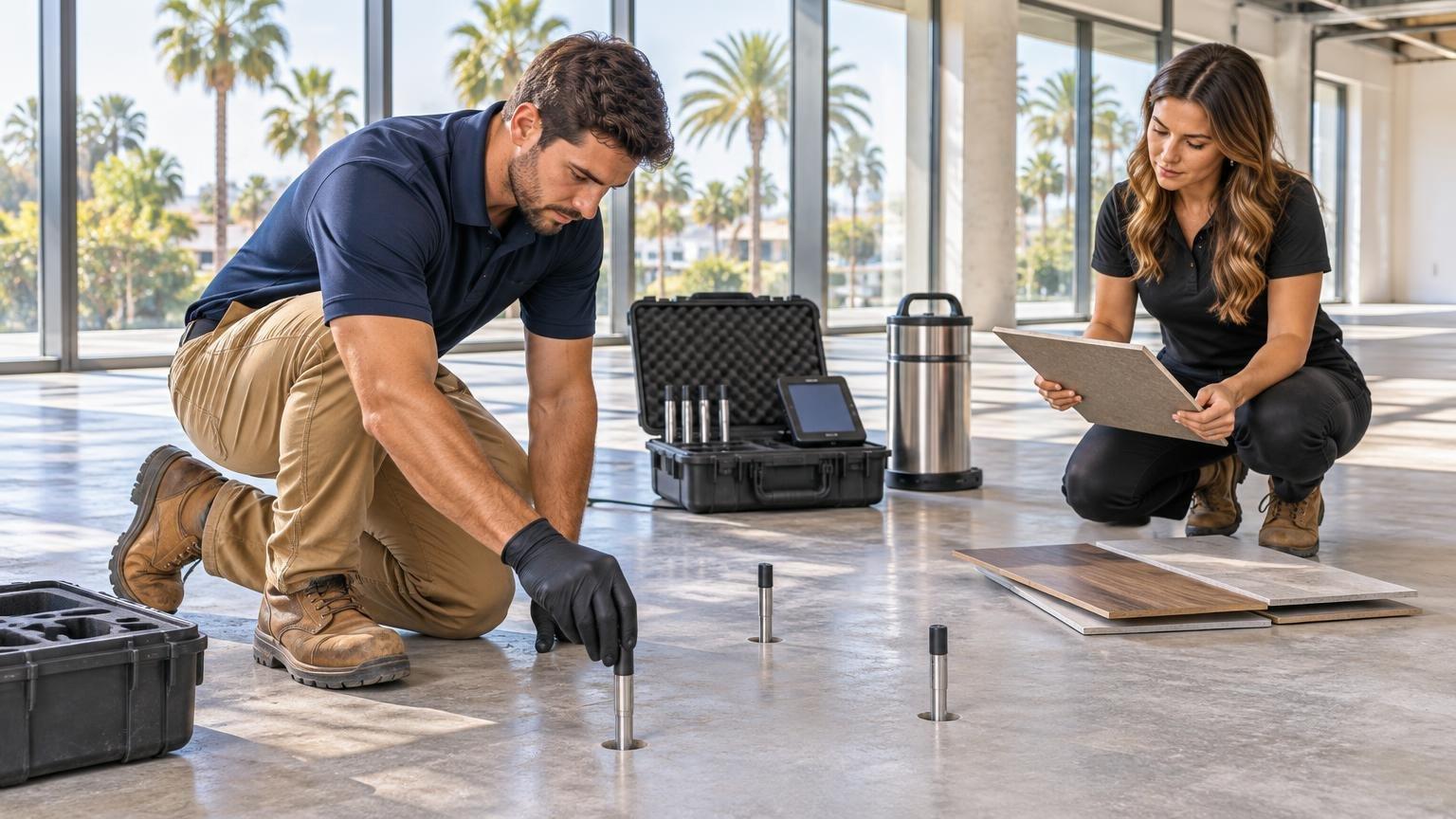
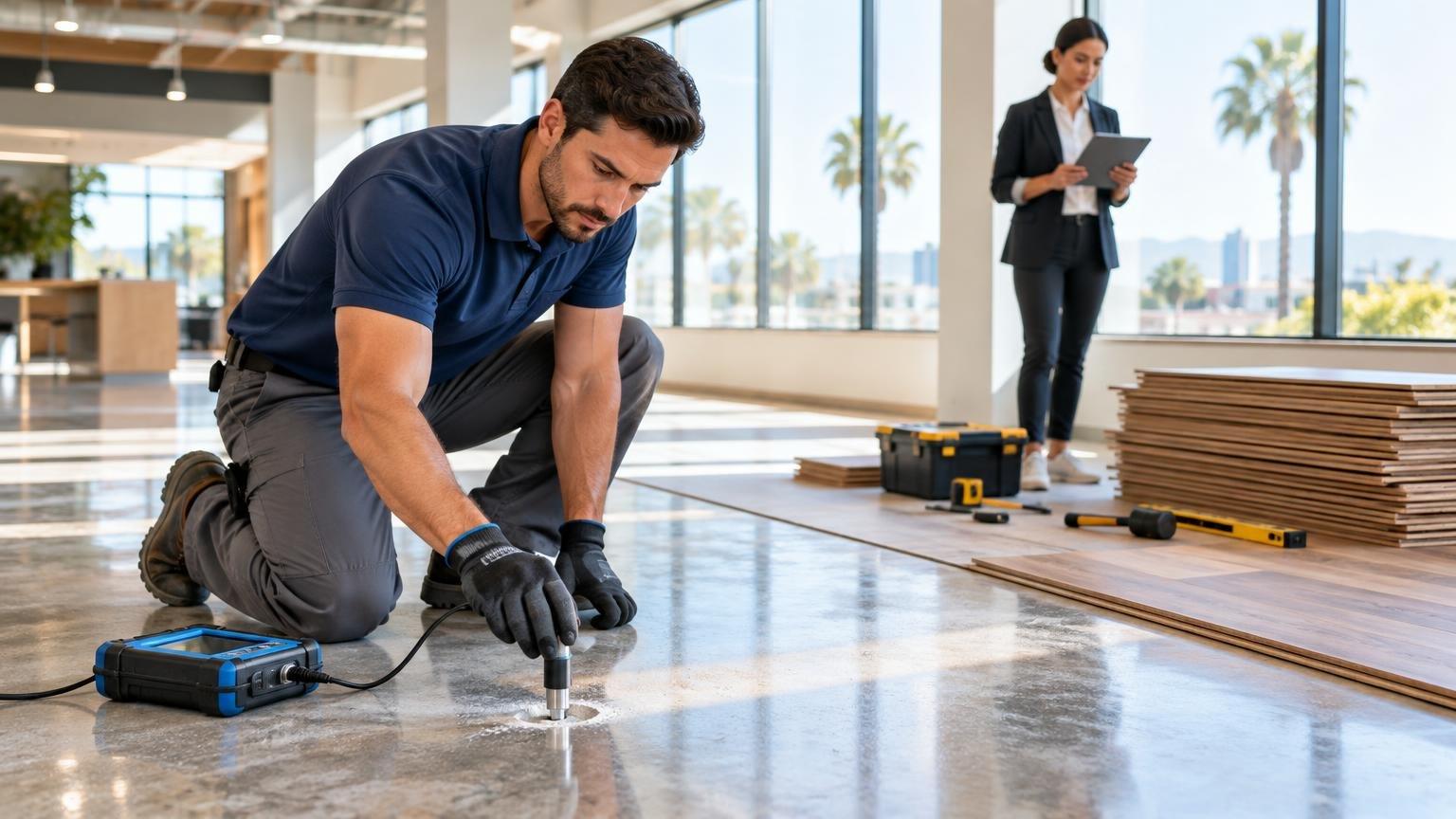
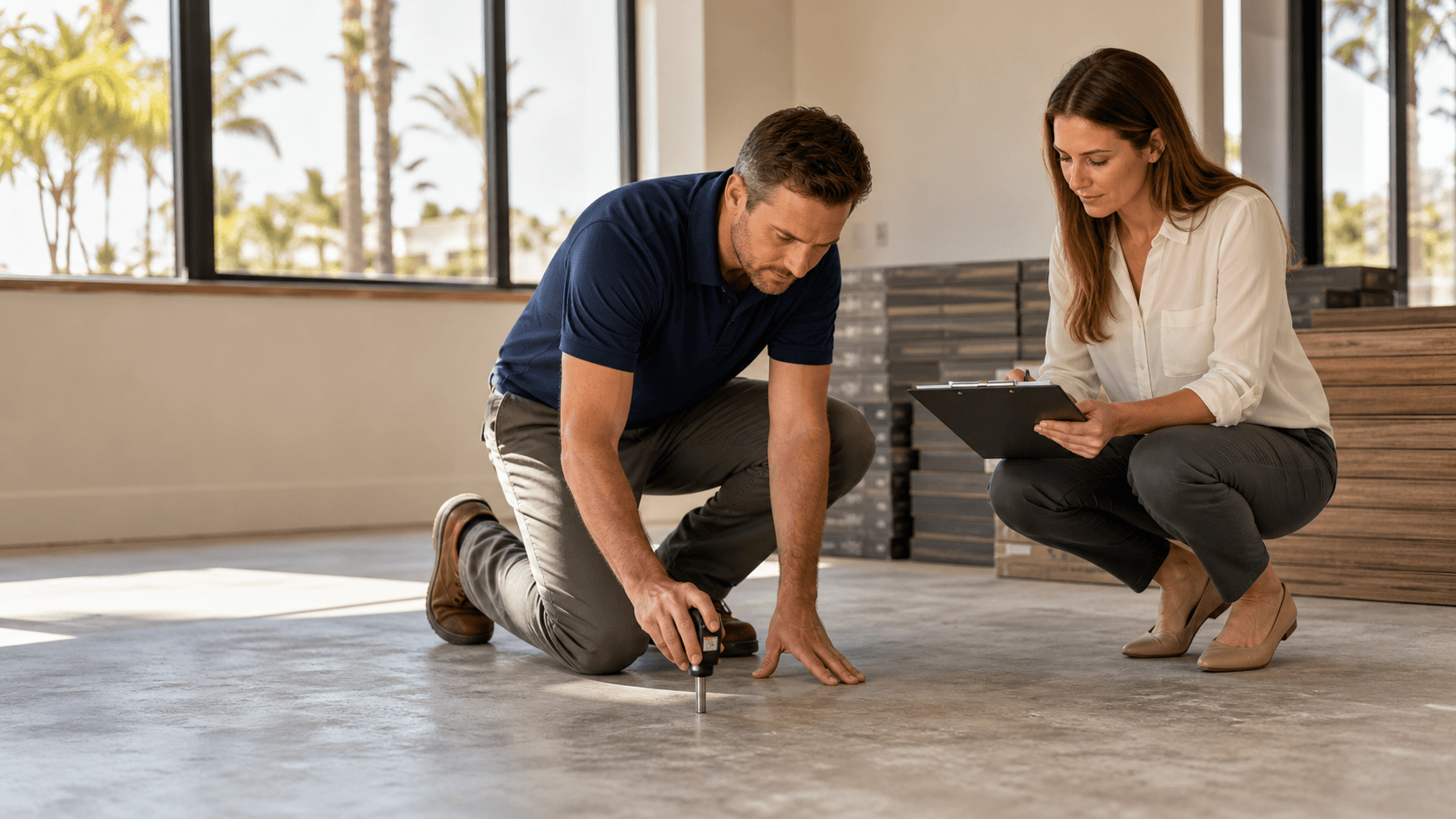
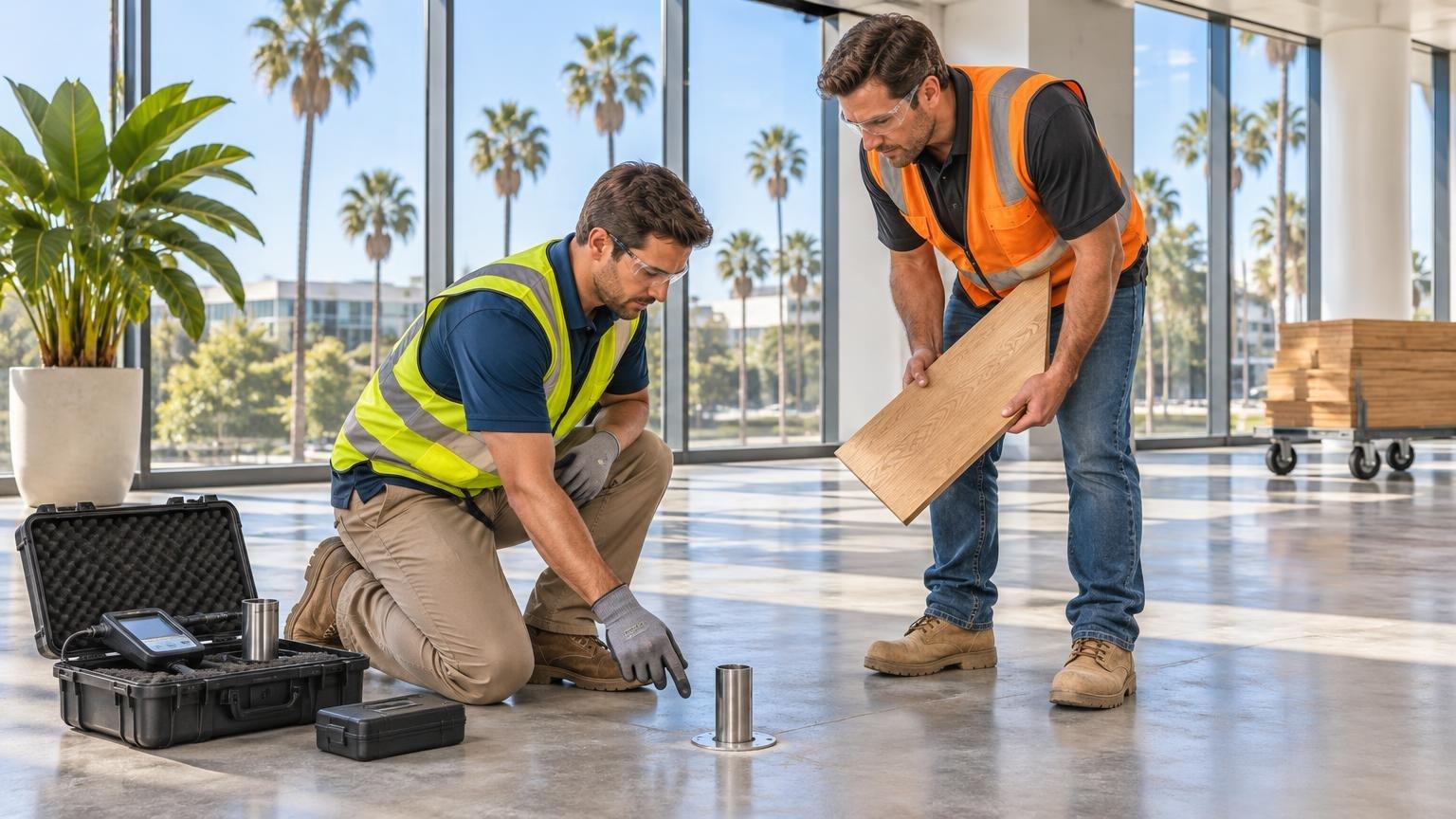
- ASTM F2170 in-slab RH testing, which measures relative humidity inside the slab
- ASTM F1869 MVER testing, which checks moisture vapor emission rate at the surface
- pH testing at the surface, which shows how alkaline the slab is where adhesives will live
Together, these tests tell the full moisture story, from the inside core to the surface where flooring meets concrete.
Pre-Flooring Moisture Testing in Anaheim, Smart Data Before Design
Pre-flooring moisture testing in Anaheim means testing before final flooring choices and dates are locked in. It is a planning tool, not a last-minute emergency step.
With real RH and pH data in hand, design and construction teams can:
- Choose adhesives that match actual slab conditions
- Decide on underlayments, primers, or membranes based on facts
- See if a mitigation system is truly required or if the slab is ready
Timing matters. In fall and early winter, you may be planning build-outs around holiday openings, tenant move-ins, or year-end turnovers. Many schedules assume slabs will be dry enough by a certain date. That guess can be wrong if cooler, damp periods or changing air movement slow drying inside the slab.
Independent, ASTM-compliant testing gives you unbiased reports that product reps and specifiers can work with. It creates a shared picture of slab conditions so there is less finger-pointing later if something goes wrong.
When You Really Need Moisture Mitigation vs When You Do Not
Mitigation systems are powerful tools, but they are not always required. They should be used for the right reasons, backed by test data, not as an automatic default.
Situations where mitigation is usually justified include:
- RH readings above the limits set by the flooring or adhesive manufacturer
- High pH levels at the surface that could attack adhesives
- Little or no evidence of an effective vapor retarder under the slab
- Tight move-in dates that do not allow more time for natural drying
In these cases, a well-chosen mitigation system can protect the flooring and help meet schedule goals.
On the other hand, some slabs test within acceptable ranges. When testing shows that RH, MVER, and pH are compatible with the planned flooring system, teams can often:
- Skip full mitigation systems
- Use adhesives and primers rated for the measured conditions
- Save time by avoiding extra install and cure steps
If a project simply defaults to mitigation without data, it can mean:
- Overspending on materials and labor
- Added days for system installation and cure time
- Ongoing warranty questions if no formal testing was done
Test results give you a clean record and a clear reason for your choice.
Anaheim Project Scenarios, Testing vs Mitigation Outcomes
On a new office or retail build-out in Anaheim, early testing can be part of the base-building plan. While the slab is still open and accessible, in-slab RH and pH tests provide a baseline long before flooring crews show up. With those numbers, the design team and general contractor can:
- Adjust the flooring package if needed
- Plan any mitigation into the schedule early
- Coordinate with HVAC start-up so conditions support proper drying
By the time flooring install day arrives, there are no surprises. Decisions are based on known slab conditions, not last-minute panic.
Now think about a high-end residential condo renovation. The space may have older concrete, unknown vapor retarder conditions, and premium finishes going in. Slab testing might show borderline RH and elevated pH in certain rooms. Instead of applying the same heavy mitigation everywhere, the team can choose a targeted approach:
- Use mitigation only in problem areas
- Pair compatible adhesives and primers with tested zones
- Protect sensitive flooring types without over-treating the whole unit
Other common local challenges include:
- Below-grade areas that are more prone to moisture
- Older buildings where the original vapor barrier is unclear
- Tenant improvement projects with tight turnover dates near the holidays
In each case, the right path, mitigation or not, comes into focus once RH, MVER, and pH numbers are on the table.
Your Next Step, Independent Testing Before You Commit
For Anaheim and Orange County projects, making pre-flooring moisture testing the first step creates fewer problems later. Testing fits best when it is built into the workflow, not pushed to the end.
A smart process often looks like this:
- Plan test windows into the construction schedule
- Coordinate testing with the general contractor and flooring installer
- Use ASTM-compliant reports to support product selections and warranty needs
As an independent testing provider located in the area, we focus on RH, moisture, and pH testing that follows the ASTM standards manufacturers expect. Clear, unbiased reports help project teams choose between full mitigation and standard installation with more confidence and less guesswork.
Get Started With Your Project Today
Protect your new flooring investment by scheduling pre-flooring moisture testing in Anaheim with Concrete Moisture Testing Orange County before installation begins. We use industry-standard methods to identify moisture issues early so you can make informed decisions and avoid costly failures. If you are ready to move forward or have questions about your project, contact us and we will help you plan the right testing approach.