Protect Every Flooring Warranty Dollar in Orange County
Moisture in concrete is one of the fastest ways to lose profit on a flooring project. One failure can mean ripped-out floors, delayed occupancy, upset clients, and a warranty that does not help you at all. For Orange County projects where schedules are tight and expectations are high, that is a big risk.
Flooring warranty moisture testing is not just a box to check so paperwork looks complete. It is a real risk management tool that protects contractors, owners, architects, and flooring manufacturers. When the concrete slab is tested and documented before flooring goes down, everyone has clear facts to stand on.
Our team focuses on independent, ASTM-compliant concrete RH, MVER, and pH testing for commercial and high-end residential jobs across Orange County. We document slab conditions so your project is protected before the first plank, tile, or sheet is installed. In this article, we will walk through how warranty-driven moisture testing works, why it matters in our local microclimates, and how to fold it smoothly into your end-of-year and early-year project timelines.
Why Moisture Voids Flooring Warranties so Often
Most flooring systems are only as strong as the slab they are sitting on. When excess moisture is trapped under the floor, trouble shows up fast. Common issues include:
- Adhesive failure and loss of bond
- Cupping or curling of wood and resilient products
- Bubbles, blisters, and discoloration
- Microbial growth and odor under the floor
Manufacturers often group these problems under one heading: improper substrate preparation. That is where warranties get tricky. Many commercial and high-end residential warranties clearly require moisture testing and documentation that follows ASTM standards, including RH, MVER, and pH, before installation.
If those tests are not done, or if there is no clear report, responsibility often bounces back to the installer or general contractor. That can mean callbacks, repairs, replacement materials, and a lot of finger-pointing. The risk climbs during end-of-year rushes, when everyone is racing to hit occupancy dates in November and December and it is tempting to shorten or skip the testing stage. Cutting that corner can leave your warranty protection on very shaky ground.
Key Tests That Keep Flooring Warranties Intact
Moisture testing for flooring warranties usually centers on three main tests. Each one answers a different question about the slab.
- In-situ Relative Humidity (RH) testing
- Moisture Vapor Emission Rate (MVER) testing
- Surface pH testing
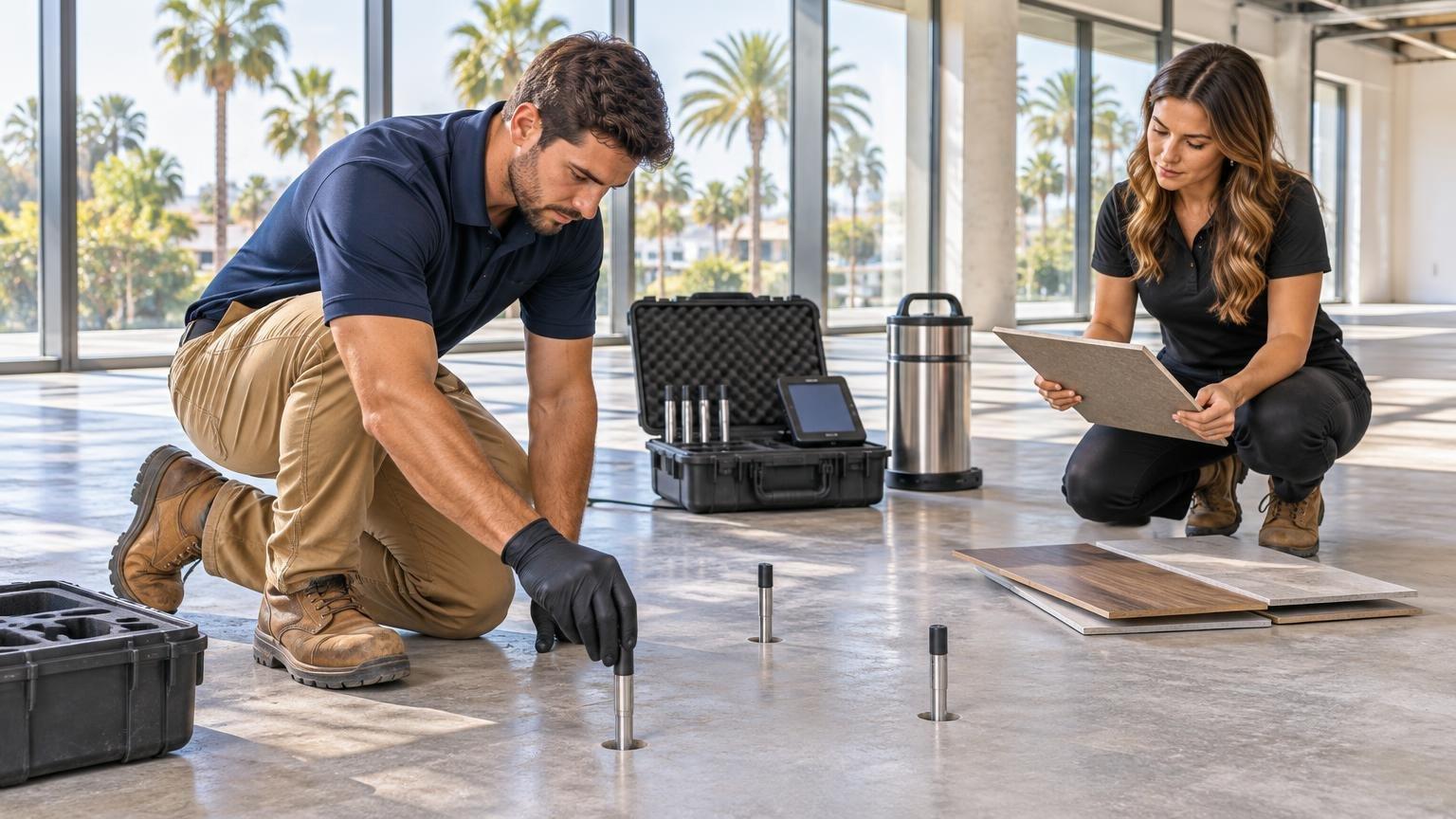
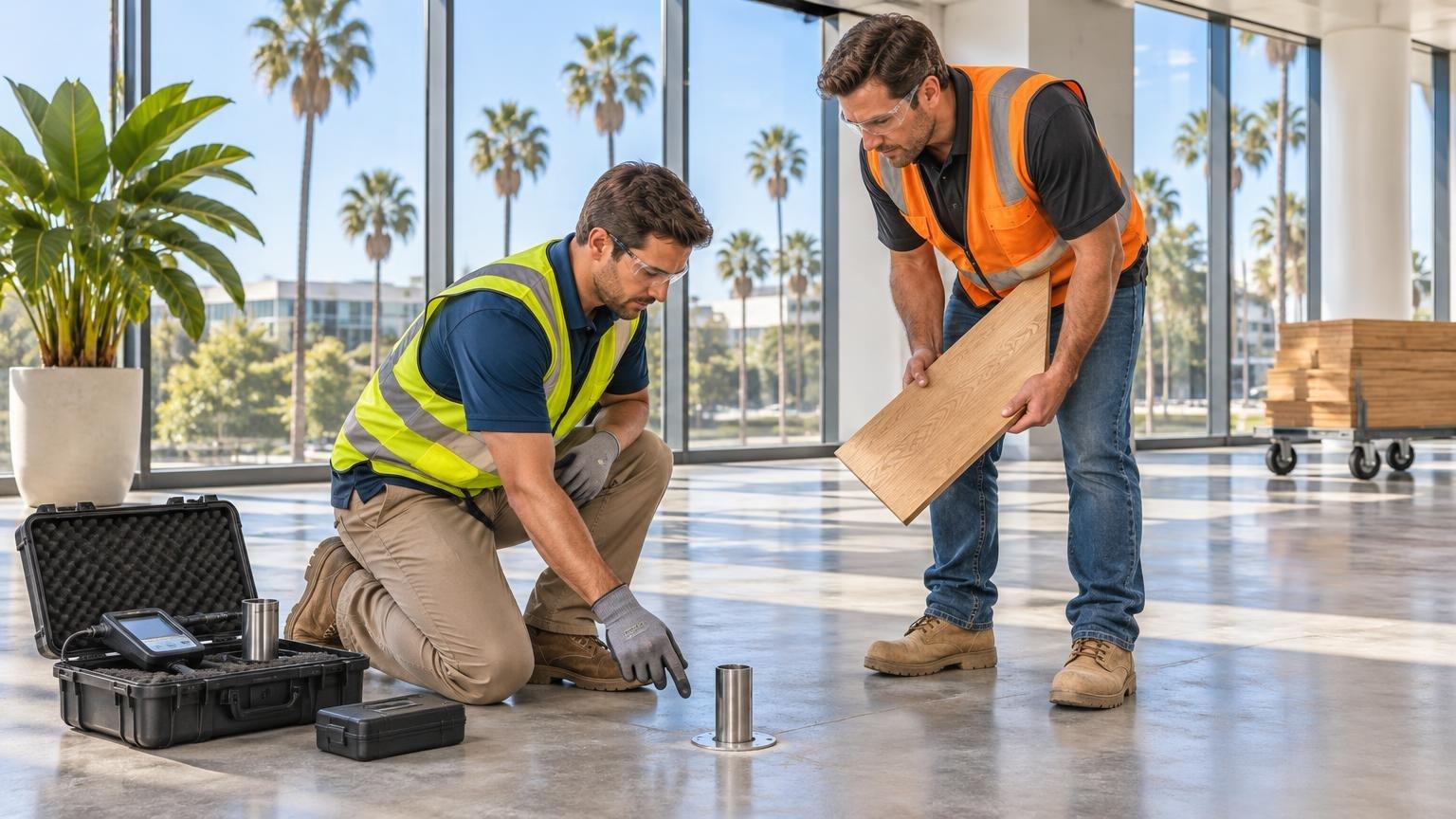
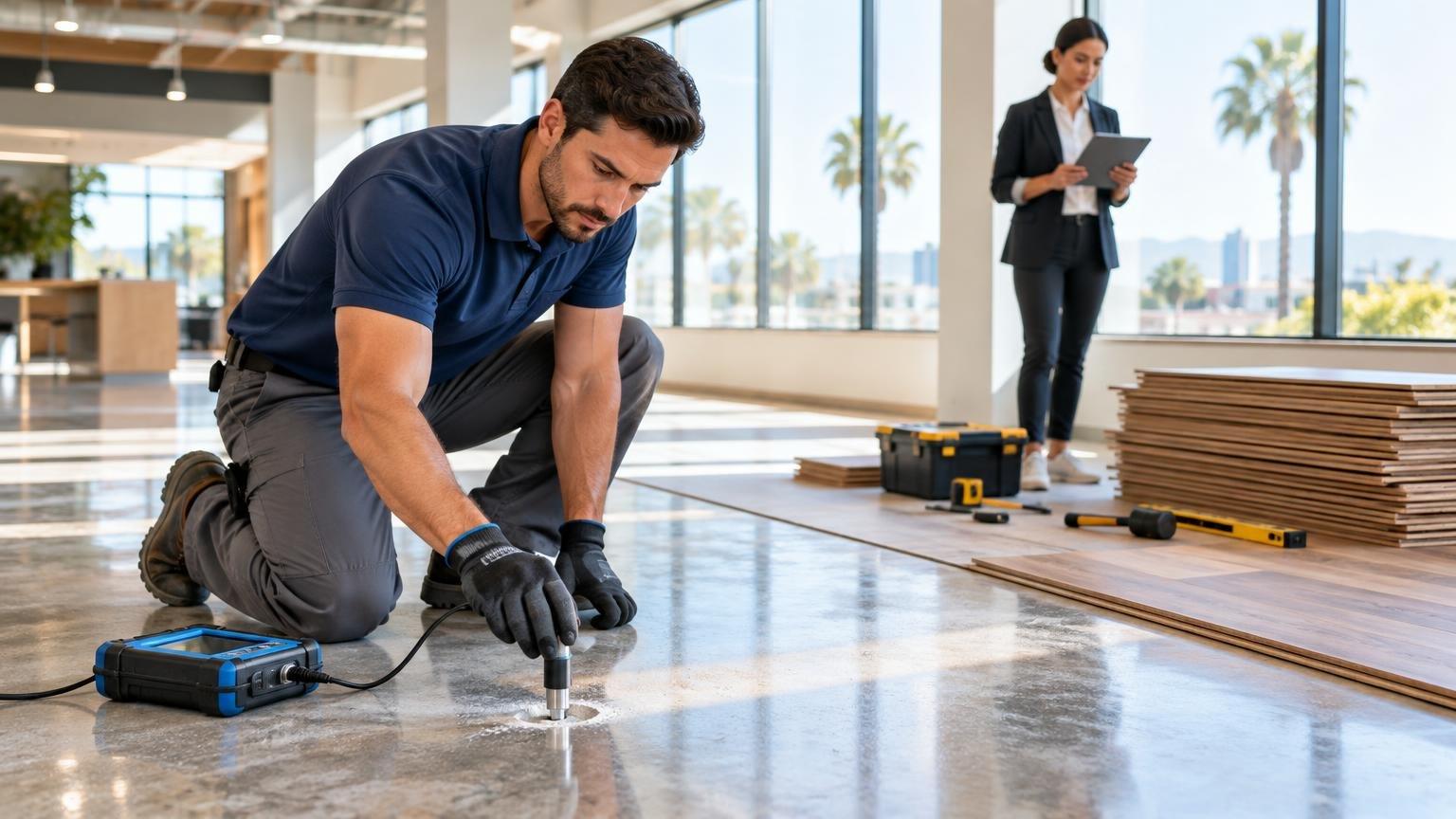
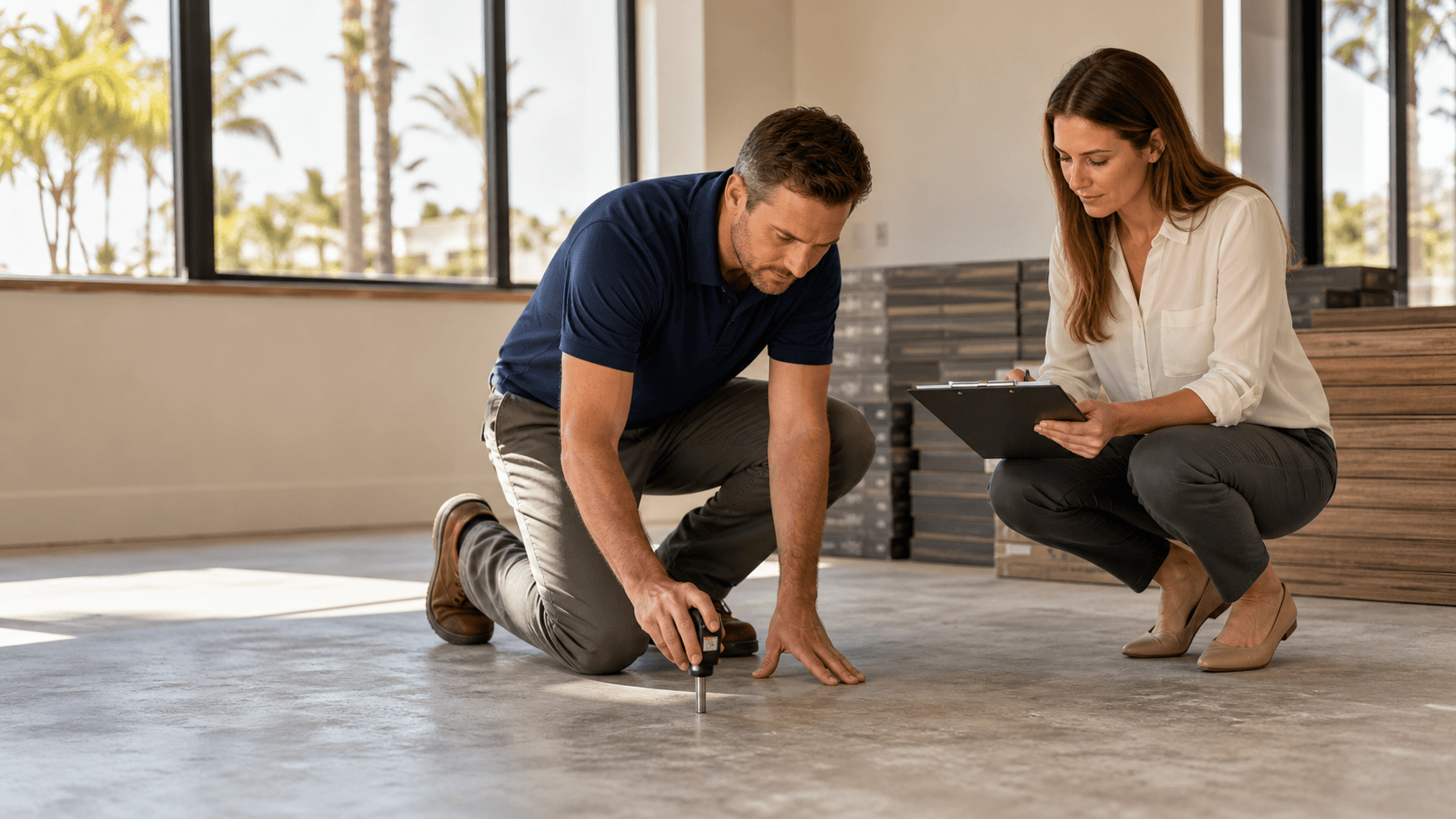
RH testing, following ASTM F2170, measures the internal moisture inside the slab, not just what you see at the surface. This tells you how the concrete will behave once the floor covering blocks evaporation. MVER testing, following ASTM F1869, measures how much moisture vapor is leaving the slab at the surface. It is often used where older slabs or certain flooring systems are involved.
Surface pH, guided by ASTM F710 and related standards, checks how alkaline the slab surface is. That matters because high pH can break down adhesives and finishes, even when moisture levels are within range.
Manufacturers often spell out exactly which tests they require, which ASTM methods must be followed, and what limits must be met. When a neutral third party performs these tests, the results carry more weight. We provide detailed, photo-rich reports that record the test layout, conditions, and readings in a way that manufacturers and insurers can understand and trust if a claim ever comes up.
Seasonal Timing for Flooring Warranty Moisture Testing
Orange County has a warm image, but our local microclimates still affect slab drying. Coastal areas can have morning fog and higher humidity. Inland spots may face more direct sun during the day but cooler nights. Around the holiday season, we often see more moisture in the air and occasional storms that change jobsite conditions.
During late fall and into the early part of the year, cooler slab temperatures and higher ambient humidity inside buildings can slow concrete drying. That is exactly when many projects are trying to hit Q4 completion targets. Skipping or rushing flooring warranty moisture testing in this window can create problems that show up long after the keys are handed over.
A good approach is to build testing into the schedule like any other key milestone:
- Plan initial RH tests as the slab approaches design strength
- Allow time for follow-up tests closer to flooring installation
- Add contingency time for mitigation if moisture is high
- Coordinate with other trades so access and conditions are suitable
When testing is planned into the November through January schedule, teams are less likely to make rushed decisions just to keep a date on the calendar. That helps control change orders, last-minute product swaps, and schedule slips that can land right on top of holiday turnover targets.
How Independent Testing Shields Your Entire Project Team
Using a neutral testing company takes the pressure off individual trades. Instead of the installer testing their own work or relying on quick, informal readings, you get a clear, third-party snapshot of slab conditions. That can make a big difference later if questions come up.
Solid, ASTM-compliant reports help:
- Document that the slab met, or did not meet, the product's moisture limits
- Show that the project team followed the manufacturer's instructions
- Assign responsibility fairly if something does go wrong
- Support owners, GCs, and installers during any warranty discussion
We work with flooring contractors, general contractors, and specifiers to match our testing scope to the exact warranty language for the products being used. For high-value commercial spaces and luxury residential floors, this documentation often becomes a key exhibit in warranty claims, change-order talks, and overall risk reviews. Instead of arguing about opinions, everyone can look at the same test data.
Putting Flooring Warranty Moisture Testing Into Practice
Making flooring warranty moisture testing part of your normal process is simpler than it sounds. A typical workflow looks like this:
- Review the manufacturer's warranty and installation instructions
- Confirm which ASTM tests are required for that product
- Schedule pre-install testing with enough time for results and any mitigation
- Compare readings to the manufacturer's published limits
- If moisture or pH is out of range, implement suitable mitigation systems
For Orange County projects, it also helps to tie testing to other key building events. Starting HVAC and keeping temperature and humidity within target ranges during testing gives you more realistic readings. Slab surfaces should be clean, accessible, and in line with ASTM requirements so test locations are valid.
We encourage project teams to standardize this process on all commercial and high-end residential floors, not only on jobs that already look "risky." When testing is routine, everyone knows what to expect, documentation is easier to track, and moisture-related surprises become less common. Early communication with concrete moisture testing in Orange County helps shape a test plan that matches the project type, schedule, and flooring systems, so moisture never becomes an afterthought.
Protect Your New Floors With Proven Moisture Testing
Before you install or replace flooring, schedule our flooring warranty moisture testing so your investment and warranties are protected from hidden concrete moisture problems. At Concrete Moisture Testing Orange County, we provide detailed, standards-compliant reports that your flooring manufacturers and installers can rely on. If you are ready to move forward or have project-specific questions, contact us so we can help you plan the right testing for your timeline.