Stop Moisture From Ruining Your New Floors
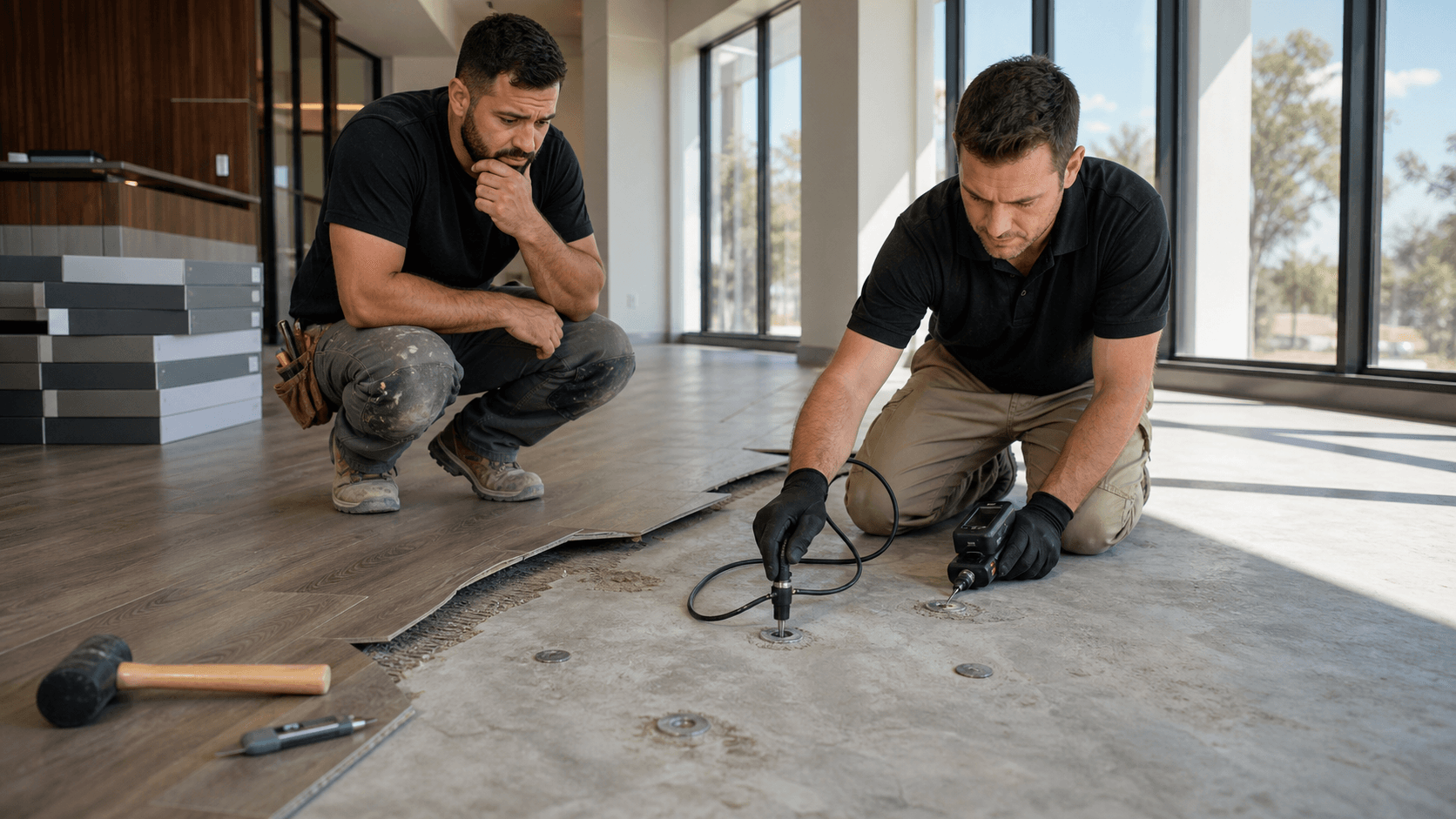
New floors should make a space feel finished and cared for. A fresh lobby or luxury condo with clean lines and beautiful flooring sends a clear message about your building. That is, until the surface starts to cup, bubble, or stain because moisture in the concrete slab was never checked the right way.
Pre-flooring moisture testing in Orange County helps stop that from happening. It protects the look of your floors, the safety of people walking on them, and the long-term value of your property. When the slab is tested correctly, everyone on the project can move forward with real confidence.
In this article, we share a clear playbook for building owners. We walk through when testing is needed, what the main tests mean, how to read reports, and how to avoid denied flooring warranties and expensive tear-outs later.
Why Moisture Is a Hidden Threat Under New Floors
Concrete seems solid and dry, but it acts a bit like a sponge. It holds moisture and slowly releases it over time. In Southern California, coastal humidity, marine layer mornings, and heavy AC use all affect how fast or slow that moisture moves through a slab.
When moisture is not managed, you may start to see:
- Wood planks curling or cupping
- Tiles coming loose or hollow-sounding
- Bubbles or blisters in vinyl and other resilient floors
- Adhesive softening, smelling, or oozing at seams
- White, chalky efflorescence at joints or edges
Moisture problems are not just ugly. They can lead to mold risk, musty smells, and indoor air quality complaints. That puts pressure on tenant relationships and can draw unwanted attention to the building.
For owners, the costs stack up fast. You may face:
- Tenant disruption and schedule changes
- Lost rent during repairs
- Demolition, moisture mitigation, and replacement flooring
- Finger-pointing between trades and product manufacturers
- Denied flooring and adhesive warranties
All of this often tracks back to one simple gap: the slab was not tested correctly before the floor went in.
When Orange County Owners Must Test Concrete Moisture
Not every project is the same, but some points in a building's life almost always call for pre-flooring moisture testing in Orange County.
Common trigger projects include:
- New construction slabs waiting on their first floor finish
- Tenant improvements where space plans and loads are changing
- Conversions, like office to medical or retail to restaurant
- Spaces where a floor has already failed once
Timing matters too. Many projects push to finish floors in late summer and fall as business plans shift and leases start. That often lines up with:
- Seasonal shifts in humidity that affect slab drying
- Santa Ana conditions that can dry the air above while deeper slab moisture is still high
- Tight build-out schedules that shorten cure and dry times
Some red flags make testing non-negotiable:
- On-grade slabs without a known, effective vapor barrier below
- Areas that have been flooded or had standing water
- Below-grade spaces or slabs next to planters or wet soil
- Fast-track timelines where the slab age and flooring date are very close
When you see any of these, testing should not be a last-minute line item. It should be part of the early planning for your project.
Key ASTM Tests Every Owner Should Understand
You do not need to be a technician, but knowing the basic tests helps you ask good questions and understand the reports you receive.
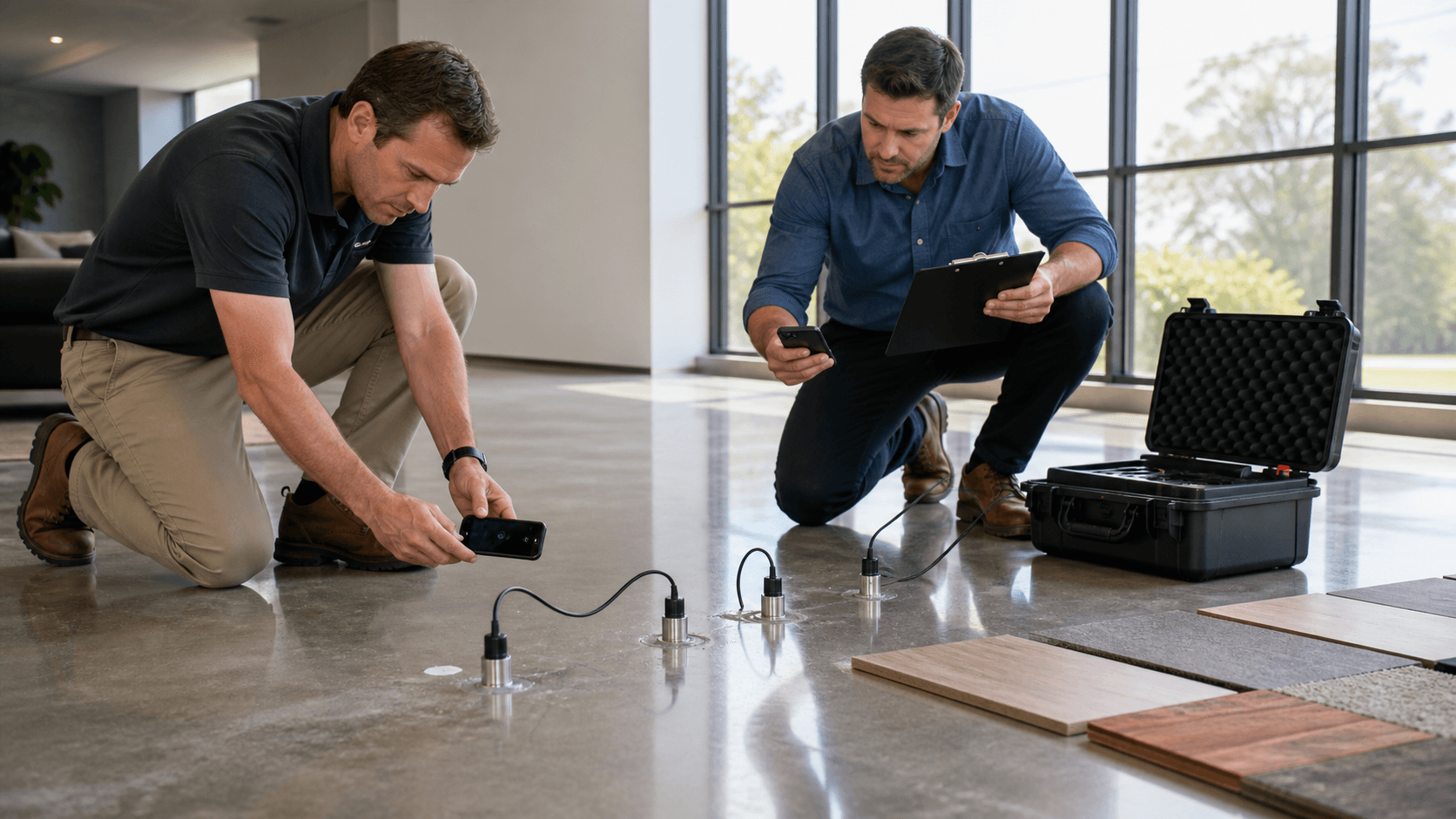
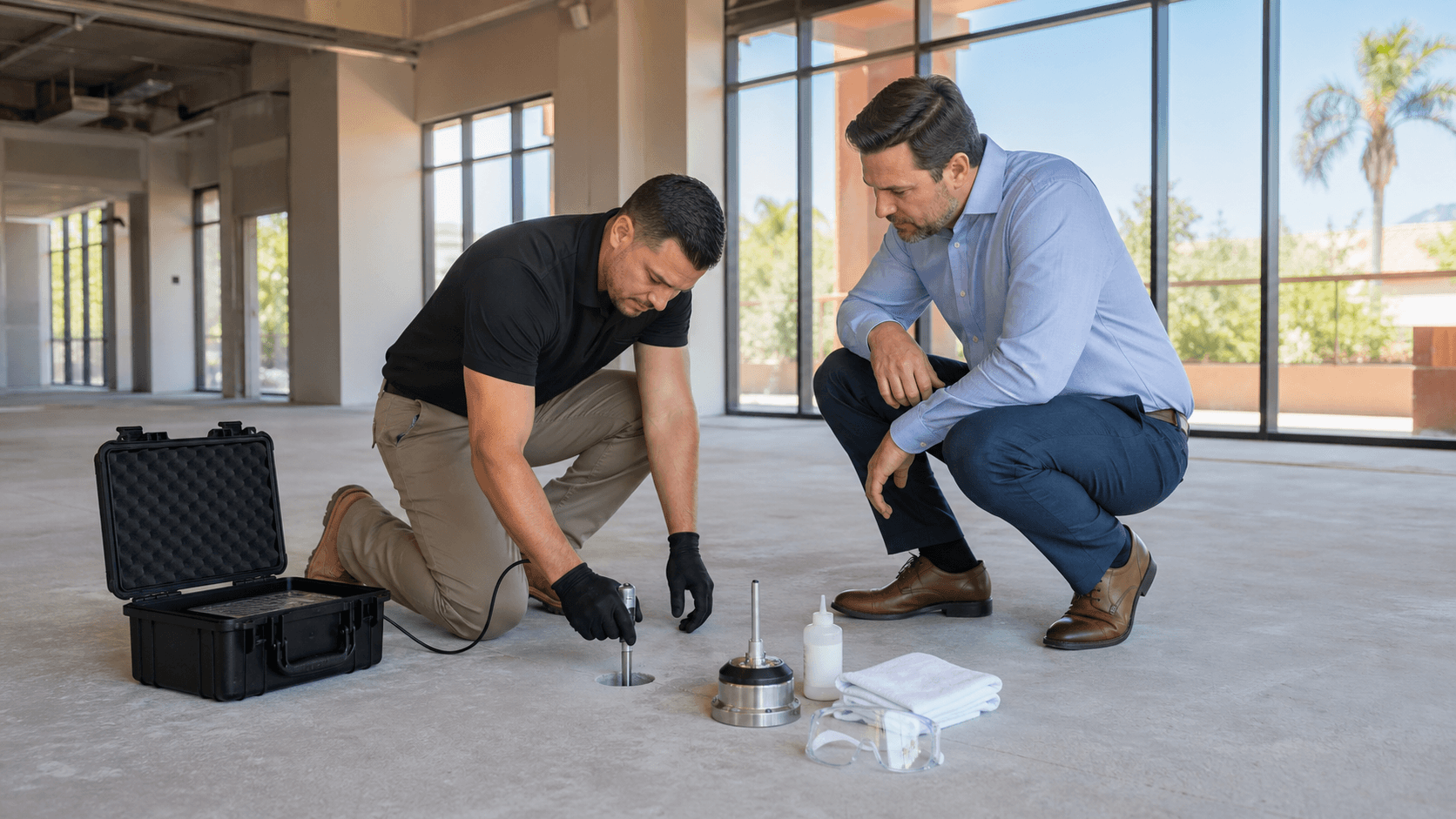
ASTM F2170 relative humidity (RH) testing:
- Small probes are installed into drilled holes inside the concrete
- The probes measure the RH within the slab, not just at the surface
- Results are shown as a percentage, often compared to the limits on product data sheets
Many manufacturers lean on RH testing because it looks inside the slab where the flooring system will actually live. It is a strong way to judge if the slab is ready or if more drying or mitigation is needed.
ASTM F1869 moisture vapor emission rate (MVER) testing:
- Calcium chloride test kits are placed on a prepared area of the slab surface
- The kits measure how much moisture leaves the surface over a set time
- Results are given as pounds of moisture per 1,000 square feet in 24 hours
Some specs still ask for this test, especially on older slabs or certain flooring systems. It is surface-focused, so it is often used together with RH, not instead of it.
Concrete surface pH testing:
- A small amount of distilled water is placed on the slab surface
- The solution is checked with pH paper or a meter
- Results show how alkaline the surface is
Adhesives and coatings are sensitive to high pH. If the pH is outside the range the manufacturer allows, you may see softening, bond failure, or discoloration. When RH, MVER, and pH are all checked, you get a much clearer moisture profile for the slab.
Choosing Truly Independent Moisture Testing Pros
Owners are often promised quick testing by installers or product reps. That can sound convenient, but it may create conflicts of interest. The person who wants to move forward with their flooring sale or install should not be the only one deciding if the slab is ready.
For independent, ASTM-compliant testing, look for:
- A company that focuses on concrete moisture testing as its core work
- Properly calibrated meters, probes, and testing equipment
- Clear written procedures that follow the ASTM standards called out in your specs
- Detailed reports with photos, floor plans, and test layouts
An Orange County-based specialist adds another layer of value. Local knowledge of common slab designs, below-slab conditions, and typical building uses in the area can help spot risks early. Familiarity with how major flooring brands write their moisture and pH limits is also important for protecting warranties.
How to Read and Use Your Test Report Like an Owner
A good moisture report should be easy for a non-technical reader to follow. Even if the data looks dense at first, the structure should guide you through it.
Expect to see:
- A floor plan or sketch showing each test location
- RH readings, MVER results if tested, and pH values
- Notes on ambient temperature and RH in the room
- Simple comparisons to the limits set by your flooring and adhesive manufacturers
When results are in range, the team can move ahead with more confidence. When numbers are too high, the report helps the owner, designer, and general contractor decide what to adjust.
You can use the report to:
- Confirm if your chosen floor type is suitable for the current slab condition
- Select adhesives, primers, or mitigation systems the manufacturer approves
- Decide whether to delay installation to allow more drying time
- Document that the team followed reasonable steps before flooring went in
Strong record-keeping is a smart move. Keep moisture reports with closeout documents, product data sheets, and warranties. If moisture-related issues appear years later, you will have proof of the slab conditions and the decisions made at the time of installation.
Game Plan for Your Next Flooring Project in Orange County
For building owners, the goal is simple: attractive, durable floors that do not surprise you with hidden moisture problems. A clear testing plan builds that outcome into the project from the start.
Here is a basic checklist to guide your next project:
- Flag any areas with known moisture history or on-grade slabs early
- Include pre-flooring moisture testing in your project timeline, not as a last-minute step
- Share flooring specs and product data sheets with your testing provider
- Allow time for mitigation or alternative product choices if results are high
- Keep all reports and approvals in one place for future reference
Pre-flooring moisture testing in Orange County is one of the easiest ways to protect your floors, your warranties, and your building's reputation. When independent, ASTM-compliant testing is a standard part of your playbook, you are not guessing about what is happening inside the concrete. You are making smart, documented decisions that support the long-term success of your space.
Get Started With Your Project Today
Protect your installation schedule and flooring investment with our proven concrete moisture evaluations. Our pre-flooring moisture testing in Orange County gives you clear, lab-validated data so you can move forward with confidence. At Concrete Moisture Testing Orange County, we work around your timeline and provide detailed, easy-to-understand reports. Ready to schedule or have questions about your project? Just contact us and we will help you plan the next steps.