When Saving Time Destroys a Flooring Investment
Rushing pre-flooring moisture testing can turn a beautiful new floor into a problem you cannot ignore. The space opens on time, everyone is happy, then a few months later boards start cupping, tiles lift, or vinyl bubbles. The schedule was met, but the floor was not truly ready.
Concrete slabs keep releasing moisture long after they are placed. That moisture moves from the bottom of the slab up to the surface, where it meets adhesives, coatings, and floor coverings. The only way to know when conditions are ready for flooring is proper pre-flooring moisture testing, not guesswork or hope.
When testing is rushed or skipped, the risk is much bigger than a few ugly spots. Problems can void flooring warranties, force long closures, and lead to expensive tear-outs and even legal disputes. The damage often stays hidden at first, then shows up right when the building is busiest, like during holiday shopping or year-end events, when closing for repairs is the last thing anyone wants.
Why Concrete Moisture Is so Easy to Underestimate
Concrete can fool even experienced people. It is easy to think that once the surface looks hard and dry, you are in the clear. But curing and drying are two very different things.
Curing is the chemical process that makes the concrete gain strength. Drying is the slow movement of moisture inside the slab up toward the surface. The curing process can be mostly complete while the internal relative humidity is still high enough to damage flooring.
Around Orange County, late summer and fall often feel dry and sunny. That warm air can give a false sense of security. The slab surface may feel dry to the touch while the inside still holds a lot of moisture that will keep moving upward over time.
Common mistakes we see include:
- Judging slabs by "feel" or color instead of test data
- Relying only on quick surface meters that do not show internal conditions
- Trusting timeline promises without any ASTM-compliant test results
- Assuming an older slab must be dry enough for new flooring
Every slab is different. Things like vapor barriers under the slab, slab thickness, concrete mix design, and how long the HVAC system has been running all change how moisture behaves. Because these factors are hidden, there is no way to judge a slab accurately without proper testing.
The Real Cost of Rushed Pre-Flooring Moisture Testing
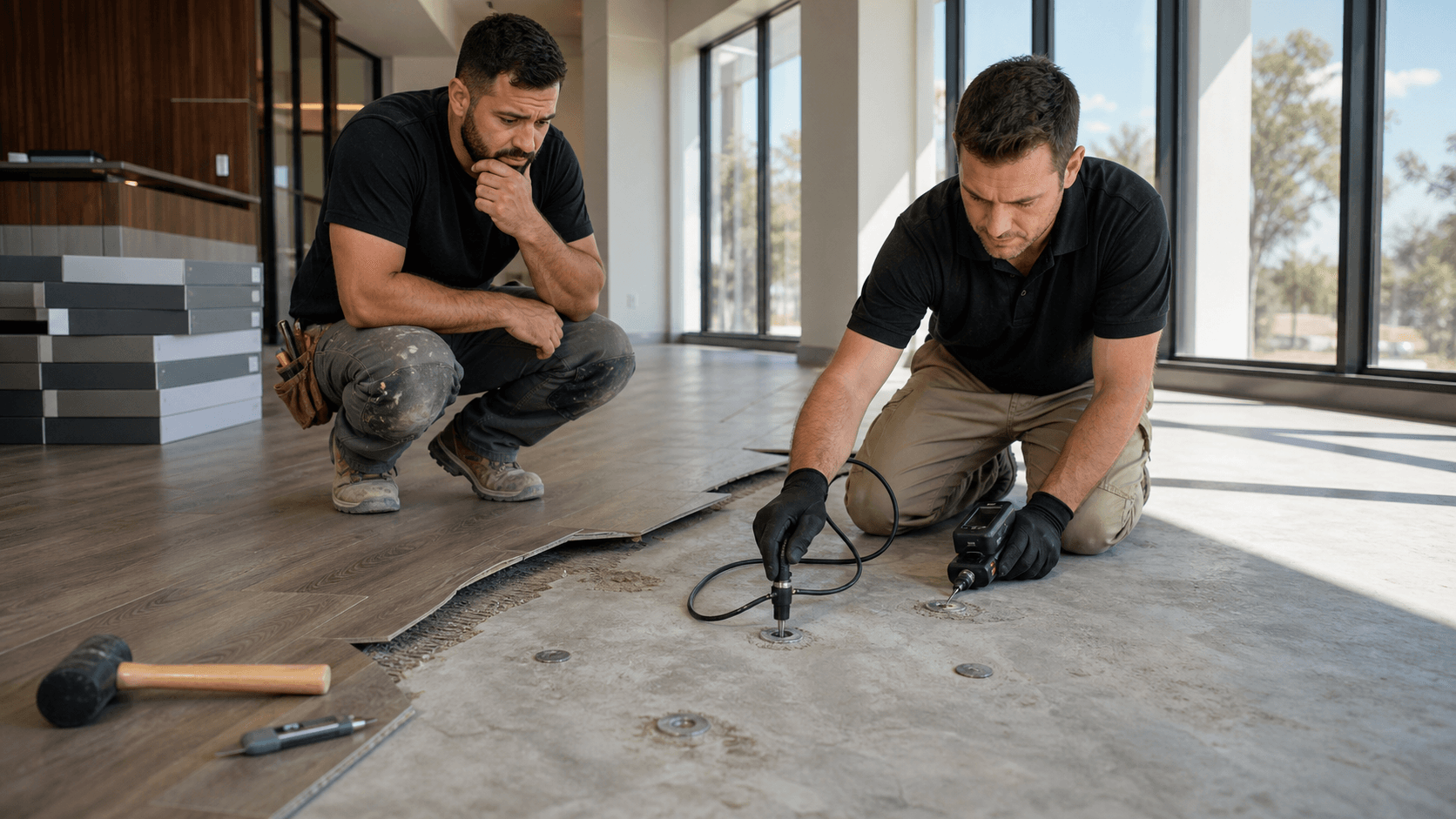
Sometimes people try to split the difference. They say they tested, but the testing is rushed or incomplete. Maybe there are too few test locations, probes are not given time to acclimate, or methods do not follow ASTM standards. On paper, it looks like testing was done. In reality, the flooring is going over unknown conditions.
That false sense of security often shows up later as:
- Warped or cupped hardwood planks
- Loose or tented tile and stone
- Bubbles, blisters, or soft spots in resilient flooring
- Musty odors from mold or mildew under the floor
- Dark staining or discoloration around joints and edges
Once that happens, the costs stack up quickly. Damaged flooring has to be removed, the concrete may need treatment or grinding, and microbial growth needs safe handling. Spaces can sit unusable during repairs, which means lost rent, delayed move-ins, or closed sections of a business.
There are also indirect hits:
- Flooring manufacturers may deny warranty claims if there is no clear, ASTM-compliant moisture and pH testing record.
- Insurance disputes can drag on when there is no solid documentation.
- Owners and managers may face upset tenants or customers, hurting reputation and future leases.
- Schedules for other trades get pushed around while the floor is fixed, which can delay later phases of work.
All of that often ties back to one choice: treating pre-flooring moisture testing as a box to check instead of a real decision-maker.
How Proper Testing Protects Floors, Warranties, and Schedules
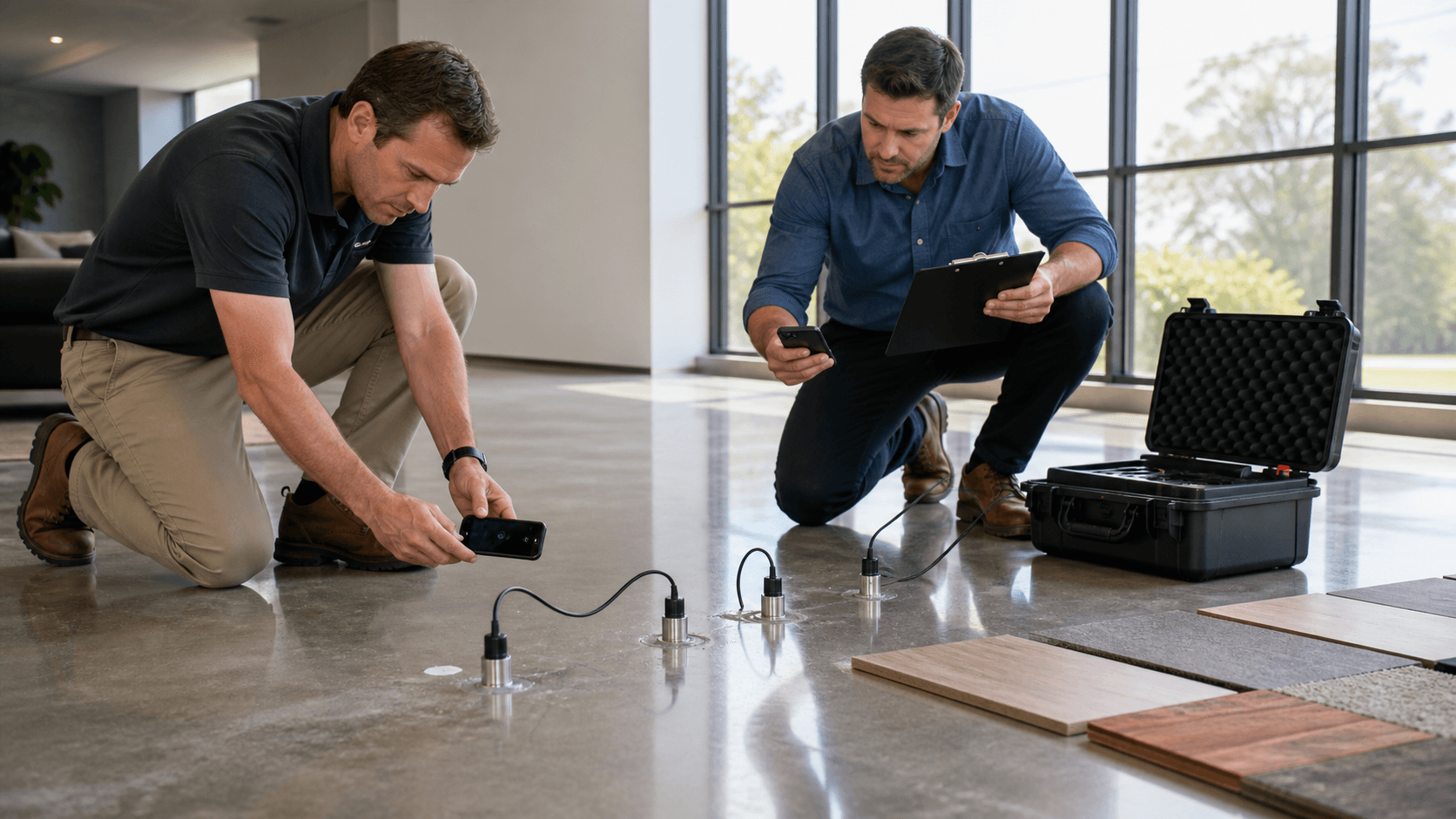
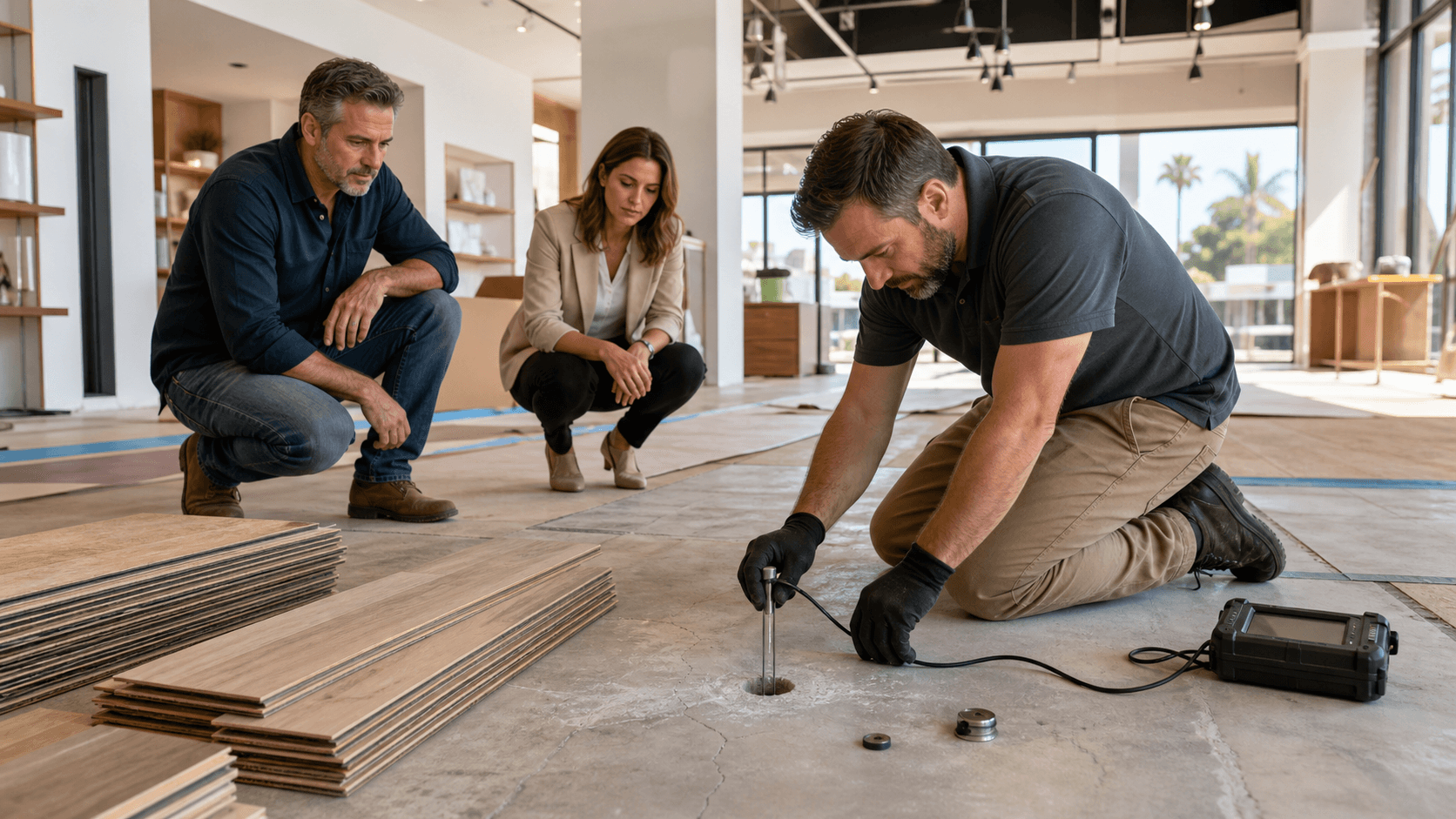
Good pre-flooring moisture testing is not complicated, but it does need to be done the right way. It should be focused on what the concrete is really doing inside the slab, not just at the surface.
A thorough testing plan usually includes:
- ASTM-compliant in-situ relative humidity (RH) testing inside the slab
- Moisture vapor emission rate testing where the flooring system requires it
- Concrete pH testing to help check adhesive and product compatibility
Independent testing, separate from installers and product reps, helps remove conflicts of interest. When testing is done by a third party, the data is more trusted by everyone on the project. That clear documentation can support flooring manufacturer warranties and helps settle questions if there is ever a dispute.
With solid test results, project teams can:
- Decide when a slab is actually ready for flooring
- Adjust HVAC or use dehumidification to help conditions reach safe levels
- Change adhesive types or flooring products when needed based on real numbers
Best of all, testing can be built into the project schedule. When it is planned from the start, no one is stuck trying to squeeze it in a few days before flooring installation. That removes the pressure to rush decisions just to hit a move-in date, especially during busy fall and holiday timelines.
Seasonal Pressures That Lead to Costly Shortcuts
From late September through the end of the year, many projects in our area are racing toward key dates. Retail spaces want to open for the holiday rush. Offices push for year-end occupancy. Property owners try to finish improvements before budgets reset.
Those calendar pressures often land hardest on flooring. The slab might not be fully dry, but the move-in date is set, furniture is on the way, and everyone wants the space done. That is when testing gets cut back or pushed aside.
Fall can also bring more swings in humidity from day to night. Even when days feel comfortable and dry, the changing conditions can slow slab drying more than people expect. When scheduling is based only on the age of the slab or rule-of-thumb timelines, the risk of hidden moisture goes up.
The trouble is that rushed or minimal testing in the fall often shows up as damage in the first or second year of use, just as traffic is rising and floors are getting more wear. To avoid that, it helps to:
- Schedule moisture testing early, as the slab approaches the planned flooring date
- Leave buffer time in the calendar for extra drying or mitigation if needed
- Use test results to confirm product and adhesive choices before flooring arrives on site
A little planning in the fall can keep your floor out of trouble later, when the space is busy and every day of downtime hurts.
Action Steps to Avoid Moisture-Driven Flooring Failures
If you are planning new flooring over concrete, pre-flooring moisture testing should be part of your standard process, not an optional step. A simple, clear timeline can make a big difference.
Think in terms of:
- Ordering an independent testing once the slab is nearing the expected readiness date
- Allowing proper acclimation time for RH probes inside the slab before readings are taken
- Retesting areas where readings are borderline or where conditions have changed
It also helps to build ASTM-compliant testing and documentation right into your contracts with installers and general contractors. When everyone knows who is responsible for testing, what methods will be used, and when the work will happen, there is less confusion and fewer last-minute shortcuts.
Owners, property managers, designers, and builders in Orange County who treat pre-flooring moisture testing as a form of insurance often avoid some of the most painful flooring failures. By working with an independent specialist focused on concrete moisture, RH, and pH testing, you are not guessing at what is going on in the slab. You are making decisions based on real data, protecting your floors, your schedules, and your peace of mind.
Protect Your New Floors With Expert Moisture Insight
Before you invest in new flooring, let Concrete Moisture Testing Orange County verify that your slab is ready with accurate pre-flooring moisture testing. Our team provides clear, documented results so you and your installers can move forward with confidence. If you are ready to schedule testing or have questions about your project, contact us today.