Protecting Costa Mesa Retail Remodels From Hidden Moisture Risk
Concrete slabs can look perfectly dry and still hold enough moisture to ruin new flooring. In Costa Mesa retail spaces, that surprise often shows up as bubbles, cupping, or failed adhesive right when everyone wants to be celebrating a fresh remodel. Concrete moisture is quiet, but it can wreck schedules, warranties, and relationships between landlords, tenants, and contractors.
When stores stay open during construction, pressure grows to move fast, work at night, and lay flooring as soon as possible. That is exactly when people are tempted to skip or rush concrete moisture testing. The risk is high, especially on high-value leases where delays and flooring failures can turn into long arguments about who is responsible.
With good planning and clear documentation, it does not have to go that way. Proper, ASTM-compliant relative humidity (RH) testing gives everyone a shared set of facts. When the testing is done right and reported clearly, both landlords and tenants have protection, and flooring contractors can move forward with confidence on flooring moisture testing in Costa Mesa stores.
Why Enclosed and Operating Stores Are So Hard to Test
Testing in an empty shell is simple compared to working in a live store with customers and staff. On Costa Mesa retail corridors and in enclosed centers, we see the same challenges again and again.
Common constraints include:
- Limited night work windows between closing and opening
- Merchandise, fixtures, and racks covering large areas of slab
- Noise and dust rules from center management or nearby tenants
- Security concerns and access limits on back-of-house areas
Many projects only allow testing crews in late at night. That short window has to cover layout, drilling test holes, installing RH sensors, and keeping things clean enough for business by morning. There is pressure to hurry, but the concrete and the test equipment do not care about the schedule. They still need the same time to stabilize and give accurate readings.
Then there is HVAC. To save energy, many centers shut down HVAC during off-hours. When that happens, temperature and ambient humidity in the store can swing up and down. Those swings can affect how moisture moves inside the slab surface zone we are measuring. If conditions change too much during testing, results can be misleading.
On top of that, phasing the work around store hours, customer traffic, and neighbors adds another layer of planning. For Costa Mesa remodels, this might mean:
- Dividing the floor into zones and testing each phase before that area gets new flooring
- Working around anchor tenants with different hours
- Coordinating with security, janitorial, and store staff so test locations are not disturbed
All of this makes testing harder, but it does not make it optional. It just means the testing plan has to match the real-life limits of an operating store.
Getting Reliable RH Results with Night Work and HVAC Off
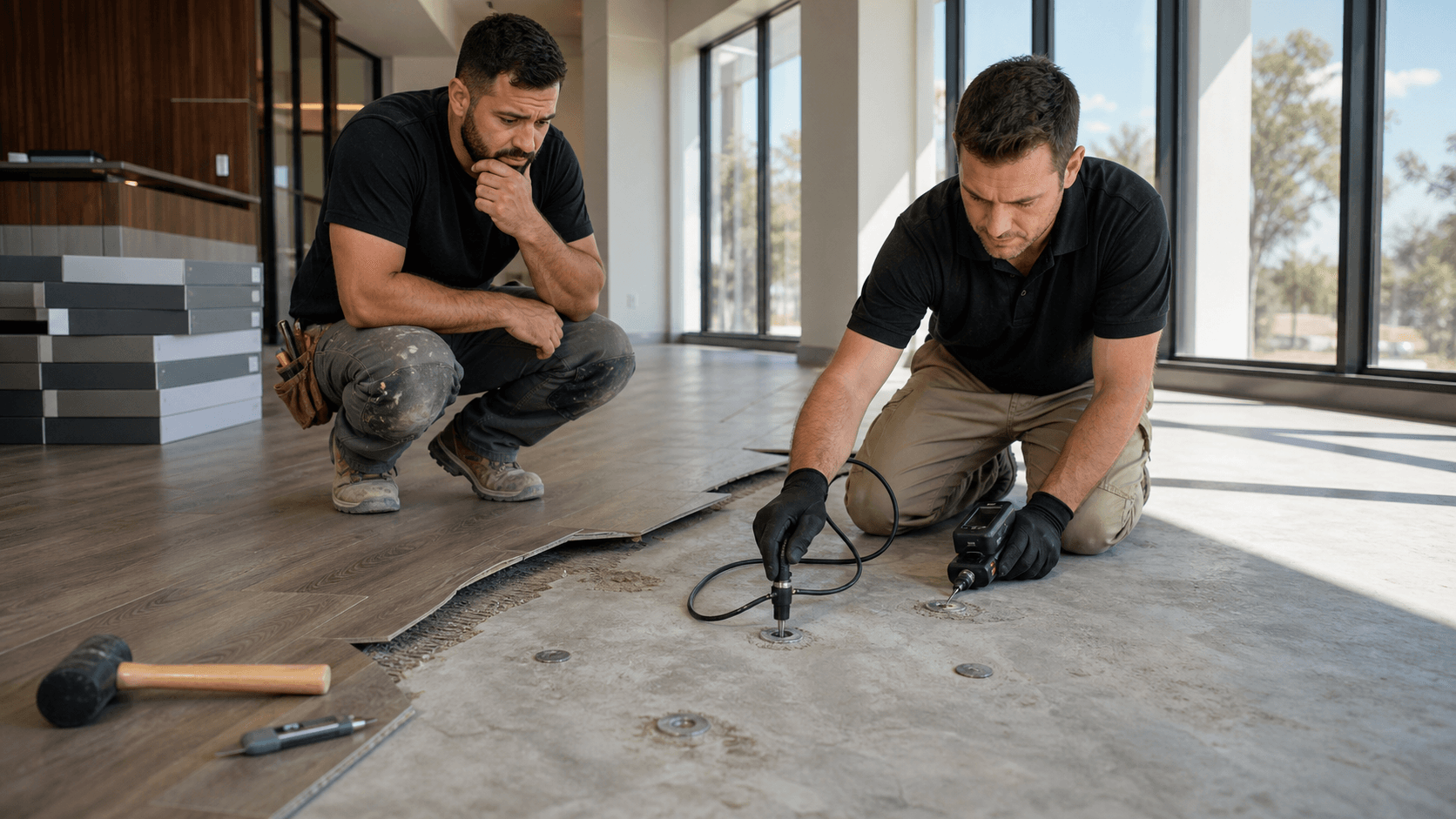
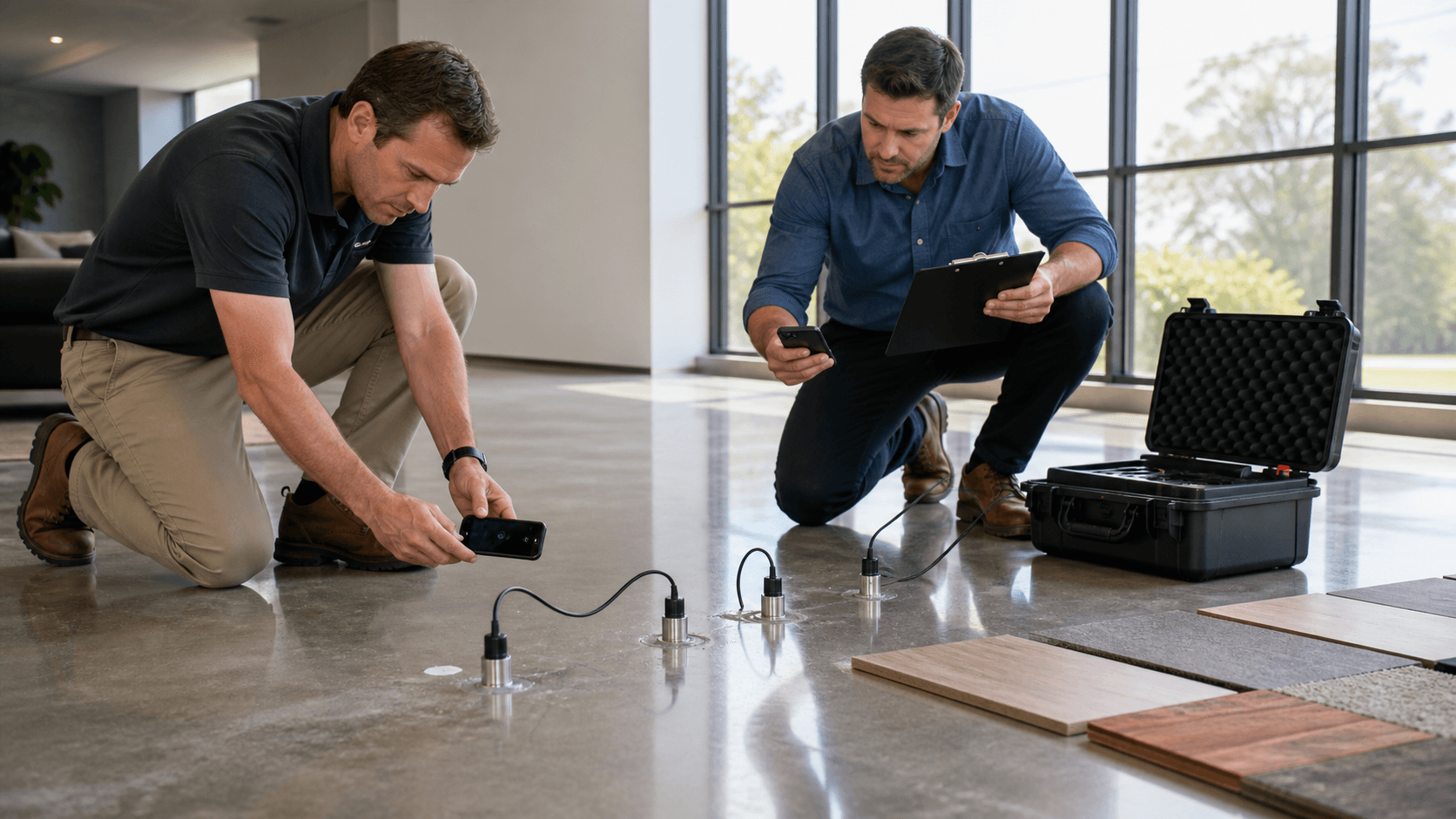
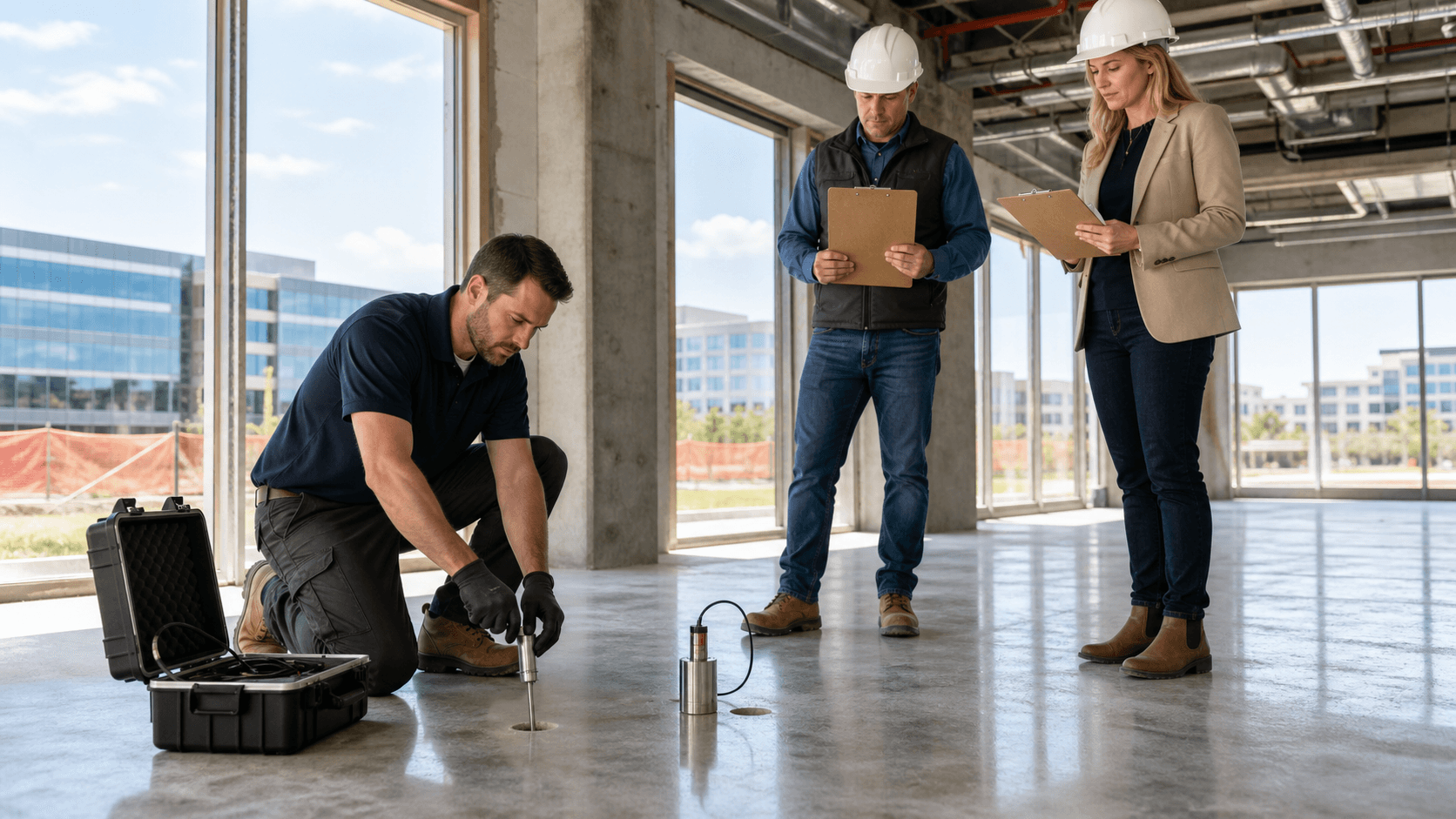
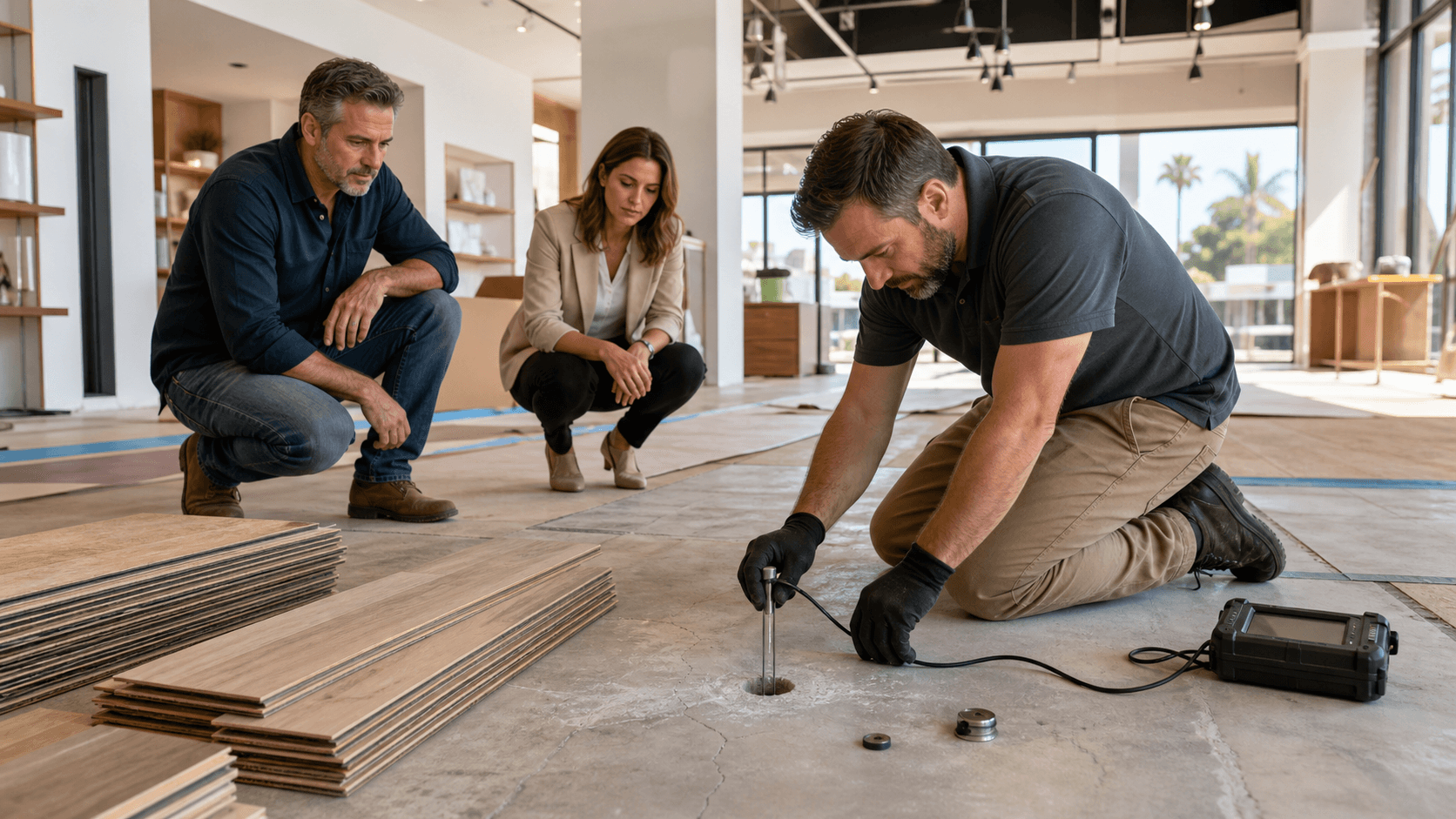
ASTM F2170 lays out how in-situ RH testing should be done inside the slab. To be dependable, the test needs:
- Correct hole depth, usually a set percentage of slab thickness
- Proper cleaning and preparation of the test holes
- Enough equilibration time for the probes to stabilize
- Reasonably stable ambient temperature and humidity during the test period
Night work and HVAC shutdowns can stress each one of these points. That is why planning and documentation become so important.
Helpful strategies include:
- Pre-conditioning the space before testing, with HVAC running long enough to bring the area close to expected occupied conditions
- Tracking ambient temperature and humidity from installation through final readings so any swings are captured in the report
- Coordinating with property management about limited HVAC operation during the test window, even if the system is normally off at night
- Protecting test probes with covers and clear markings so staff or cleaning crews do not disturb them between visits
An experienced moisture testing partner that works regularly in Costa Mesa can design a testing schedule that respects store hours but still respects the standard. That might mean starting hole drilling early in the night, coming back at a later shift for final readings, or planning testing on days when the store closes early for other work. The key is never trading compliance for convenience.
Rapid-Turn Schedules Without Cutting Corners on Testing
Retail remodels move fast. Tenant improvement dates, grand openings, and liquidated damages clauses in leases all push everyone to hit tight milestones. Floors are usually on the critical path, so it can feel like there is no time left for testing.
The way around that is to pull testing earlier into the schedule instead of pushing it later; good options include:
- Scheduling RH testing during or right after demolition while the slab is exposed
- Coordinating cuts in slab patch or leveling work so test holes can still be placed correctly
- Planning test locations around known transitions like front entries, back-of-house halls, and restrooms
When flooring moisture testing in Costa Mesa stores reveals high RH, moisture vapor emission rate (MVER), or pH, the project team still has choices. Common responses are:
- Moisture mitigation systems on top of the slab
- Extending dry time when the program allows for it
- Adjusting flooring specifications to products that can tolerate higher moisture levels
Whatever path is chosen, those decisions should be linked directly to documented test data. That way, the record shows that the team did not just hope for the best; they responded to real numbers.
Documenting Compliant RH Testing for Landlords and Tenants
A strong moisture report does more than list readings. It becomes part of the project record that landlords, tenants, and flooring manufacturers can all rely on. Clear, defensible documentation usually includes:
- Test locations with a simple plan or grid reference
- Dates and times of hole drilling, probe installation, and final readings
- Test methods used for RH, MVER, and pH, all aligned with the appropriate ASTM standards
- Equipment details, including models and calibration information
- Ambient temperature and relative humidity during the test period
When this level of detail is captured, it is much easier to sort out landlord versus tenant responsibilities if something goes wrong. For example:
- If the lease places slab conditions on the landlord, the report shows the moisture state before build-out finishes
- If the tenant controls construction and HVAC sequencing, the report shows whether the space was kept in suitable conditions during testing
- If a flooring failure happens later, everyone can look back at the same shared data instead of arguing from memory
These reports often end up in lease files, construction closeout binders, and warranty packets. For Costa Mesa retail centers with frequent turnovers and remodels, having that moisture history on record can prevent repeat mistakes on future projects.
Turn Nighttime Testing Into Daytime Peace of Mind
Retail remodels in Costa Mesa are too important to risk on guesswork about concrete moisture. Night work, enclosed spaces, HVAC shutdowns, and rapid schedules all make testing more challenging, but they are also the exact reasons it matters so much. When RH, MVER, and pH testing are planned early and done according to ASTM standards, everyone sleeps better, even if the testing happens after dark.
Concrete Moisture Testing Orange County focuses on independent, ASTM-compliant moisture testing and clear documentation for commercial and high-end residential projects across Orange County. For landlords, tenants, general contractors, and facility managers handling flooring moisture testing in Costa Mesa, well-planned nighttime testing can turn into daytime peace of mind, fewer surprises, and smoother tenant build-outs.
Get Started With Your Project Today
Protect your investment and avoid costly flooring failures by scheduling professional flooring moisture testing in Costa Mesa with Concrete Moisture Testing Orange County. We provide precise, reliable results so you can move forward with confidence on your next installation or renovation. To discuss your project timeline, scope, and testing needs, simply contact us and we will help you plan the next steps.