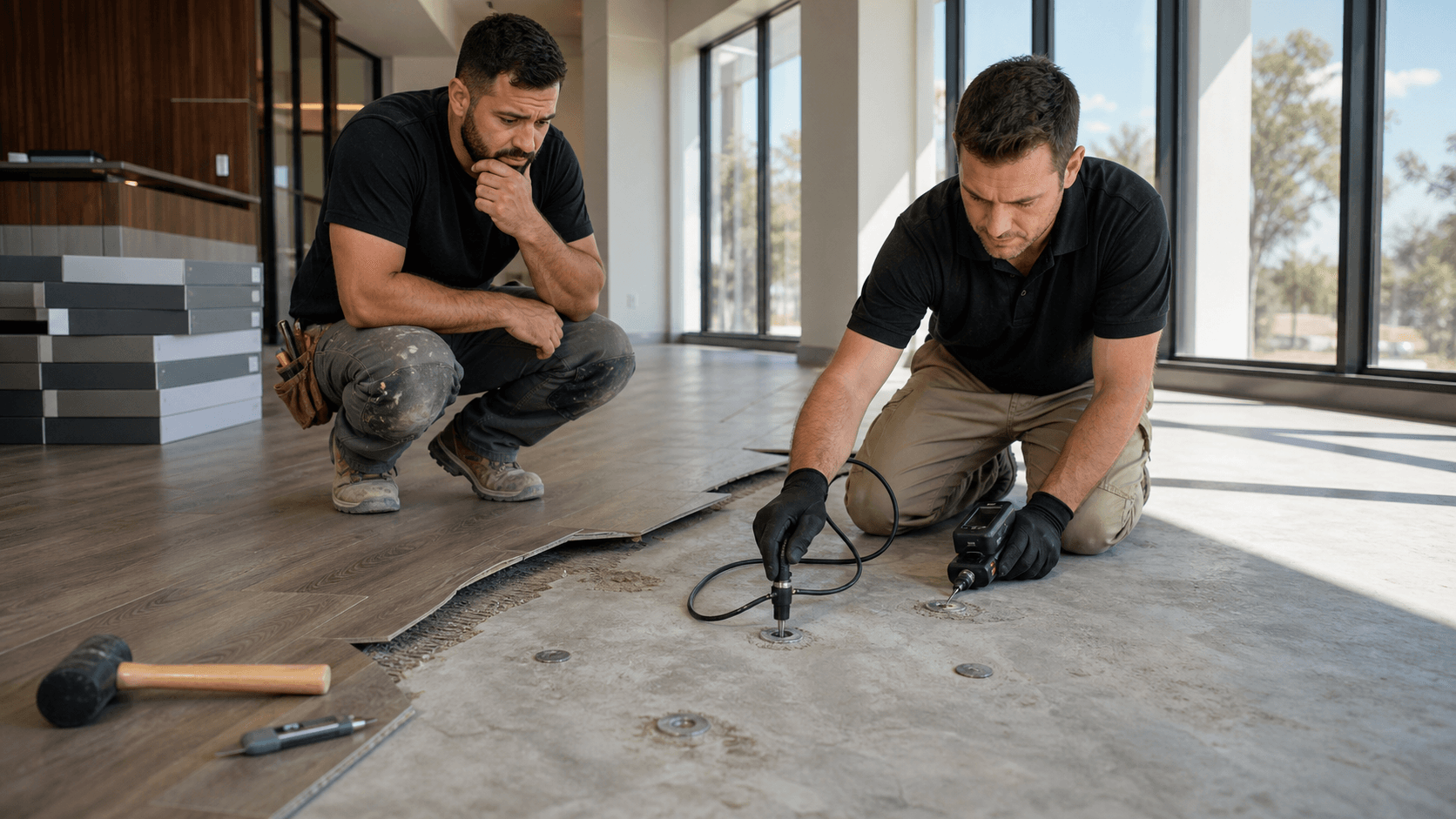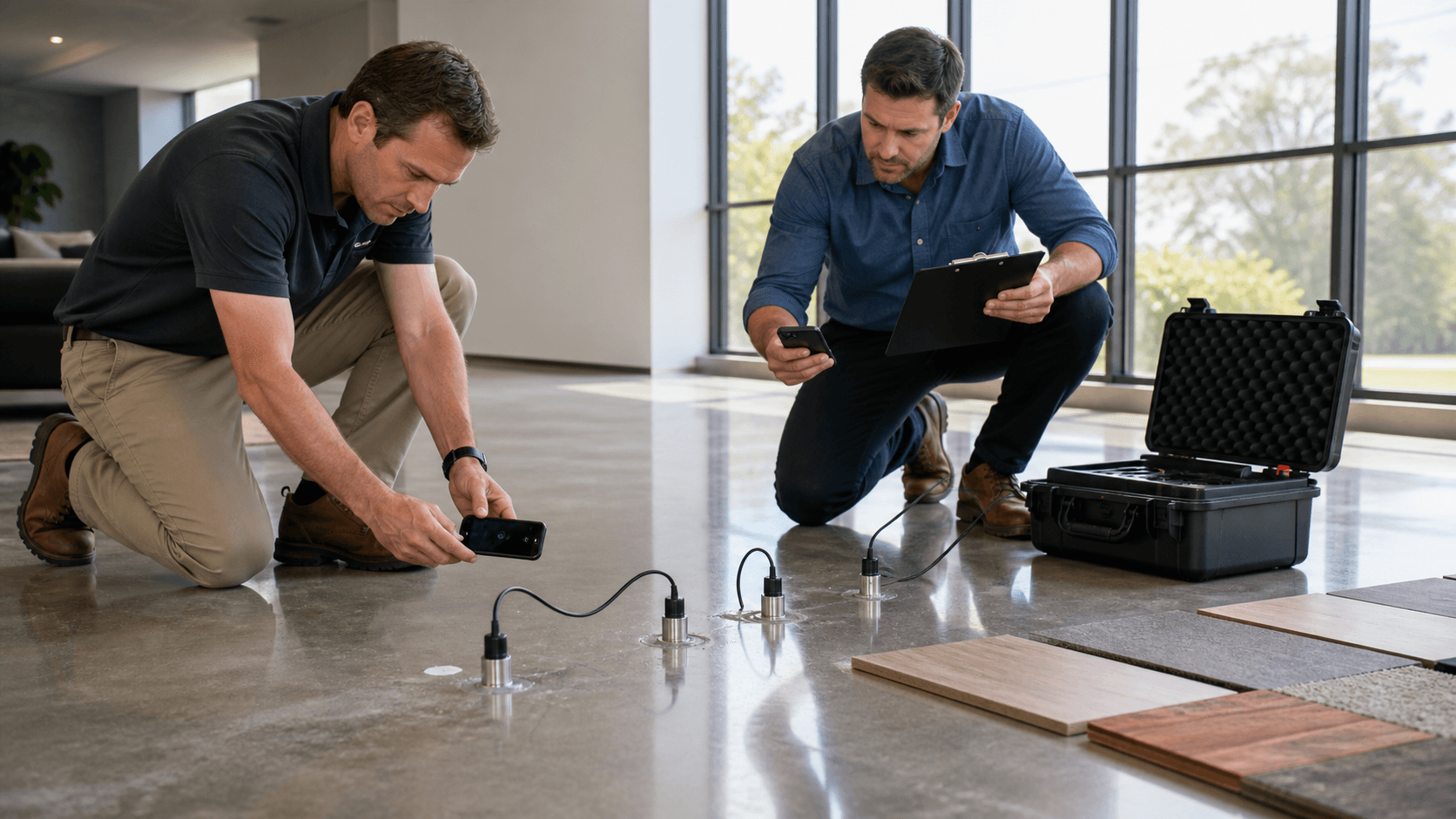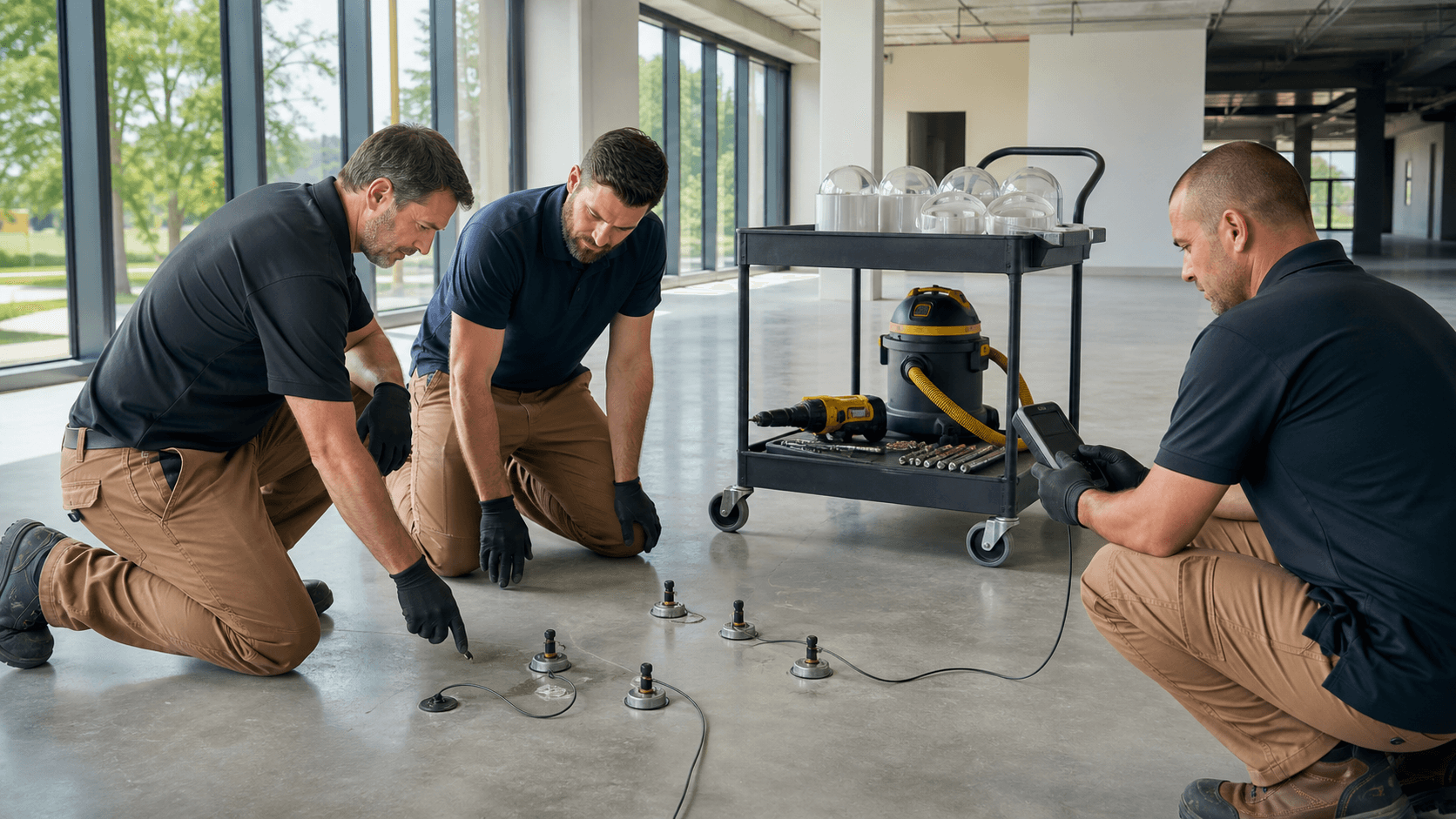
Stop Flooring Failures Before They Start
Moisture in concrete slabs is one of the fastest ways to ruin a beautiful floor. When the slab is not ready, adhesives let go, planks cup, tiles lift, and coatings bubble. The repair work takes time, creates stress, and can affect how people feel about the building for a long time.
In Irvine projects, this problem shows up a lot. There are many new slab-on-grade buildings, mixed-use spaces, and high-end homes that expect perfect finishes. Add in different microclimates across the city, and concrete moisture testing becomes a step you simply cannot rush. In this article, we walk through the most common concrete moisture testing mistakes in Irvine and how proper, ASTM-compliant, independent testing helps you avoid expensive flooring failures before they start.
Ignoring Irvine's Climate and Site Conditions
Irvine looks warm and dry on most days, but the local climate still plays tricks on drying slabs. The coastal influence and marine layer can keep humidity higher than people expect, especially in the early part of summer. The surface might look dry, while deeper in the slab, moisture is still moving.
A common mistake is thinking, "It has been warm and dry, so the slab must be ready." That guess leads to testing too soon. When tests start before the slab has had time to reach a steady condition, results are misleading. Flooring then goes on a slab that is still giving off moisture, and problems show up later.
Before any concrete moisture testing in Irvine, jobsite conditions need a close look. Key things to check include:
- Is the building enclosed and weather tight?
- Is the HVAC system running like it will under normal use?
- Are windows and doors being opened all day for construction airflow?
- Are there temporary moisture sources like wet trades or cleaning?
Testing should match real in-service conditions as closely as possible. If the environment in the building will change a lot after testing, the test results will not tell the full story.
Skipping ASTM Standards or Cutting Corners
Another major mistake is skipping standard test methods or bending the rules to save time. Concrete does not care about the schedule or the move-in date. It only follows physics. If the test method is wrong, the data is wrong.
ASTM F2170 covers in-situ relative humidity testing inside the concrete slab. ASTM F1869 covers moisture vapor emission rate, when that method is appropriate. These standards set clear steps that must be followed. When people take shortcuts, they often:
- Drill test holes at the wrong depth
- Rush the equilibration time before reading probes
- Use too few test locations for the size of the slab
- Use uncalibrated or poorly maintained equipment
Each of these shortcuts can swing results enough to push a project into the risk zone without anyone noticing. Following the standards carefully and using independent, ASTM-compliant testing helps keep data reliable and aligned with what flooring manufacturers expect for their warranties.
Testing at the Wrong Time in the Construction Schedule
Timing is just as important as the testing method. Many Irvine projects run on tight schedules, so there is pressure to test early and install flooring as soon as possible. When testing starts before the building is enclosed or before the HVAC is running like normal, results do not reflect what the slab will experience in daily use.
Testing too early can lead to two bad outcomes:
- The numbers look better than they really will be later, so flooring goes down too soon.
- Or the numbers look worse, and teams panic or start using products that may not be needed.
The better path is to plan testing into the schedule from the start. Ideal timing includes:
- Making sure the building is enclosed and weather tight
- Running HVAC long enough for interior temperature and RH to stabilize
- Allowing a buffer between testing and flooring installation to address high moisture or pH if needed
With this approach, test data matches real conditions, and the team has time to respond if the slab is not ready.
Misreading Results and Ignoring Manufacturer Limits
Even when testing is done correctly, the numbers still need to be read the right way. Many flooring failures happen not because there was no data, but because someone misunderstood what the data meant.
Common issues include:
- Mixing up RH limits for different flooring or adhesive systems
- Confusing MVER values or units
- Overlooking pH limits for adhesives or coatings
- Assuming all manufacturers have the same thresholds
Every product line has its own published limits. A safe RH level for one adhesive may be a clear "no" for another. The same goes for moisture emission and pH. That is why RH, MVER, and pH results must be compared to the exact requirements from the specific flooring and adhesive being used.
Clear, professionally documented reports make this much easier. When data is laid out in simple terms, with test locations and conditions explained, project teams can make a clear go or no-go decision and avoid guesswork.
Overlooking Slab History and Moisture Sources
Not all slabs are the same. Treating every floor as if it has the same background is another mistake that leads to repeat problems. The history of the slab matters.
Things that can affect moisture behavior include:
- Presence and condition of a vapor barrier below the slab
- Use of curing compounds or sealers during construction
- The concrete mix design and thickness
- Past moisture issues or repairs
On top of that, outside moisture sources around Irvine properties can surprise people. Irrigation that runs close to the building, poor site drainage that lets water collect near foundations, or changes from nearby construction can feed moisture into the slab months or years after the original build.
A smart approach is to look at testing data together with a review of:
- Site grading and drainage patterns
- Landscaping design and irrigation layout
- Joints, penetrations, and building details around the slab
This bigger picture helps prevent the same moisture issues from showing up again and again in the same spaces.
Protect Your Irvine Flooring Investment Now
Concrete moisture testing in Irvine is not just a box to check. It is a key part of protecting flooring, tenant comfort, and long-term building performance. Avoiding common mistakes like ignoring local climate, skipping ASTM standards, testing at the wrong time, misreading data, and overlooking slab history can prevent flooring failures, delays, and warranty disputes.
At Concrete Moisture Testing Orange County, we focus on independent, ASTM-compliant concrete moisture, RH, and pH testing for commercial and high-end residential projects in and around Irvine. By planning proper testing early, especially ahead of summer flooring work, project teams can move forward with confidence that the slab is truly ready for the finish it deserves.
Protect Your Floors With Expert Moisture Testing Today
If you are planning a new installation or troubleshooting an existing floor, we can help you prevent costly moisture-related failures before they start. Our certified team at Concrete Moisture Testing Orange County provides precise, reliable concrete moisture testing in Irvine tailored to commercial projects of all sizes. Schedule an inspection so we can deliver clear, actionable results and recommendations for your conditions. If you are ready to book a test or have questions about your slab, contact us today.