Stopping Flooring Failures Before They Start
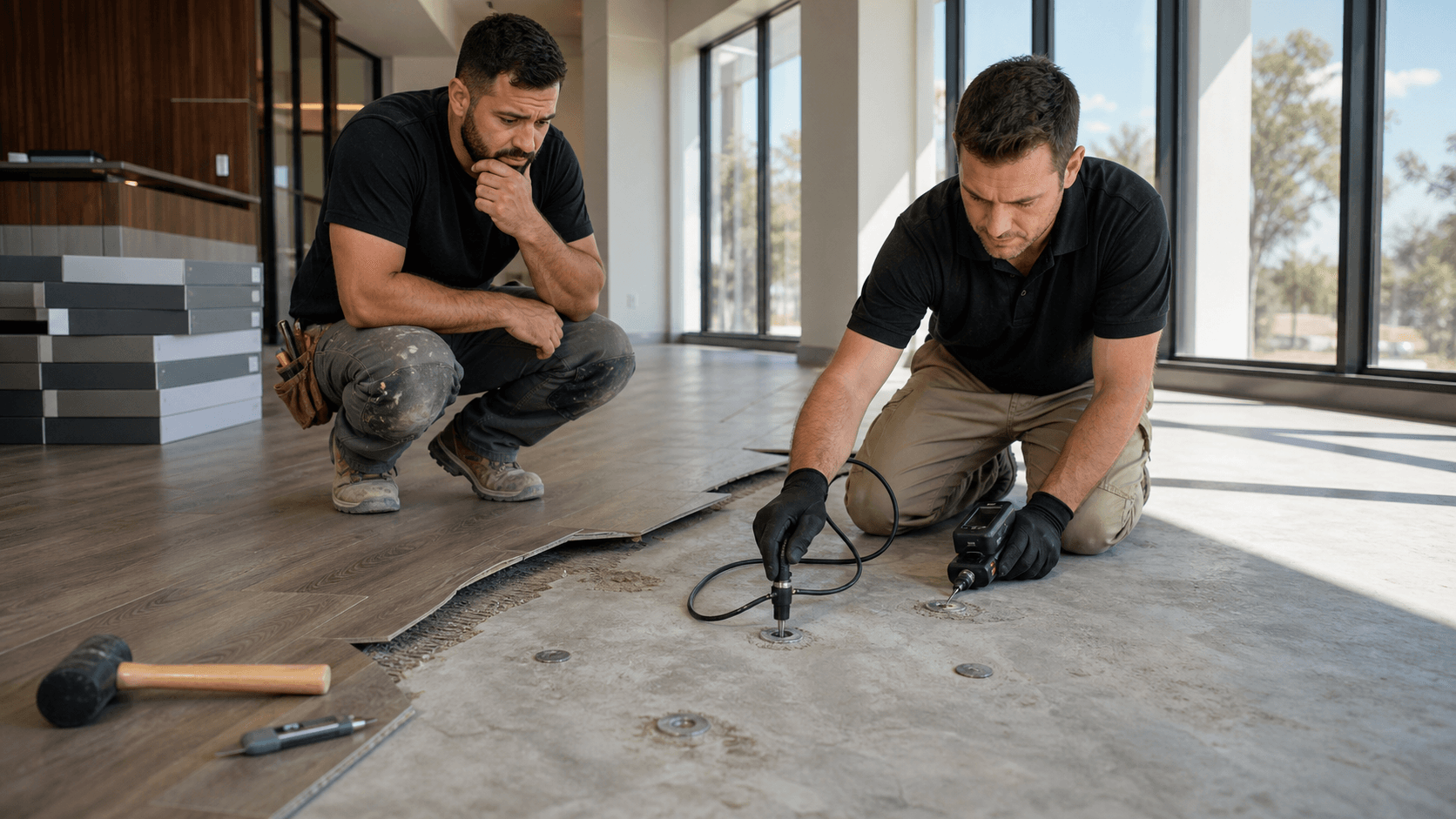
Hidden moisture in concrete is one of the main reasons floors fail in Orange County. A slab can look and feel ready, but extra moisture inside can cause flooring to lift, curl, bubble, or change color once everything is installed. That can turn a finished space into a construction zone all over again.
When a floor fails, it affects more than appearance. In commercial spaces, medical offices, and high-end homes, tearing out flooring can interrupt business, delay move-ins, and create noise and dust in spaces that should be quiet and clean. Pre-flooring moisture testing in Orange County is a simple, lower-cost step that helps protect warranties, schedules, and long-term floor performance before any of that happens. In this guide, we explain what that testing is, how it works, and why it matters for your next project.
Why Moisture Matters Under Every Floor
Concrete does not dry the same way paint or a spill dries. It first cures, a chemical reaction that gives the slab its strength. Drying, the slow release of moisture from inside the slab, is a different process. The surface can look dry, but deep inside, moisture can still be moving upward toward your flooring.
That hidden moisture can affect almost every type of flooring system:
- Luxury vinyl tile and plank can bubble, cup, or have joints open
- Hardwood and engineered wood can warp, crown, or gap
- Carpet tile and broadloom can release from the glue and ripple
- Rubber flooring can lift at the seams or soften adhesive
- Epoxy and resin floors can blister, peel, or discolor
Adhesives and underlayments are built to work only up to certain moisture limits. Each product has its own guidelines for:
- Maximum concrete relative humidity (RH)
- Maximum moisture vapor emission rate (MVER)
- Acceptable pH range of the slab
If those limits are ignored, the adhesive bond can break down. That is when you start seeing loose corners, hollow sounds, or staining that no cleaning solution can fix. Pre-flooring moisture testing checks these key values before flooring is installed, so the system can be matched correctly to what is happening in the slab.
Unique Moisture Challenges in Orange County Projects
Orange County projects face some special moisture challenges because of local conditions. The mix of coastal and inland microclimates means one job may sit in a morning marine layer, while another a few miles away has dry sun all day. Humidity and daily temperature swings can slow down concrete drying, even when the space looks finished.
Other common situations add to the risk:
- Slab-on-grade floors that sit directly on soil
- Podium decks over parking or retail spaces
- Underground parking structures and basements
- Tightly sealed buildings where fresh air is limited
On many Orange County projects, flooring is scheduled near the end of construction, often just before busy summer use or tenant move-in dates. When schedules get tight, it can be tempting to skip moisture testing or to assume the concrete had "enough time" to dry. That shortcut often leads to long-term problems that are hard and messy to fix later. Local, pre-flooring moisture testing in Orange County helps confirm what is really happening inside the slab, not just what the calendar shows.
Inside an ASTM-Compliant Pre-Flooring Moisture Test
Quality testing follows specific ASTM standards so that results are trusted by flooring manufacturers and project teams. The main standards involved often include:
- ASTM F2170 for in-situ concrete RH testing inside the slab
- ASTM F1869 for calcium chloride testing of MVER (when appropriate)
- ASTM F710 for surface preparation and substrate evaluation
Here is what typically happens during testing:
- Site walk and planning
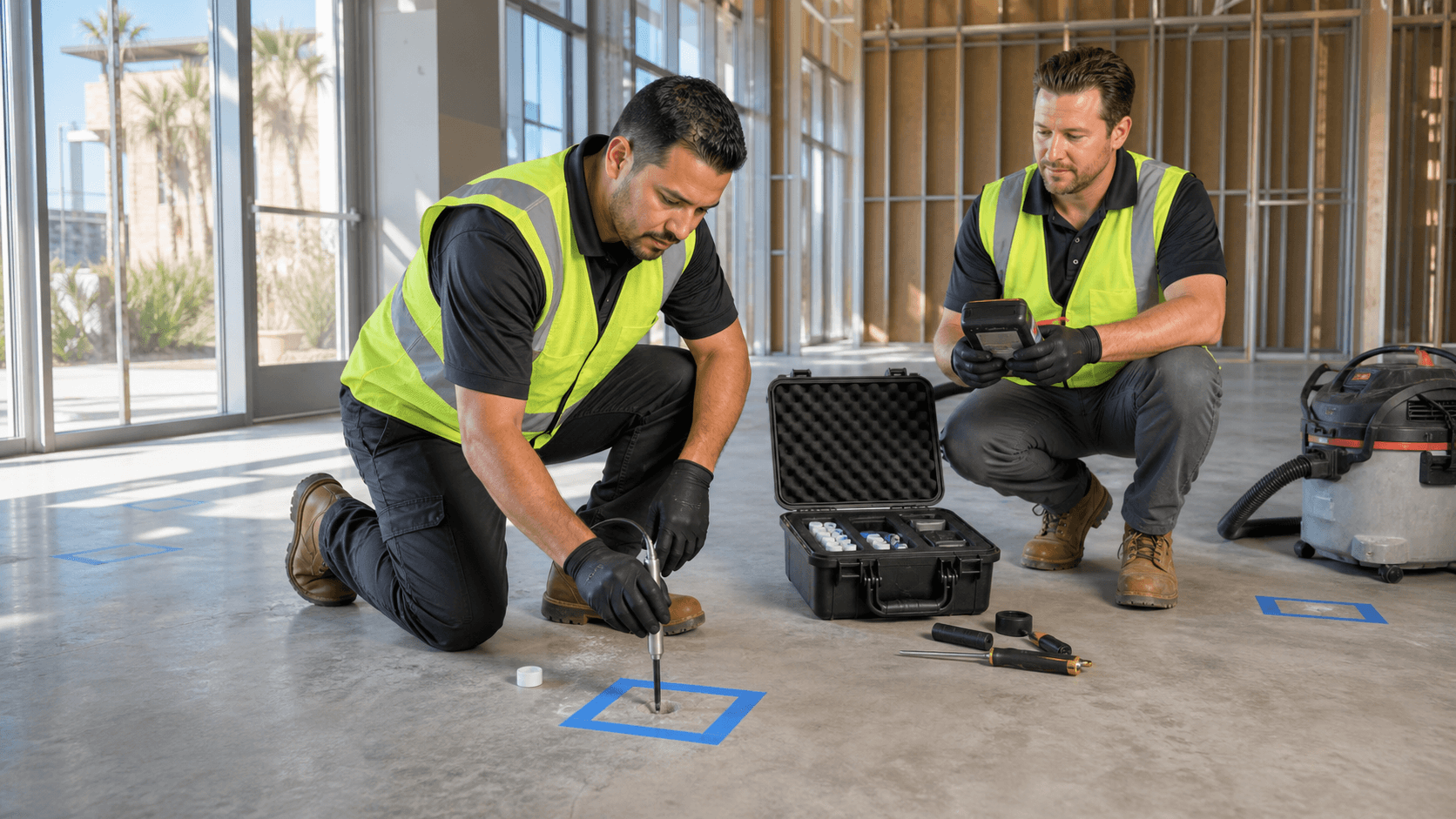
We review drawings, walk the space, and choose test locations that represent different areas and conditions.
- RH probe installation
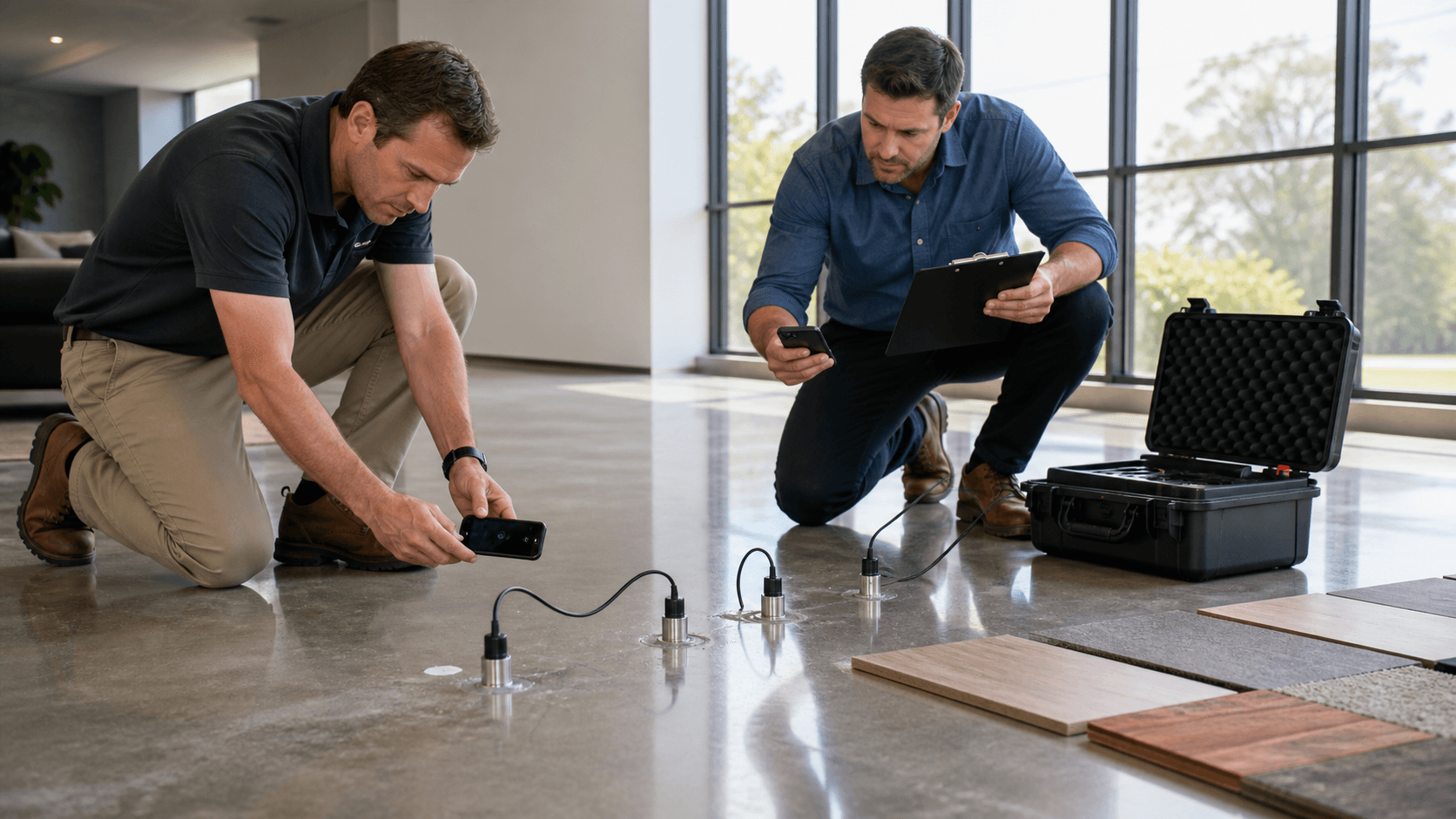
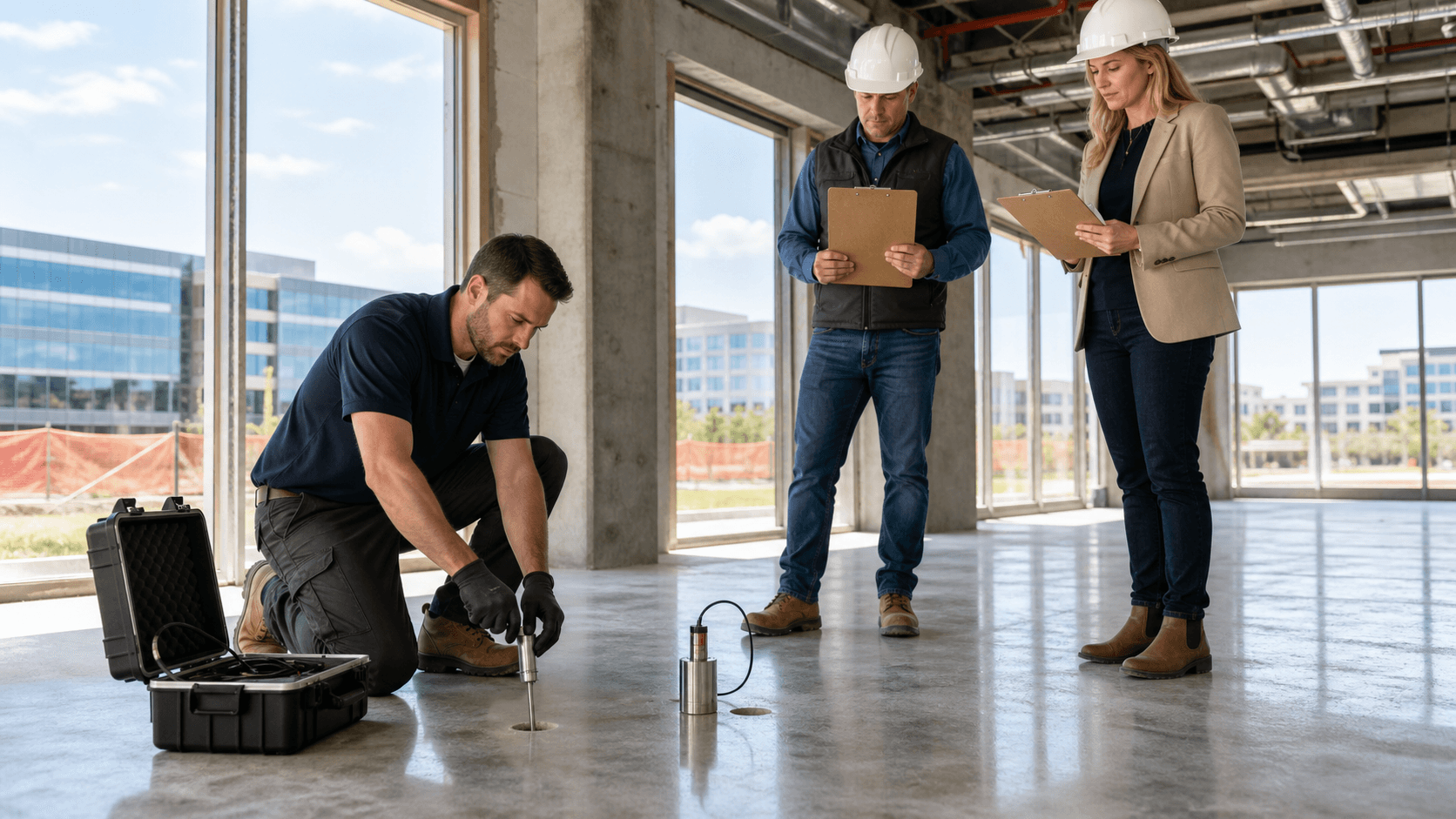
Small holes are drilled in the slab to a set depth, and RH probes or sleeves are installed following ASTM F2170.
- Acclimation period
The probes are left in place for a required amount of time so readings match the building conditions, not just the moment of drilling.
- Data collection
RH, temperature, and sometimes MVER and pH readings are taken and recorded carefully.
- Reporting
Results are organized into a clear report that can be reviewed by owners, general contractors, and flooring installers.
Independent, third-party testing helps keep the process unbiased. When the testing company is not installing the flooring or supplying materials, everyone on the project can rely on the data as a neutral reference.
Interpreting Results and Choosing the Right Fix
Once RH, MVER, and pH results are in, they need to be compared to the flooring and adhesive manufacturer guidelines. Each system has its own limits, so one set of results might be fine for carpet tile but not for wood or a specific epoxy.
If moisture or pH is too high, there are several common paths forward:
- Allowing more dry time with controlled building conditions
- Using dehumidification or air movement to help the slab dry
- Applying a topical moisture mitigation system, when specified
- Adding an appropriate vapor barrier or adjusting the floor build-up
Pre-flooring moisture testing in Orange County gives owners, designers, and contractors real numbers to work with. Instead of guessing, the team can choose a solution that balances cost, schedule, and risk based on accurate information from the actual slab.
How Testing Protects Warranties and Budgets
Most flooring and adhesive warranties require ASTM-compliant moisture and pH testing before installation. Without documented test results, a manufacturer may refuse to cover moisture-related problems later. The right paperwork can be just as important as the right product.
Good documentation usually includes:
- Test locations marked on a plan
- Dates and times of each reading
- RH, MVER, and pH values for each test point
- Notes on site conditions during testing
When things are documented clearly, there is less finger-pointing if an issue shows up down the road. The owner has proof that proper testing was done, the installer has evidence that conditions were checked, and the general contractor can show that the team followed industry standards. All of this helps protect both the finished floor and the overall project budget from surprise repair work, schedule setbacks, and repeat installations.
Steps to Schedule Reliable Testing Before Your Next Install
The best time to plan moisture testing is before flooring installation is locked into the schedule. That way, results can be reviewed calmly, and any fixes can be built into the plan instead of rushed at the last minute.
A simple checklist for project teams:
- Call for testing once the building is enclosed and HVAC or temporary conditioning is running
- Have basic project details ready, such as square footage, floor type, and installation dates
- Include the owner, general contractor, and flooring installer in conversations about timing and test locations
Typically, testing can often be completed within a short window, but RH probes need time in the slab before final readings are taken. Results should be reviewed early enough to adjust installation dates or add mitigation work if needed. When pre-flooring moisture testing in Orange County becomes a standard step in the workflow, projects tend to move more smoothly, with fewer last-minute surprises and far less risk hiding under the floor.
Protect Your New Floors With Proven Moisture Testing
Before you install any flooring, schedule pre-flooring moisture testing in Orange County to avoid costly failures, delays, and warranty issues. At Concrete Moisture Testing Orange County, we provide accurate, standards-compliant test results so you can move forward with confidence. Reach out today and let us help you choose the right testing plan for your concrete slab and project timeline. If you are ready to schedule or have questions, simply contact us.