Concrete moisture can turn a beautiful new floor into a mess in just a few days. When flooring starts to bubble, cup, or discolor right before move‑in, the problem is often hiding under the surface in the slab. Emergency concrete moisture testing gives you fast, clear answers so you can protect your schedule, your budget, and your reputation.
In this article, we will walk through when last‑minute testing makes sense, what actually happens during emergency concrete moisture testing, and how quick, ASTM-compliant data helps owners, contractors, and designers make smart choices instead of rushing into costly tear‑outs.
When Last-Minute Testing Saves Your New Floors
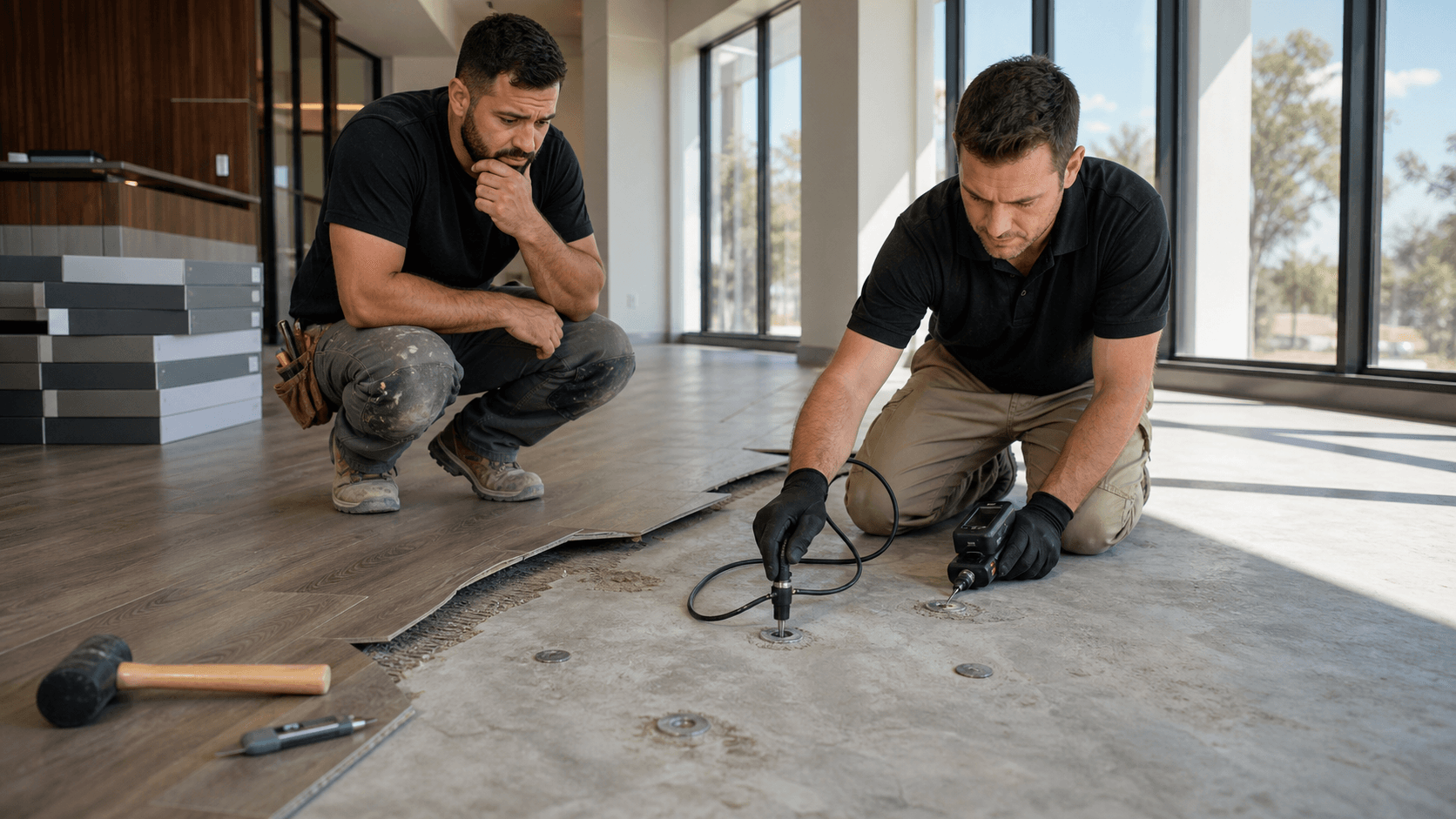
A project is almost done, furniture is ordered, tenants have a move‑in date, and the floor is supposed to be the star of the space. Then changes show up in the new flooring. You see bubbles, cupped planks, dark seams at joints, or corners starting to lift. Nobody planned for this, and everyone starts asking what went wrong.
Very often, the real issue is moisture moving up from the concrete. That hidden moisture is one of the biggest reasons for:
- Flooring failures shortly after installation
- Change orders and extra labor
- Delayed openings and missed turnover dates
- Frustrating warranty questions and finger‑pointing
Emergency concrete moisture testing steps in at this point. Instead of guessing, you get hard data on what is happening inside the slab. With the right testing, you can move from panic to a clear plan: stop, proceed, or repair with confidence. Our goal is to show how and when to pull that emergency brake before a small warning sign becomes a full flooring disaster.
Hidden Moisture Risks in Orange County Construction
Concrete does not dry on a fixed calendar. Here in Orange County, our coastal humidity, marine layer, and mild weather can keep slabs damp longer than people expect. The surface might look ready, but inside the slab, things can be very different, especially in areas like:
- Parking garages and podium decks
- Ground‑level commercial spaces
- Units over unconditioned spaces or garages
- Areas without active HVAC during build‑out
Fast build schedules often squeeze drying time. When turnover dates are tight, flooring sometimes goes down as soon as it looks ready. Add in value‑engineering choices and schedule pressure, and there is often less room to wait for the concrete to reach the levels flooring manufacturers want.
Other common risk factors include:
- Vapor retarders under the slab that are damaged or missing
- Curing compounds that slow moisture movement
- Topical sealers that trap moisture below the surface
- Reliance on visual checks or simple handheld surface meters
These tools can help with first looks, but they do not show what is going on deeper inside the concrete. The risk often spikes in late spring and early summer as days get longer, AC and HVAC systems start running, and interior conditions change. That shift can suddenly push more vapor up toward your new floor, even if things seemed fine a week earlier.
When You Need Emergency Concrete Moisture Testing Now
Emergency concrete moisture testing is a rapid, independent look at slab moisture using ASTM-compliant methods. It usually comes up when there is a sign that something is wrong, or when the flooring manufacturer or installer raises last‑minute concerns.
Some common red flags include:
- Bubbles, blisters, or hollow spots in new flooring
- Musty or damp odors in certain rooms or zones
- Dark or stained joints in wood, LVT, or laminate
- Adhesive bond tests that peel or fail quickly
- High pH readings during prep work
- Conflicting opinions about whether to proceed or stop
In these moments, it can be tempting to press ahead and hope the floor settles down. That almost always leads to bigger problems later. ASTM-compliant RH testing gives you documented proof of current slab conditions. That record matters a lot when you are dealing with:
- Manufacturer warranty limits
- Responsibilities between trades
- Decisions about repairs, mitigation, or replacement
Calling in an Orange County specialist quickly can mean the difference between a full tear‑out of an entire level and a more limited repair in only the affected zones.
What Happens During Rapid Response Moisture Testing
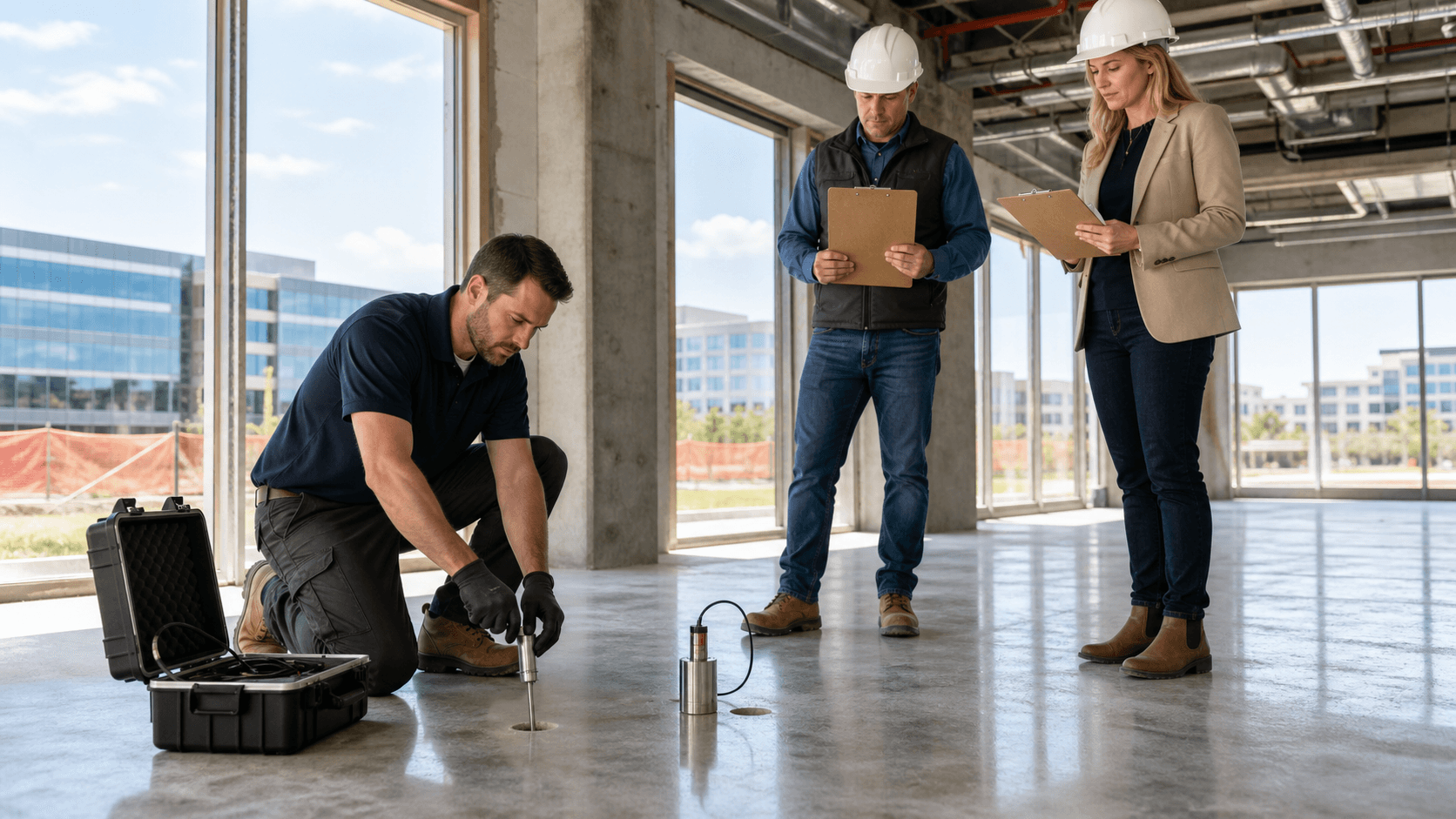
When we respond to an emergency concrete moisture testing call, we move fast but stay systematic. A typical rapid response visit includes:
- Site walk‑through to see where problems show up
- Review of project history and flooring details
- Selection of test locations that reflect real‑world use and problem areas
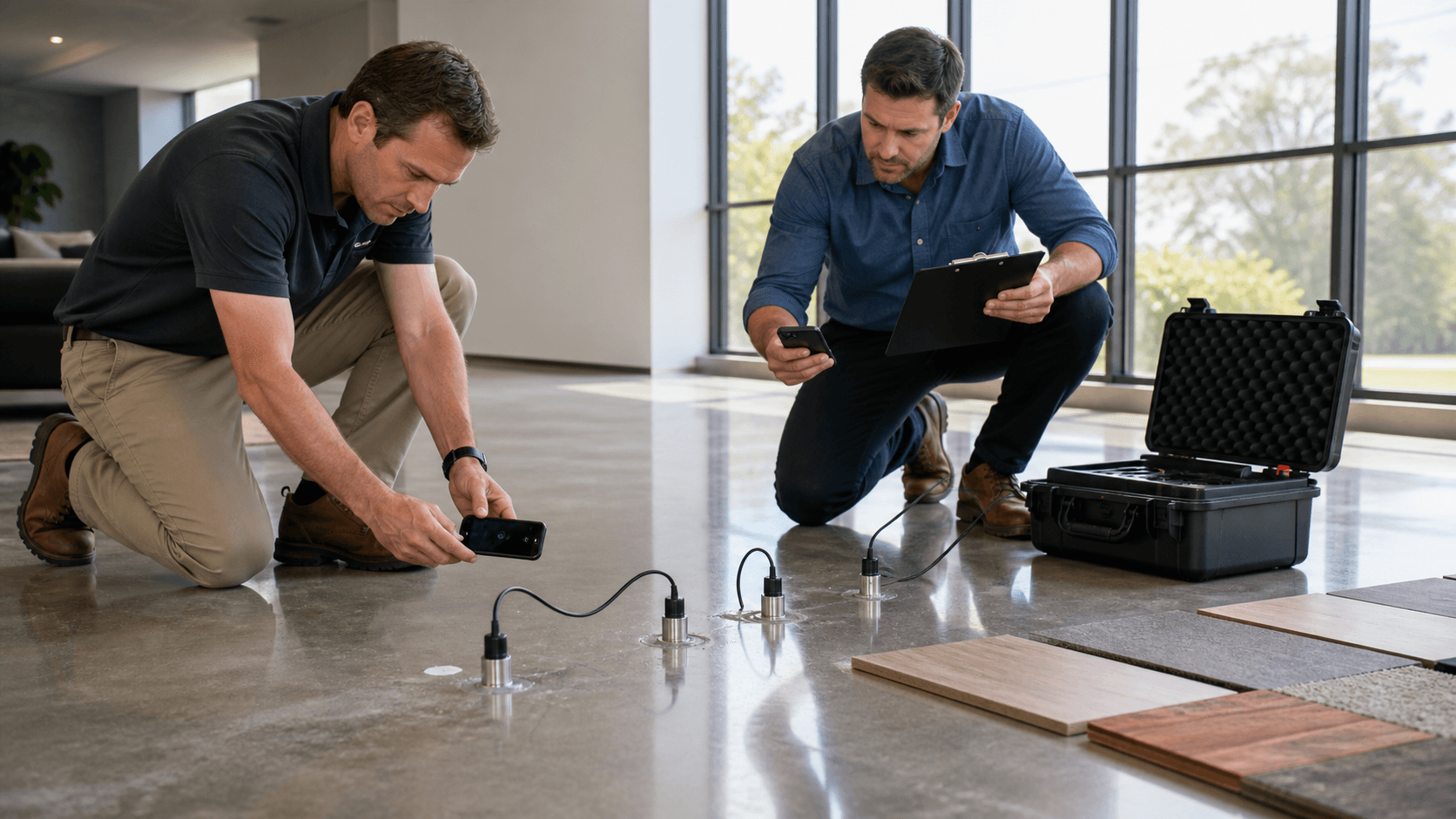
- Deployment of in‑slab RH probes and other ASTM-compliant tests as needed
ASTM F2170 in‑slab RH testing is a key part of this process. Instead of only reading the slab surface, it measures moisture conditions deeper in the concrete. That gives a much more accurate picture of the slab the flooring is actually sitting on, which matters a lot when you need to decide quickly what to do next.
Once readings are taken, an experienced, independent tester looks at the data in context:
- Flooring type and manufacturer limits
- Adhesives and underlayments used or specified
- HVAC and building conditions at the time of testing
- Location of issues within the building
From there, we provide clear written results, photos, and practical recommendations. The goal is to give owners, general contractors, flooring contractors, and designers something concrete to agree on so decisions are based on facts, not guesses.
Smart Choices That Can Turn Crisis Into Prevention
Emergency testing does more than tell you that you have a problem. It helps shape a plan to contain it. Instead of pulling up every square foot of flooring, test data can show whether only certain zones or rooms need attention.
Common responses based on data include:
- Selective demo only in areas above limits
- Targeted drying in problem zones
- Full moisture mitigation systems where needed
- Adjusted adhesive or flooring selections that still respect manufacturer limits
When decisions are data‑driven, you gain several advantages:
- Smaller scope of tear‑out and replacement
- Fewer change orders and disputes
- Better protection of warranties and documentation
- Clear lessons for future projects
Those lessons might include adjusting slab prep standards, building planned moisture testing into the original schedule, and insisting on independent testing before high‑risk installations. An emergency today can become the reason a future project runs more smoothly.
Protecting Your Project Before and During an Emergency
The smartest way to handle moisture problems is to plan for them before they show up. Moisture testing should be treated like insurance, not an afterthought. When teams build both baseline and, if needed, emergency concrete moisture testing into the project timeline, surprises become much easier to handle.
A simple "what if" plan before flooring install can include:
- Who will request testing if concerns arise
- Which decision-makers need to see test reports
- How fast testing can be mobilized if red flags appear
- How test results will guide choices about flooring and adhesives
Concrete Moisture Testing Orange County is focused on independent, ASTM-compliant RH and moisture testing and documentation for commercial and high‑end residential projects. By planning ahead and knowing who to call for emergency concrete moisture testing, owners, facility managers, architects, and contractors can protect finishes, schedules, and warranties, especially during busy late spring and summer project cycles.
Protect Your Concrete Investment With Fast, Accurate Testing Today
If you are facing a tight deadline or unexpected moisture issues, we can respond quickly to protect your schedule and your floors. Our certified technicians at Concrete Moisture Testing Orange County specialize in emergency concrete moisture testing so you can make confident decisions before installation or repairs. Reach out today and tell us about your situation so we can prioritize your project and recommend the right testing approach. If you are ready to schedule or have questions, simply contact us and we will follow up promptly.