Stop Flooring Failures Before They Void Your Warranty
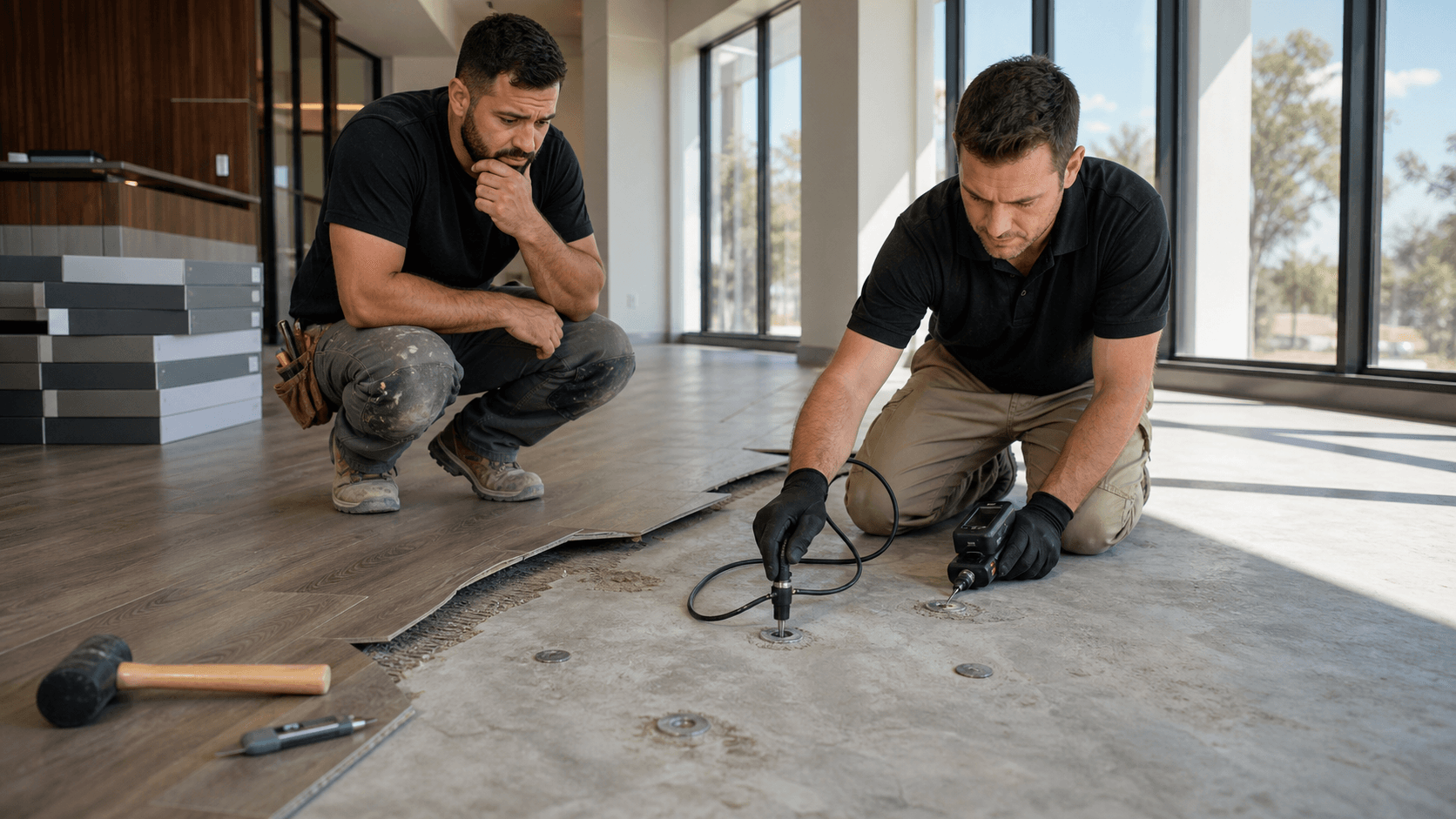
Concrete slabs can look dry and solid on the surface while still holding a lot of hidden moisture inside. That unseen moisture is one of the top reasons new floors bubble, curl, stain, or come loose. When that happens, flooring warranties often get denied, and everyone starts pointing fingers.
For property owners, contractors, and facility managers, a denied flooring claim can mean paying for repair or replacement out of pocket. It can also mean lost time, disruption to tenants or staff, and extra stress on projects that already feel tight. The risk goes up when moisture testing is skipped, rushed, or not done the way the warranty requires.
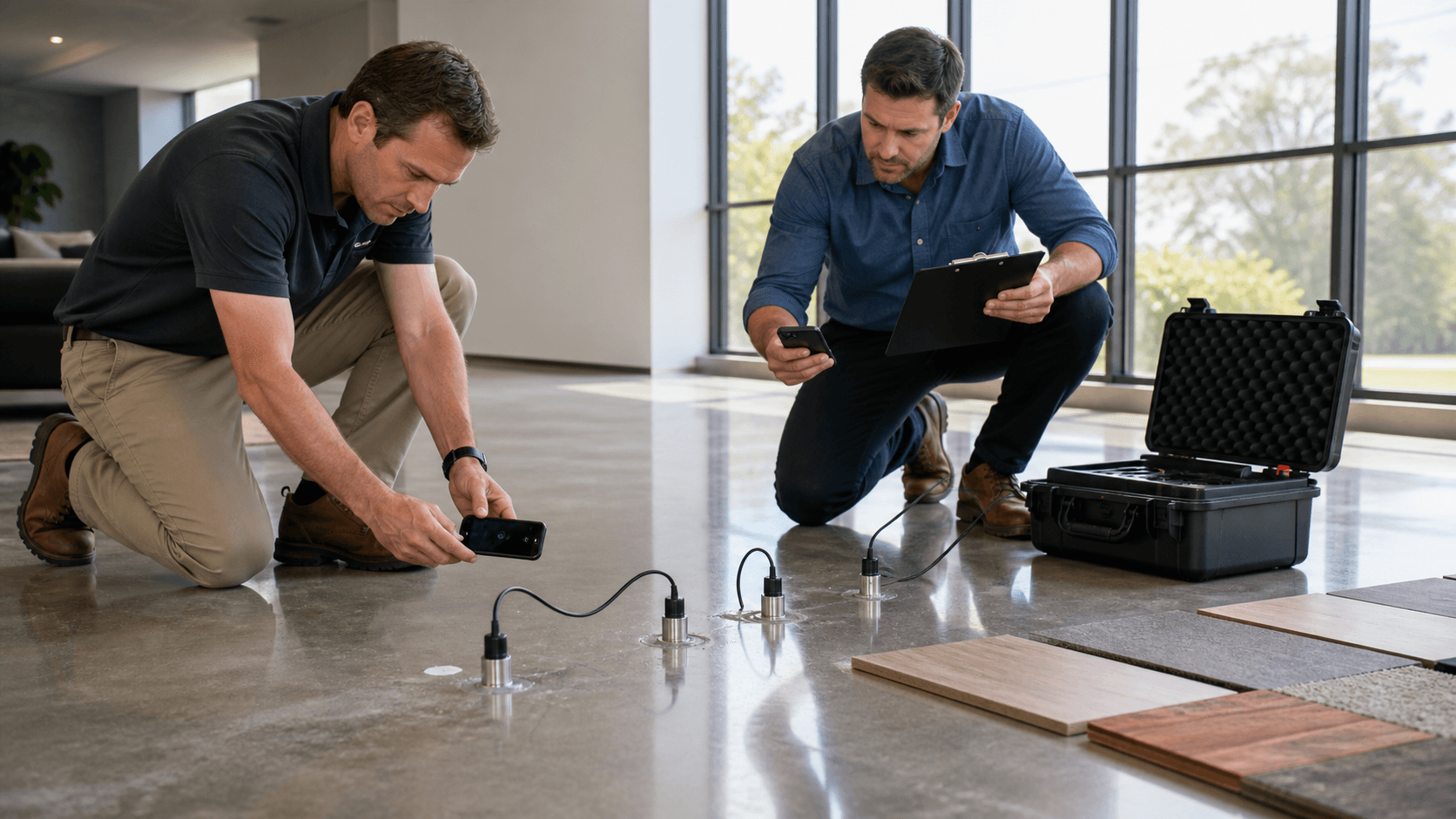
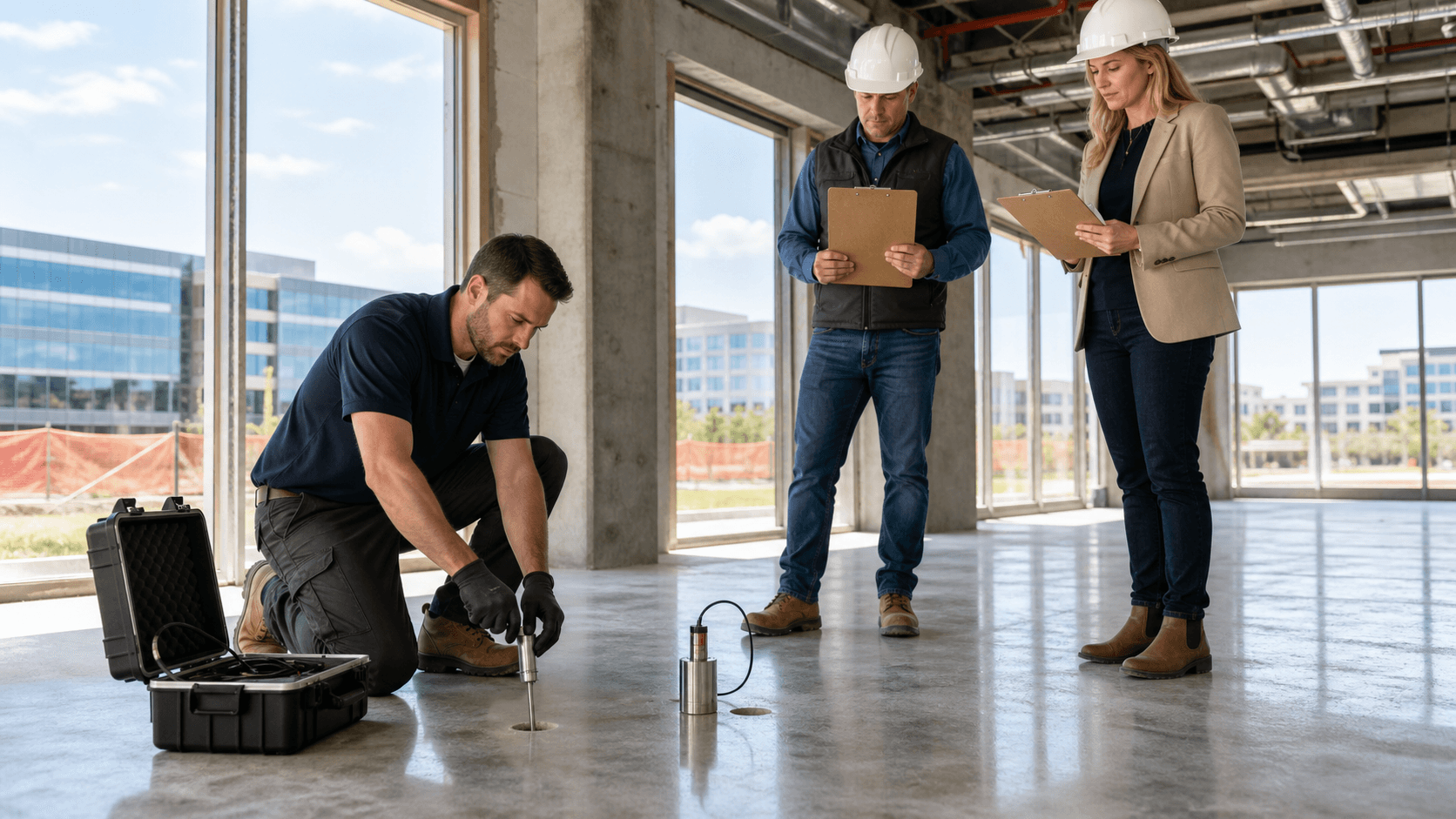
Flooring warranty moisture testing is not just a box to check. Manufacturers expect specific tests, done in specific ways, with proof to back them up. When those steps are followed and documented, it helps protect the floor and the warranty. Independent, ASTM-compliant testing and clear paperwork are key parts of that protection.
What Flooring Manufacturers Really Require From Testing
Every flooring and adhesive manufacturer has their own written rules for moisture, relative humidity, and pH. These limits are usually tied to the product data sheets and the warranty. If the slab does not meet those limits at the time of install, the warranty can be at risk.
Most manufacturers expect things like.
- ASTM F2170 in-slab relative humidity (RH) testing
- ASTM F1869 moisture vapor emission rate (MVER) testing where it is still accepted
- pH testing of the concrete surface before adhesive and flooring are installed
Warranty language often sounds simple on the surface. You might see phrases like "proper substrate preparation" or "industry-standard moisture testing." The problem is that this wording can be vague. If the installer and the manufacturer do not agree on what "proper" means, that is where trouble starts.
In Orange County, the climate stays fairly warm, but that does not mean moisture is not a problem. Concrete still needs time to dry. Spring and early summer projects often run on tight schedules for schools, offices, and multifamily properties. If the slab is tested too soon or the wrong method is used, the results might not match what the manufacturer expects, and the warranty can be at risk before the first plank or tile goes down.
Flooring Warranty Moisture Testing Basics You Cannot Skip
To protect a flooring warranty, a few basics must be in place. These are simple ideas, but they require care and planning to get right:
- Choose the test methods that match the flooring and adhesive requirements
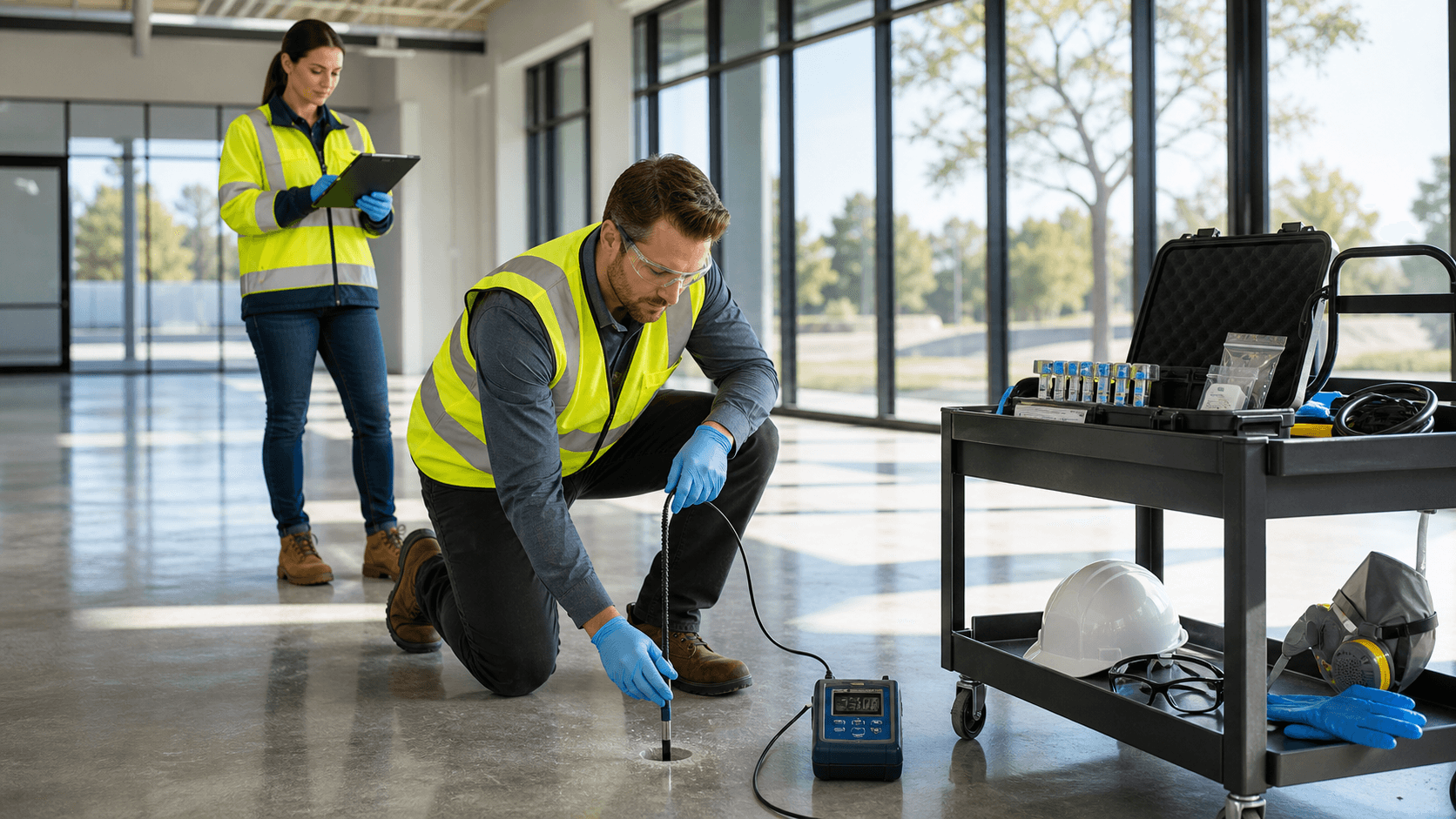
- Use calibrated instruments with current calibration records
- Allow proper equilibration times for in-slab probes and test sites
- Keep site conditions stable during testing
There is a big difference between quick surface tests and in-slab RH tests. Surface tests, like simple moisture meters, only read the top of the slab. They can be useful for general checks, but most modern warranties lean on ASTM F2170 in-situ RH testing because it measures deeper in the concrete where moisture actually lives.
Timing plays a huge role. If testing is done before the HVAC is running or before indoor conditions are close to how the space will be used, the readings can be misleading. The slab may appear "dry enough" under open-air conditions, but once the building is closed up, moisture can move upward and cause flooring problems that the warranty may not cover.
When moisture readings are near the manufacturer's limits, it can lead to tension between the general contractor, flooring installer, and manufacturer. Professional, independent testing gives everyone a shared set of facts. That makes it easier to decide if the slab is ready, if more drying time is needed, or if a moisture mitigation system should be considered to help support warranty protection.
Documentation Warranties Expect to See
Even when the tests are done correctly, a manufacturer can still push back if the paperwork is weak. Good testing without good documentation can feel like it never happened at all.
A strong moisture test report for warranty support should include:
- Project information and contact details
- Exact slab locations and test layout
- Test methods and ASTM standards used
- Instruments and probes used, with serial numbers
- Calibration dates for all relevant equipment
- Test depths for in-slab RH probes
- Dates and timestamps for each reading
- Ambient temperature and RH during testing
- Surface conditions and pH results
When this information is clear and organized, it protects everyone involved. The owner has proof that the slab was tested correctly. The installer can show that they followed industry standards. The specifier or architect can confirm that the design intent was respected. If a warranty claim ever happens, there is a clean trail of facts instead of guesswork and blame.
Independent testers who focus on ASTM-compliant work structure their reports around these expectations. That structure helps align with what manufacturers look for, so the testing record can support a claim even years later if something goes wrong.
Seasonal Timing for Spring and Summer Installations in Orange County
Late spring is when many flooring projects in Orange County move from planning to action. Schools try to squeeze work into break periods, offices push to finish updates before busy seasons, and many multifamily properties work around resident schedules. Floors are often one of the last major pieces, which means the clock is ticking when it is time to test the slab.
Warmer months can affect how slabs dry. Longer daylight hours, changing ambient humidity, and busy construction schedules all play a part. When trades are in and out of the building, doors are open, and fans are running, the testing conditions might not match how the space will feel once it is occupied and the HVAC is running on a normal cycle.
To lower the risk of delays and surprise moisture problems, it helps to:
- Plan testing early in the project, before final flooring is ordered
- Coordinate testing around key milestones, like HVAC startup
- Allow time in the schedule for retesting if the first results are borderline
- Discuss moisture expectations with the flooring team before installation dates are locked in
On fast-track projects, one set of tests may not be enough. Planning for multiple test checkpoints as the slab dries can keep everyone ahead of potential moisture issues. If the numbers are not where they need to be, the team has time to adjust plans, instead of finding out at the last minute that the floor is not ready for installation.
Protecting Your Investment with Independent Testing
Proper flooring warranty moisture testing is one of the strongest tools you have to protect your floors and your budget. It helps prevent failures, reduces finger-pointing, and keeps warranties in a better position to support you if something does go wrong.
When owners, facility managers, and contractors in Orange County treat ASTM-compliant RH, moisture, and pH testing as a standard step, every project benefits. With clear test methods, stable conditions, and detailed reports, flooring systems are more likely to perform as promised and warranties are more likely to stand behind them. Over time, this kind of testing can become a normal, repeatable part of every build or renovation, keeping flooring warranties supported from the slab up.
Protect Your New Floors With Proven Moisture Testing
If you are planning a new installation or need to protect an existing surface, our flooring warranty moisture testing helps you document slab conditions before problems arise. At Concrete Moisture Testing Orange County, we provide clear, detailed reports that support warranty requirements and help you avoid costly disputes with manufacturers or installers. Reach out today to discuss your project, schedule testing, or request a quote through our contact page.