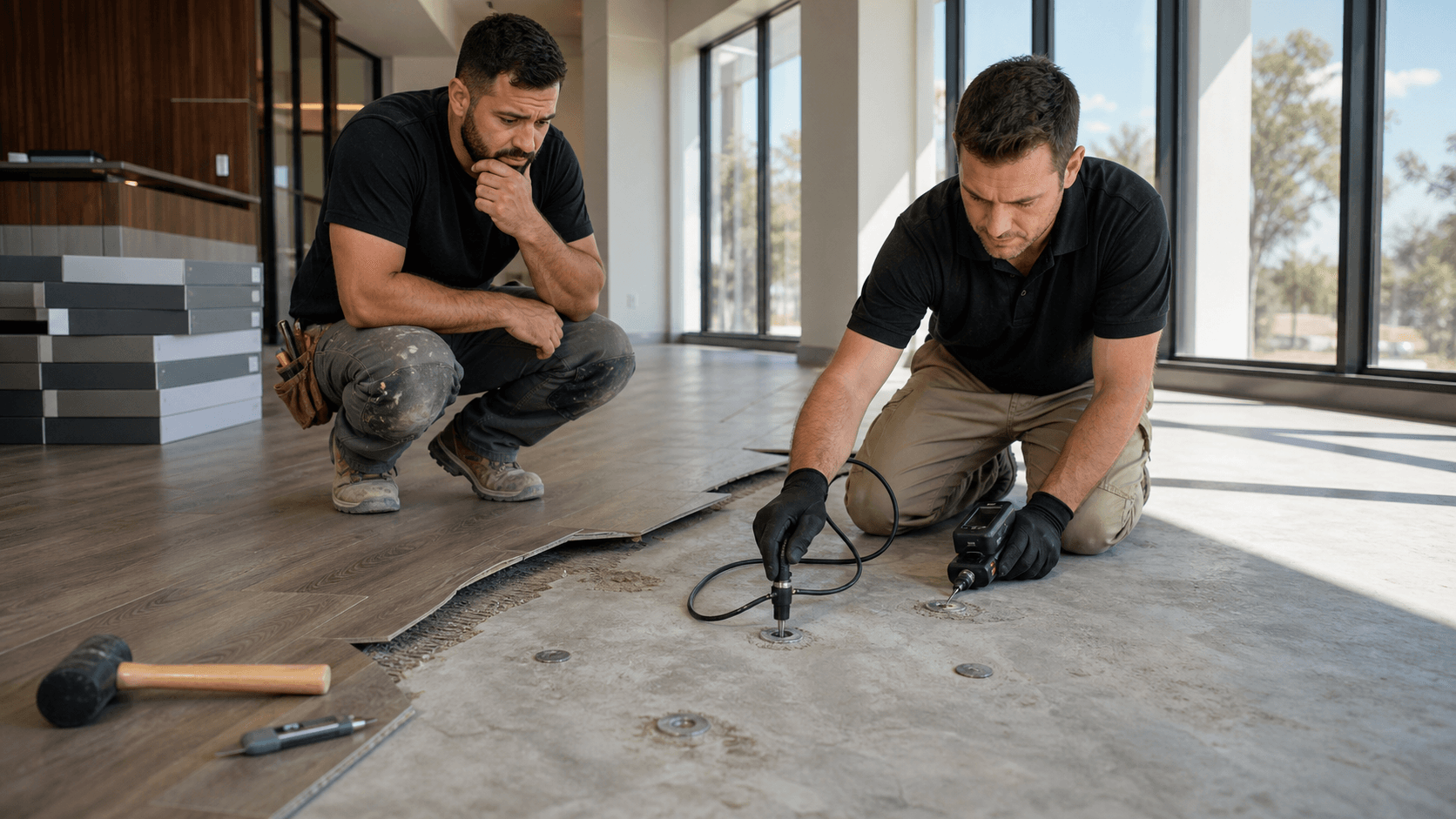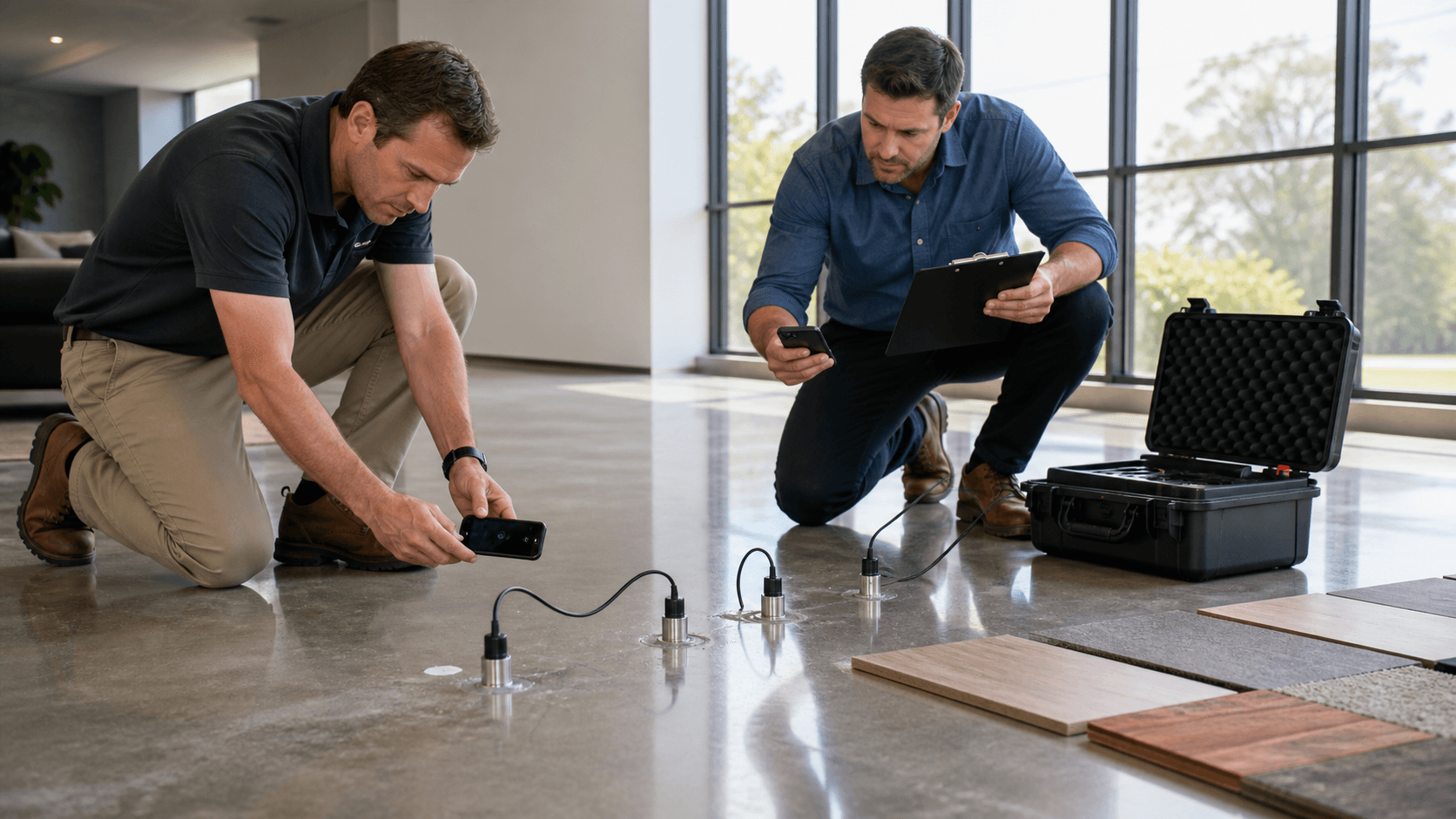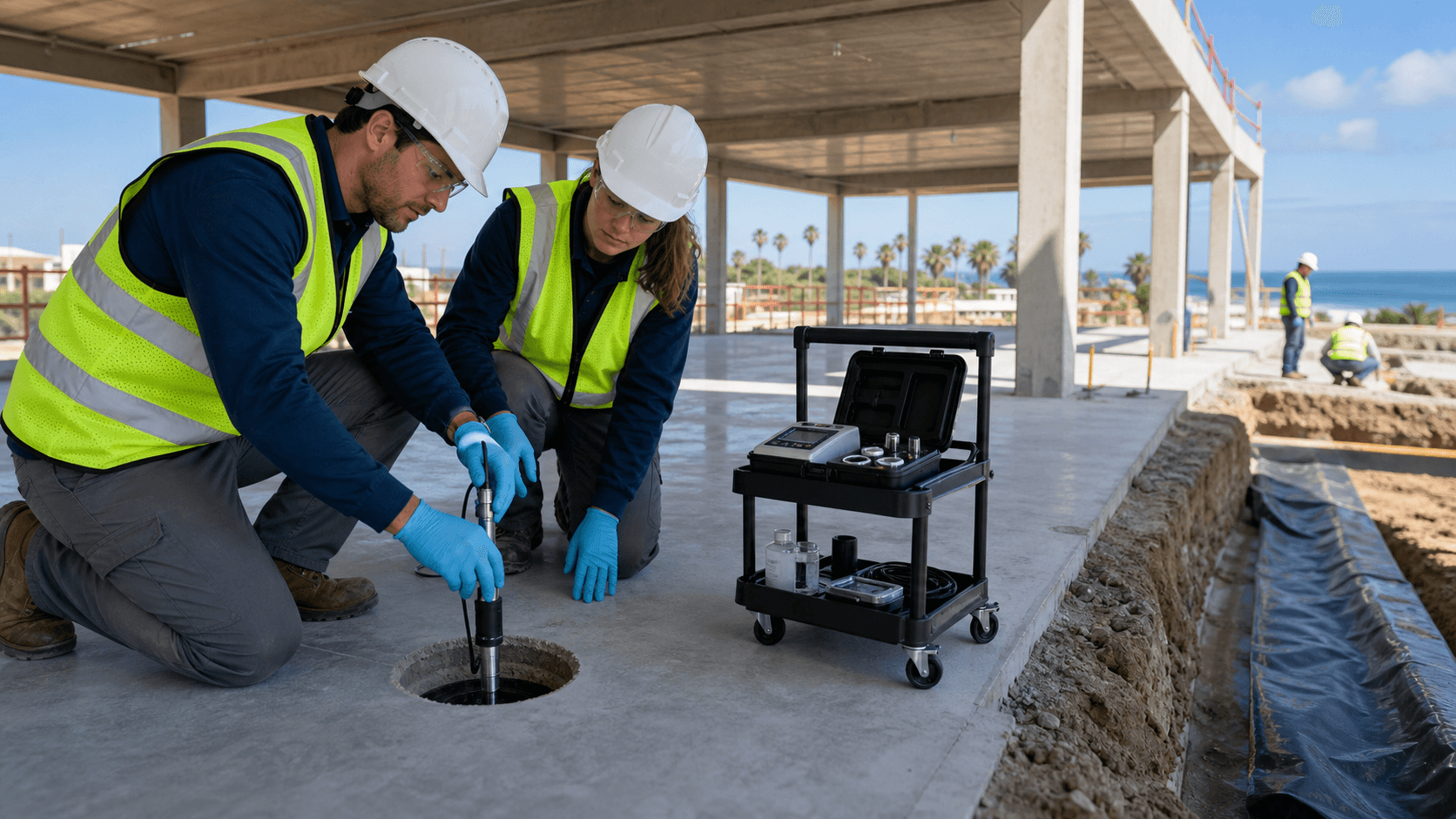
Concrete moisture testing in Tustin is not just a box to check before flooring. Moisture in a slab can break down adhesives, cup hardwood, bubble luxury vinyl, and stain grout joints, even when everything looked fine at install. The local conditions around the concrete are what really control how ready that slab is for the finish.
Here in Tustin, projects range from older slab homes to new commercial spaces and high-end custom builds. With that mix, guessing based on the age of the slab or rule-of-thumb drying-time estimates is risky. Local soil conditions, the way the slab was designed, and the ambient humidity in the building all affect in-slab relative humidity (RH) test results and when flooring can safely be installed.
Why Tustin Projects Need Local Moisture Insight
Concrete moisture testing checks how much moisture is moving through a slab and whether it is safe for the flooring system you plan to install. For commercial and high-end residential projects, proper testing protects you from adhesive failures, curling, and other moisture-related damage that can show up long after move-in day.
Tustin is a good example of why "generic" moisture rules do not work. You can have:
- Older buildings with unknown vapor barriers
- New developments over compacted fill
- Mixed-use spaces with different interior climate zones
All in the same few blocks. Each of these conditions can change how moisture behaves in the concrete, even if the pour date is the same.
Soil around the slab, design choices under and inside the concrete, and the humidity in the space all work together. That is why RH test results in one Tustin project may not match the timeline you expected from another. Independent, ASTM-compliant testing that focuses on what is actually happening in your specific slab is the safest way to move forward with confidence.
How Tustin Soil Conditions Influence Slab Moisture
Under every slab in Tustin, the soil is quietly controlling moisture. Some areas have heavier clay, some sit on compacted fill, and others sit closer to groundwater influence. These differences matter more than many people think.
Clay-heavy or dense soils drain slowly. When water from irrigation, rain, or nearby planters soaks in, it tends to stay there. That stored moisture can move upward into the slab through capillary action, keeping in-slab RH higher than you would expect just based on concrete age.
Soil and site details that can keep a slab damp include:
- Poor drainage away from foundations
- Lush lawns or planter beds tight to exterior walls
- Constant irrigation from sprinklers or drip lines
- HOA-maintained greenbelts running along slab edges
Even new concrete can read too wet for flooring when the soil below holds water. Over time, that moisture works its way up and keeps RH levels elevated, especially near edges, joints, and low spots.
Because of this, site-specific evaluation is far more reliable than relying on a chart or rule-of-thumb drying schedule. Testing beneath critical flooring areas, especially in spots close to landscaping or water sources, gives a more accurate picture of real moisture risk before you approve any floor install.
Slab Design Choices That Change RH Test Outcomes
The way a slab is built in Tustin can change moisture readings just as much as the soil below it. Typical slab-on-grade construction here might include a vapor retarder, but it is not always present, continuous, or intact.
Missing, thin, or damaged vapor retarders allow ground moisture to keep feeding into the slab. Cold joints, saw cuts, and areas cut out and patched for plumbing or electrical can act as hidden moisture pathways. On the surface, everything may look dry, but a few inches down the story can be very different.
Mix design and finishing practices add another twist. Higher water-cement ratios, curing compounds, and troweled, tight surfaces can all create a moisture gradient in the slab. The top may seem ready, but deeper in the concrete, the RH can still be high enough to cause flooring problems later.
This is why ASTM F2170 in-slab RH testing is so important. By placing probes at the proper depth, testing shows how those design choices and site conditions are actually affecting moisture inside the concrete, not just on the surface. That deeper look is key before signing off on flooring installation.
Tustin Seasonal Humidity Swings and RH Results
Tustin summers bring warm days and periods of dry air, but we also get humidity spikes that can surprise you. Concrete responds to these changes, and so do RH test results. Ambient temperature and humidity in the space affect how moisture moves within the slab and how the flooring system will perform.
During build-out, many commercial and tenant improvement spaces do not yet have HVAC running. In some luxury homes, air systems are turned off between trades. That means the slab is "living" in a very different climate than it will see once the building is occupied.
This creates two problems:
- RH readings taken without stable HVAC may not match long-term conditions
- A slab that tested "ready" can drift out of range once the interior climate changes
ASTM methods call for controlling and stabilizing ambient conditions before testing. Getting the HVAC running, holding a steady temperature and humidity for a period of time, then testing gives readings that match real-world use.
Timing tips that help in Tustin include testing after HVAC start-up, allowing the space to stabilize, and re-testing if long delays leave the slab exposed to open air or shifting jobsite conditions. That small step can prevent big headaches with sensitive finishes later.
Moisture Testing Strategies for Commercial and Luxury Homes
Different Tustin projects need different testing strategies. A retail center has other concerns than a medical office or a high-end home with wide-plank hardwood.
In many cases, we see a mix of flooring types in one building. For example:
- Luxury vinyl plank or tile in high-traffic areas
- Carpet tile in offices or classrooms
- Large-format tile in lobbies or entries
- Engineered wood or specialty finishes in executive or living spaces
Each flooring manufacturer has its own moisture and pH limits. Some call for both RH and MVER (ASTM F1869) tests, along with surface pH checks. Wet areas, like entries and spaces near restrooms or break rooms, usually deserve extra attention.
A smart testing plan can be phased:
- Baseline RH and MVER tests once the slab has had an initial drying period
- Follow-up verification before flooring install, especially after HVAC stabilization
- Clear documentation to share with architects, general contractors, and flooring installers
Having independent, third-party results helps everyone make decisions based on real data, rather than pressure to keep the schedule moving.
Turning Tustin Moisture Data Into Confident Flooring Installs
When you understand how Tustin soils, slab design details, and local humidity patterns affect concrete, RH numbers stop being random. They become clear go/no-go guidance for flooring. Instead of guessing, you know which areas are ready, which need mitigation, and which should wait.
Builders, property managers, and homeowners who take concrete moisture testing in Tustin seriously tend to see fewer callbacks, fewer flooring failures, and longer life from their finishes. Checking the slab with ASTM-compliant testing before committing to install dates or high-end flooring selections is a small step that protects a large investment across Tustin and the wider Orange County area.
Get Started With Your Project Today
If you are planning a new floor installation or troubleshooting an existing slab, our team at Concrete Moisture Testing Orange County is ready to help you make informed decisions. Schedule professional concrete moisture testing in Tustin so you can avoid costly failures and keep your project on track. We will walk you through the results, explain what they mean for your flooring system, and recommend next steps. To request an appointment or ask questions about your specific project, simply contact us today.