Turn Testing Chaos Into Schedule Recovery
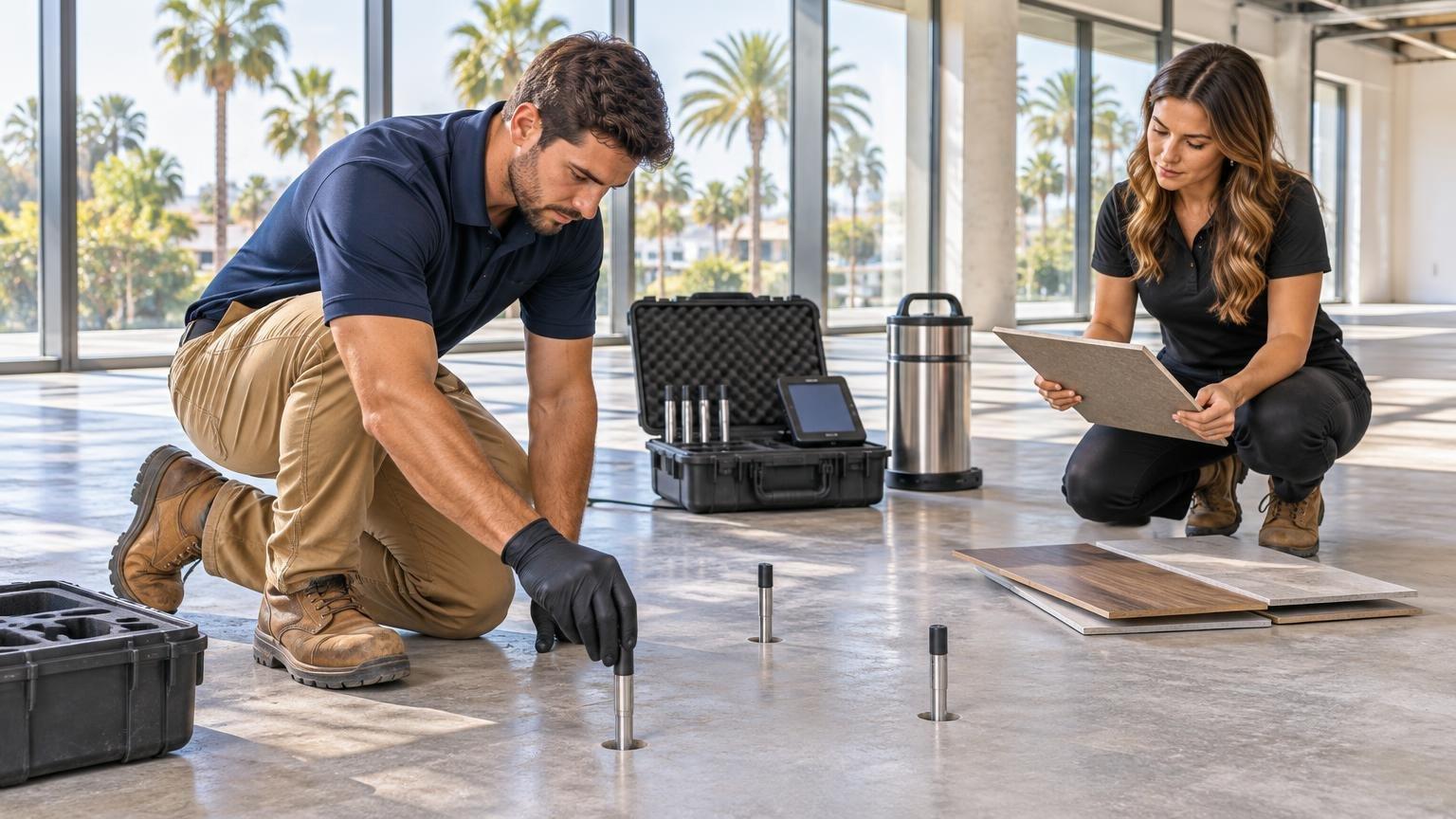
Emergency concrete moisture testing can be the difference between turning over a floor on time and blowing the whole project schedule. When flooring fails, everyone feels it, from the general contractor to the owner to every trade stacked up behind flooring. Tight deadlines around year-end, tenant move-ins, and holiday retail openings make the pressure even higher in Orange County.
An emergency can look like flooring curling up overnight, adhesives not curing, surprise high RH readings that stall an install, or a last-minute change in flooring type that needs new data. Sometimes an owner moves up a grand opening date or a hotel wants rooms online before a big event. The slab does not care about those dates, but your schedule does.
In this playbook, we walk through how to control what you can control. We focus on fast access coordination, safety and permits under pressure, smart test location choices when work is active, locked-down chain-of-custody, and same-day reporting that helps you recover your schedule instead of losing more days to guesswork.
Fast Access Coordination on Live Job Sites
On emergency projects, access is usually the first barrier. If you wait until everyone is on site to figure out who can say yes, you lose hours you do not have.
Before you ever need emergency concrete moisture testing, it helps to know:
- Who the decision-makers are, such as the GC project manager, superintendent, facility manager, security, and building engineer
- Which communication channels work fastest, like text, project platforms, or after-hours cell numbers
- Who can authorize coring or drilling, duct taping, and short-term disruption of other trades
For many projects in Orange County, night and weekend work is normal, especially in hotels, office towers, and busy retail centers. Emergency testing often fits best:
- After business hours in occupied buildings
- Between housekeeping rounds in hospitality spaces
- During quiet times in medical or corporate spaces
We plan routes so technicians and equipment avoid guest corridors, private offices, and sensitive suites. Staging areas, elevator use, and parking should be set before arrival so crews can get in, test, and get out without delays.
To line up logistics with emergency testing, we focus on the critical path first. That usually means:
- Lobbies, major corridors, and main sales floors
- Any area blocking other trades from finishing their work
- Spaces tied to turnover dates or lease agreements
A simple check-in and checkout routine helps too. Document who met us on site, what areas were open, and any access limits. Confirming access windows and limits in writing protects the project team and supports discussions with owners or insurers if questions come up later.
Safety, Permits, and Compliance Under Pressure
In an emergency, it is tempting to rush straight to drilling. That is when people get hurt or building rules get broken. We slow down just enough to stay safe and compliant, even when the schedule is tight.
Before arriving, we review the project safety plan and any building rules we are given. That includes:
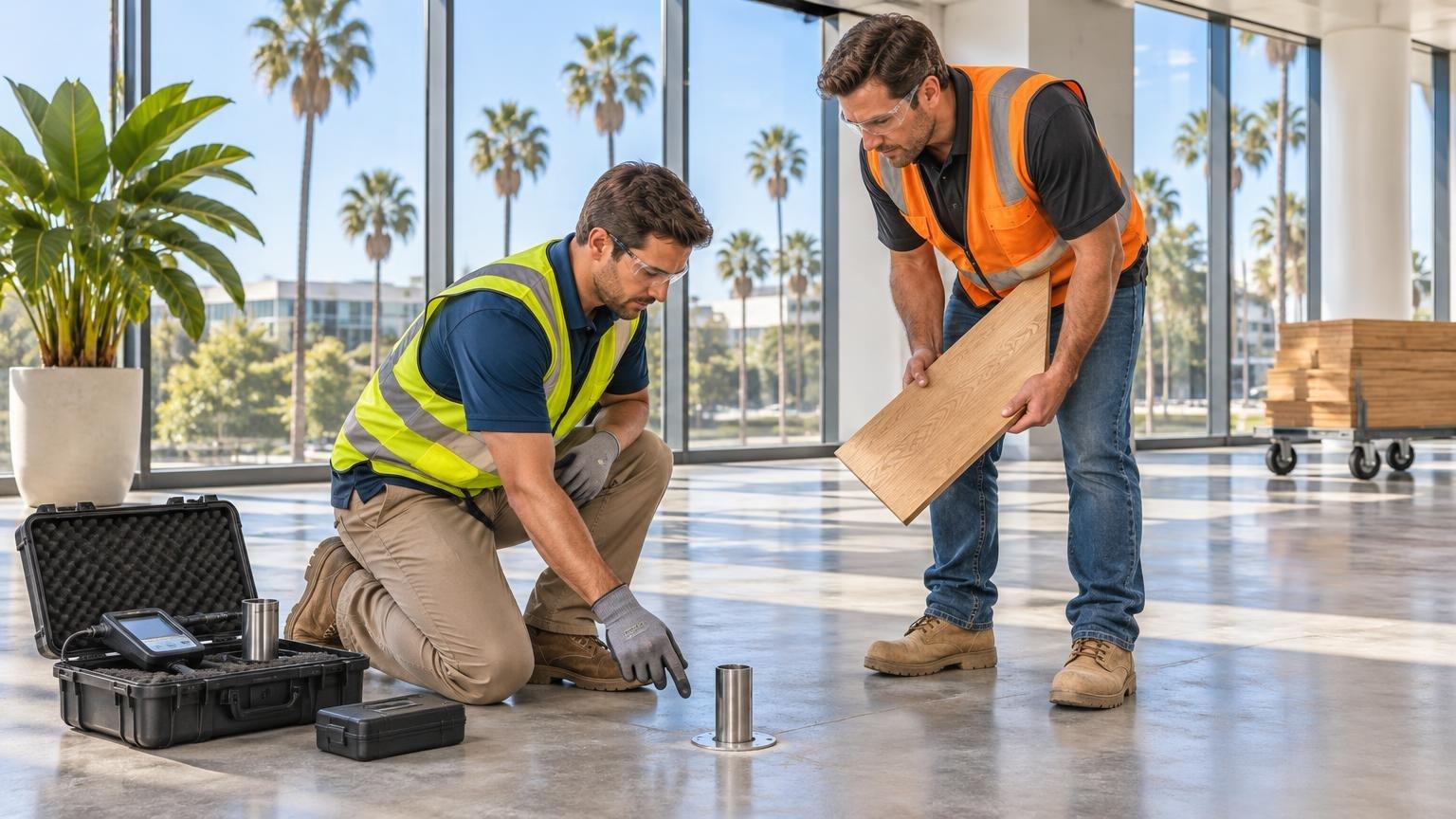
- PPE rules like vests, hard hats, glasses, and safety shoes
- Required site orientations or sign-in procedures
- Any current high-risk work near our test zones
On the floor, we think about trip hazards from test holes, cables, and meters. Each test area should be marked and protected so no one steps into a hole, drags a cord, or damages an exposed sensor. Coordination with trades doing demolition, grinding, or heavy equipment work is important so our tests are not damaged and their work is not slowed.
Existing buildings can add permits or owner rules. Depending on the space, there may be:
- After-hours clearances from property management
- Hot work or special activity permits, even when actual heat is not involved
- Noise or vibration limits near hospitals, labs, or luxury residences
We respect local codes and follow ASTM methods for RH and pH testing even when time is short. That includes proper drilling depth, conditioning periods, and correct handling of pH solutions and tools.
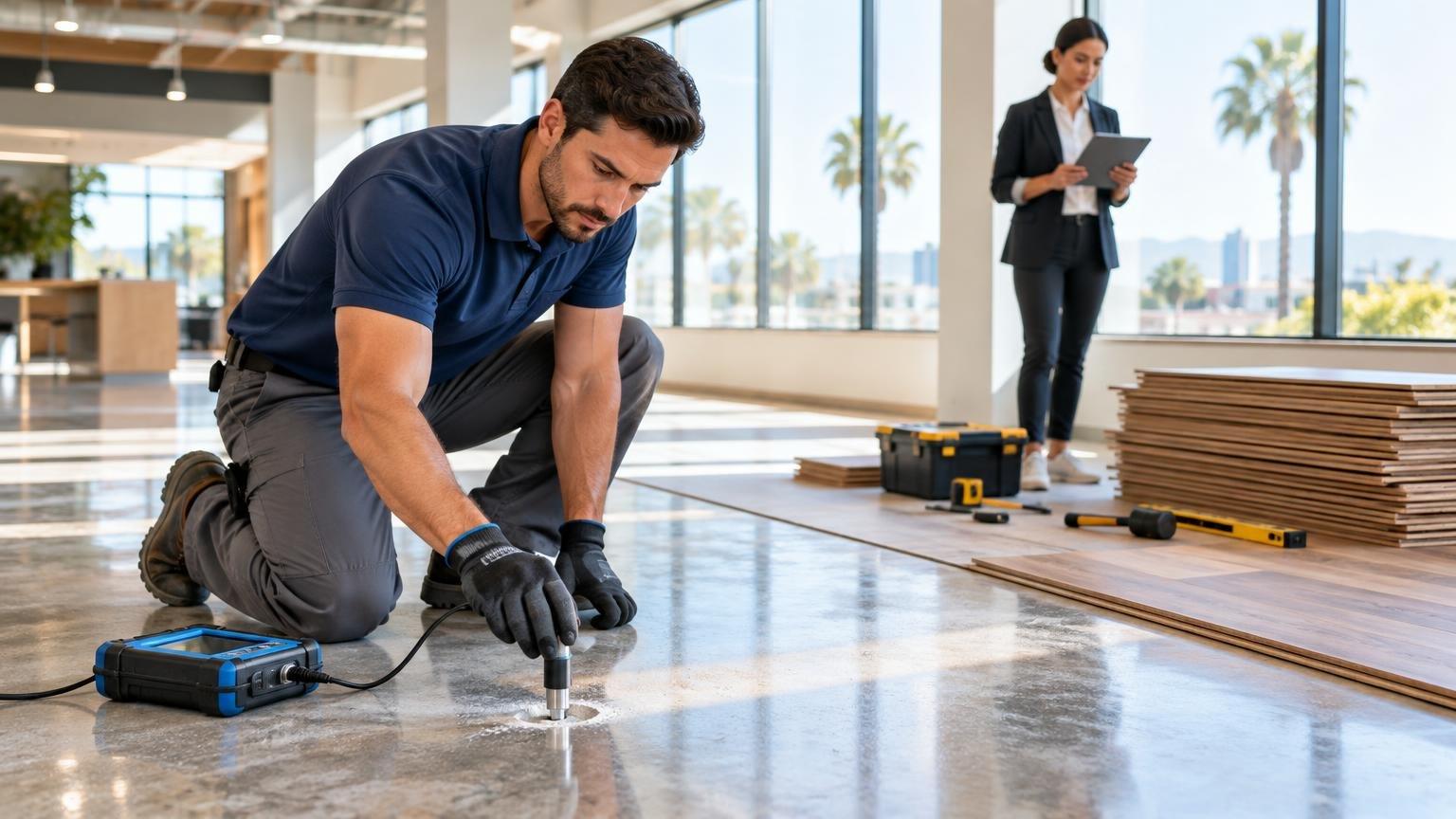
We also protect what is already finished. That means using containment and vacuums around coring or drilling, watching for under-slab systems, and keeping dust away from nearby finishes and MEP gear. Communicating with building staff about alarms, clean-up plans, and putting things back in place is part of a solid emergency record. Every approval, condition note, and safety step becomes part of that record.
Smart Test Location Selection in Active Work Areas
Emergency testing still has to stand up to review later. Random holes with no plan can cause more trouble than they solve. We balance ASTM guidelines with what is actually happening in the field.
ASTM standards give a baseline for test counts and locations for slab-on-grade and elevated decks. Large open areas may call for a minimum number of tests per square footage, spread out to represent the whole slab. When parts of the space are built out, stocked with materials, or under temporary protection, we adjust, but we keep traceability.
We prioritize:
- Areas with known moisture history or past flooring issues
- Spaces with moisture-sensitive finishes like wood, luxury vinyl, or specialty healthcare floors
- Perimeters, below-grade spaces, and transitions where conditions often change
Active trades can make access tricky. To work around that, we coordinate with:
- Flooring installers to clear small zones for clean, exposed tests
- Painters or millwork crews so we are not cutting into fresh finishes
- Site staff to temporarily lift protection boards or coverings where needed
Curing compounds, sealers, and protective layers are handled carefully so the test still reflects actual slab conditions. Detailed floor plans, grid lines, and digital photos tie each test back to a clear location. That way, when someone looks at a report weeks later, they can point to a spot on the floor and say, "That reading came from here."
Chain-of-Custody and Same-Day Reporting for Emergencies
In a moisture emergency, decisions move fast, and that means the data behind those decisions must be solid. A clear chain-of-custody gives everyone confidence that what they see in the report is exactly what was recorded in the field.
From the start, we document:
- Who requested the emergency concrete moisture testing
- When it was requested and which spaces or change orders it covers
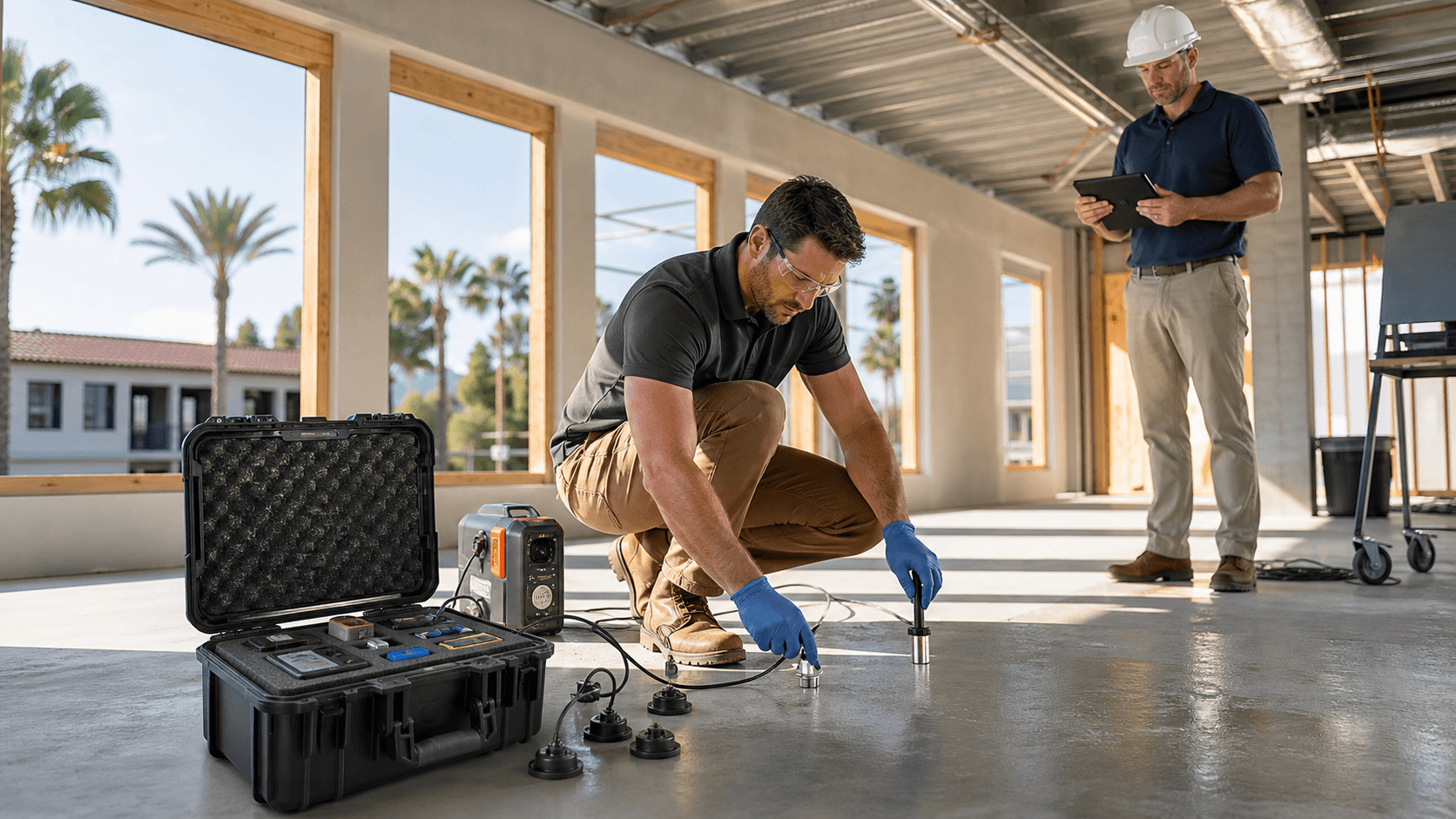
- Each test method used, including in-situ RH, calcium chloride, and pH
For each test, we log the location, depth, time of installation, and time of reading. Field notes, photos, and labeled layouts show an unbroken path from drill to final report. Digital records back up written ones so nothing is lost.
Schedule recovery often depends on same-day insight. With a streamlined workflow, we can capture, verify, and organize readings quickly. Sometimes that looks like:
- A same-day summary highlighting key RH and pH findings in critical areas
- A follow-up, fully reviewed report after all readings stabilize and quality checks are complete
Results are presented in a way that project teams can use right away, not in a format that needs decoding. GCs and flooring contractors need a simple go or no-go view, plus clear notes on where mitigation might be required.
Sharing findings with the full decision group helps avoid mixed messages. That group often includes the GC, owner representative, flooring contractor, and any consultant involved. We connect measured values to manufacturer guidelines so people see the risk level, not just raw numbers. With that context, teams can choose whether to proceed, add mitigation, or adjust the schedule with intention instead of guesswork.
Turn Moisture Emergencies Into Manageable Events
Concrete moisture surprises will always be part of construction, especially on fast-track and end-of-year projects where floor coverings are pushed late in the schedule. What does not have to happen is chaos.
With clear access planning, respect for safety and permits, smart test placement under active work, strong chain-of-custody, and same-day reporting where possible, an emergency can become a controlled, documented process. Schedules may still shift, but decisions are based on real data, not hope.
For Orange County project teams that handle commercial and high-end residential work, it helps to treat emergency concrete moisture testing as part of your playbook, not a last-minute scramble. Pre-planning contacts, understanding building rules, and knowing how data will flow to your decision makers can save days when it counts the most.
Protect Your Project Timeline With Rapid, Accurate Moisture Testing
When flooring failures or unexpected moisture issues threaten your schedule, we respond quickly with precise, reliable results. Our emergency concrete moisture testing services help you make smart decisions before costly damage or delays occur. At Concrete Moisture Testing Orange County, we bring specialized expertise and professional reporting to every job so your team can move forward with confidence. Ready to get help right away? Contact us today to schedule testing.