Concrete moisture that you cannot see can quietly ruin beautiful floors. It causes buckling, bubbles, discoloration, and glue failure, then turns into finger-pointing between owners, installers, and manufacturers. This is a big issue in commercial and high-end homes across Santa Ana and the rest of Orange County, especially on busy summer projects.
In this article, we share how hidden moisture becomes a liability problem, why shortcuts are risky, how Santa Ana conditions hide trouble inside the slab, and how proper ASTM testing protects everyone involved. If you manage properties, run projects, design spaces, or own high-end homes, this is about protecting your floors, your warranties, and your reputation.
Hidden Liabilities Lurking Under Santa Ana Floors
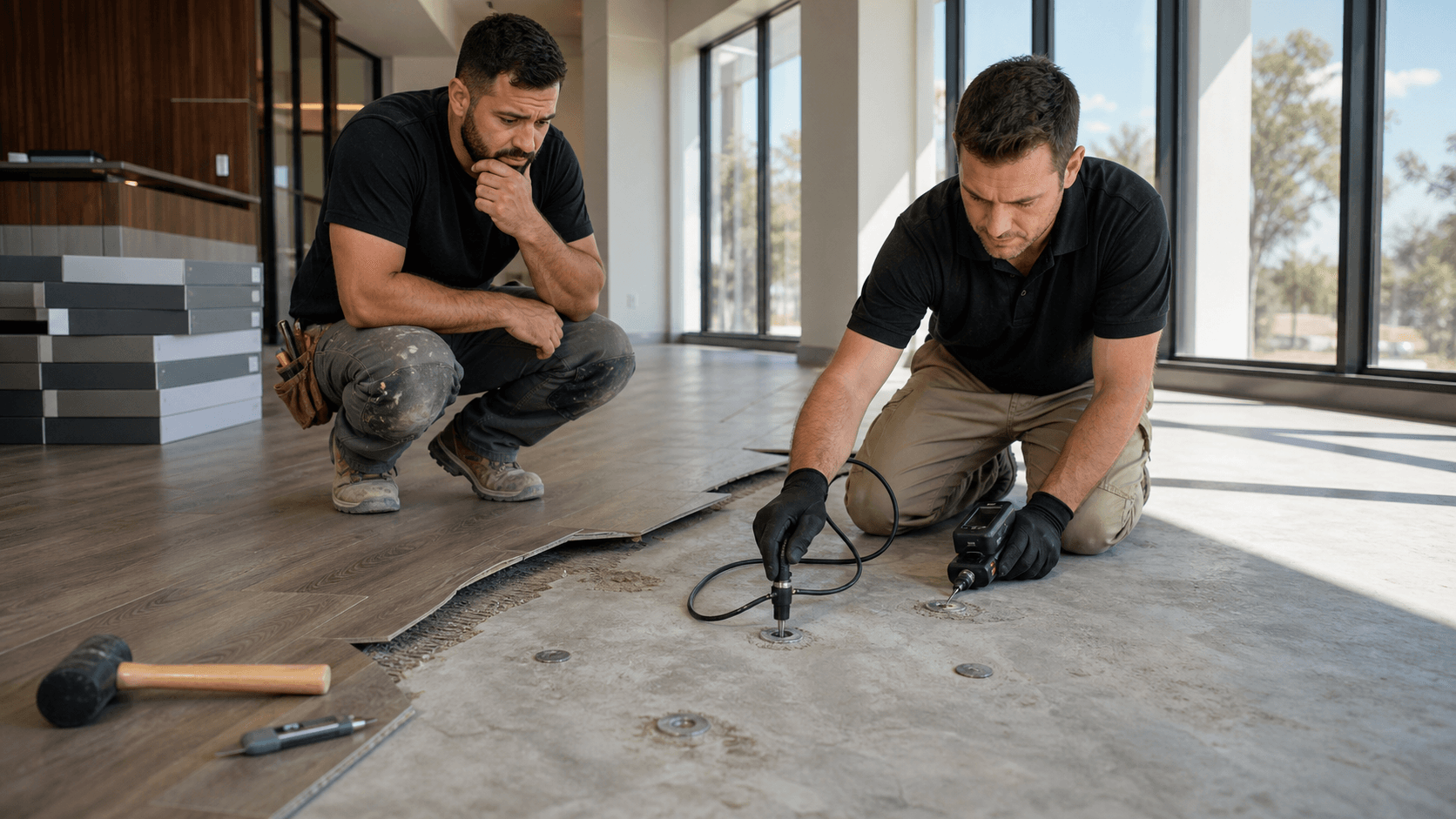
Many local projects have had a similar story. A space gets a premium floor: nice vinyl, wood, or tile over concrete. Everything looks perfect on day one. Within months, the floor cups, peels, or smells musty. The installer points to moisture. The manufacturer points to testing. The owner is stuck in the middle.
The problem usually started long before the first plank or tile went down. Concrete slabs hold moisture inside for a long time. On the surface, they can feel dry and look ready. Under the surface, the internal humidity can still be too high for many flooring systems and adhesives.
Concrete moisture testing in Santa Ana should be treated like risk management, not just a task on a checklist. It matters for:
- Property managers trying to avoid tenant complaints and disruption
- General contractors trying to close projects without callbacks
- Designers protecting their flooring specifications
- High-end homeowners protecting big flooring investments
Summer can make it more confusing. July heat, strong HVAC, and fans can dry out the surface fast. Tight schedules push everyone to move forward. The slab may seem ready, but the moisture that matters is deeper down where adhesives live and flooring breathes.
Why Moisture in Concrete Becomes a Legal Problem
Too much moisture is not only a performance problem. It often becomes a legal and warranty problem. When a floor fails, everyone starts looking for proof: what tests were done, who did them, and were they done by the book.
Most flooring manufacturers include clear rules in their installation and warranty guides. They usually require:
- ASTM-compliant concrete moisture tests before installation
- Written test results that meet their published limits
- Proper documentation that can be reviewed if there is a claim
If those tests were skipped, rushed, or done in a non-standard way, it can shift responsibility. The installer can be blamed for ignoring testing. The general contractor can be blamed for pushing the schedule. The owner can get stuck between both sides.
Common trouble points include:
- No written test reports at all, only "we checked it"
- Reports with missing information like locations, depths, or times
- Testing methods that are not ASTM recognized
When that happens, warranty coverage can be denied, and any claim starts on shaky ground. Having clear, ASTM-compliant data is often the difference between a manageable issue and a long dispute.
Common Testing Shortcuts That Expose You to Risk
On busy jobs, it is easy to lean on shortcuts that feel "good enough" in the moment but cause problems later. Some of the most common ones we see are:
- Judging by feel or appearance: "It feels dry" or "It looks light in color"
- Using only a handheld surface meter as the final decision
- Testing too early in the schedule, then never retesting before install
- Treating one or two readings as proof that the whole floor is safe
To understand why this is risky, it helps to know the three core measurements that matter:
- RH: In-slab relative humidity, measured inside the concrete at a set depth
- MVER: Moisture vapor emission rate, how much moisture leaves the surface over time
- pH: Surface alkalinity, which can attack adhesives and flooring systems
Different flooring products and adhesives have different limits for these values. Some care more about RH, some more about MVER, many care about all three.
Another hidden risk is letting a party with skin in the game control testing. When testing is done by the installer or a product rep, it can raise questions later. Owners, manufacturers, and attorneys often prefer data from an independent specialist who is not tied to the material sale or the install.
ASTM-compliant methods, such as ASTM F2170 for RH and ASTM F1869 for MVER, are widely recognized in the flooring world. When problems come up, these are the test types people look for first.
Santa Ana Climate Factors That Hide Moisture Problems
Santa Ana has a mix of coastal influence, warm temperatures, and changing humidity levels that can trick people into trusting the surface of the slab. A floor can feel cool and dry under your hand while the center of the concrete is still holding a lot of moisture.
Some local factors that can hide problems include:
- Long summer days and strong AC that dry the top of the slab quickly
- Tight build timelines where flooring goes in as soon as it "seems" ready
- Doors and windows left open early in construction, then closed once HVAC starts
Current building trends in the area make this even more important. Popular choices like polished concrete, luxury vinyl tile, large-format tile, and modern adhesives can be especially sensitive to both moisture and pH.
Certain locations in a building are more at risk, such as:
- Below-grade spaces and lower levels
- Podium decks and areas over parking or storage
- Slabs-on-grade near landscaping, planters, or irrigation lines
In these spots, concrete moisture testing in Santa Ana is not just a nice extra. It is one of the few ways to know what is happening inside the slab before flooring covers everything up.
How Independent ASTM Testing Protects Your Project
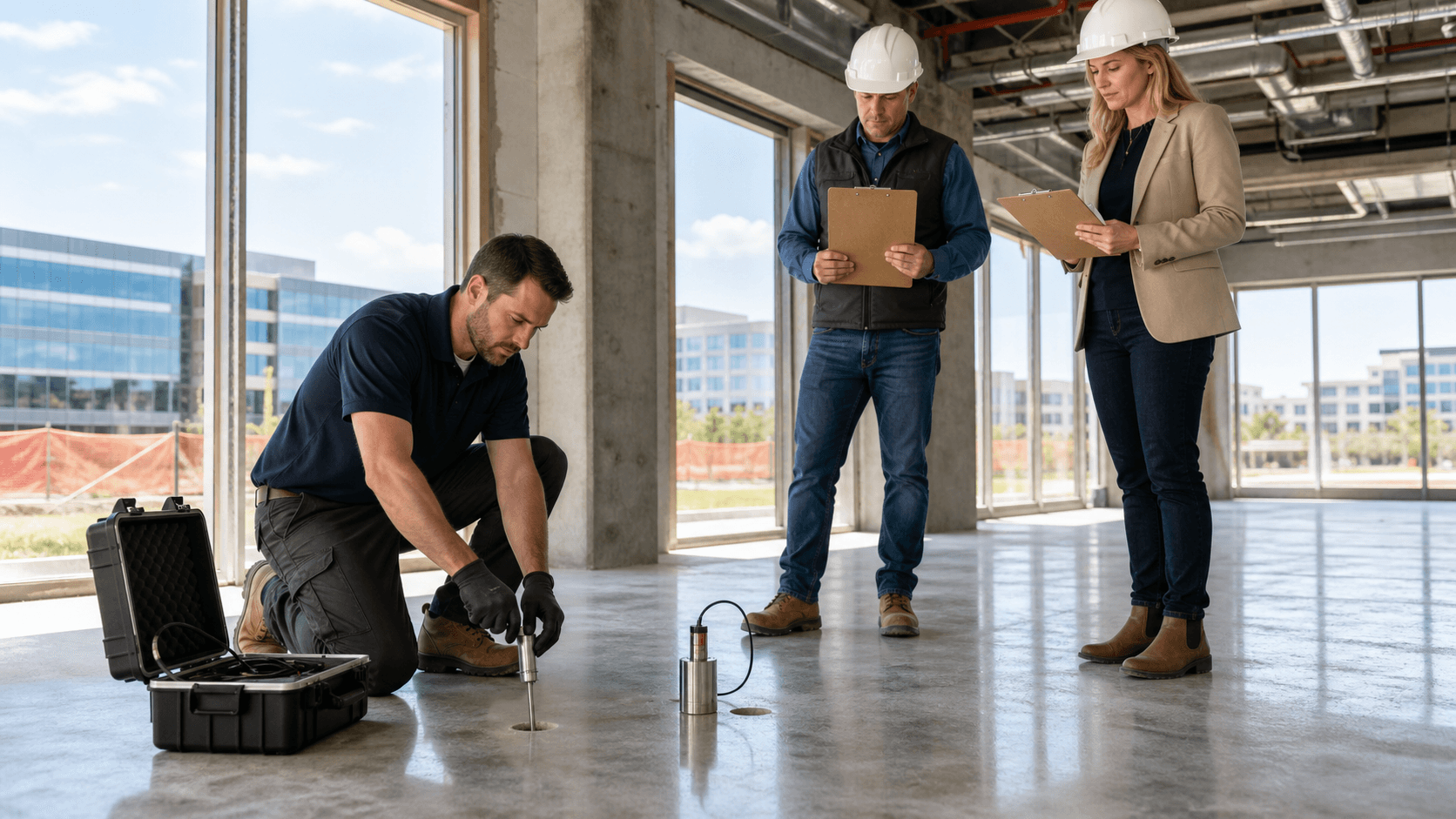
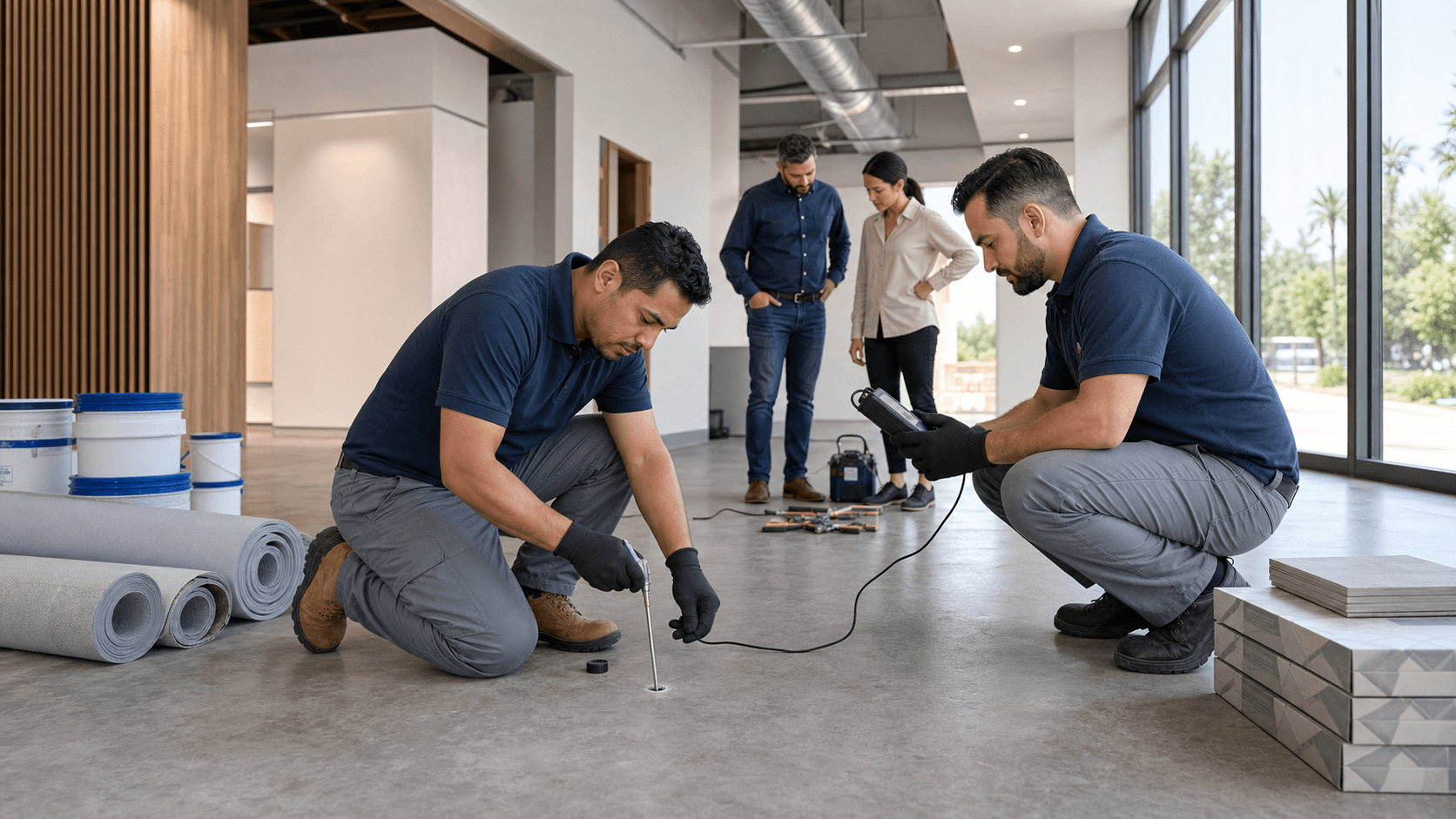
A proper, independent moisture testing program looks at the whole picture, not just a few quick readings. It typically includes:
- A review of plans, flooring types, and manufacturer requirements
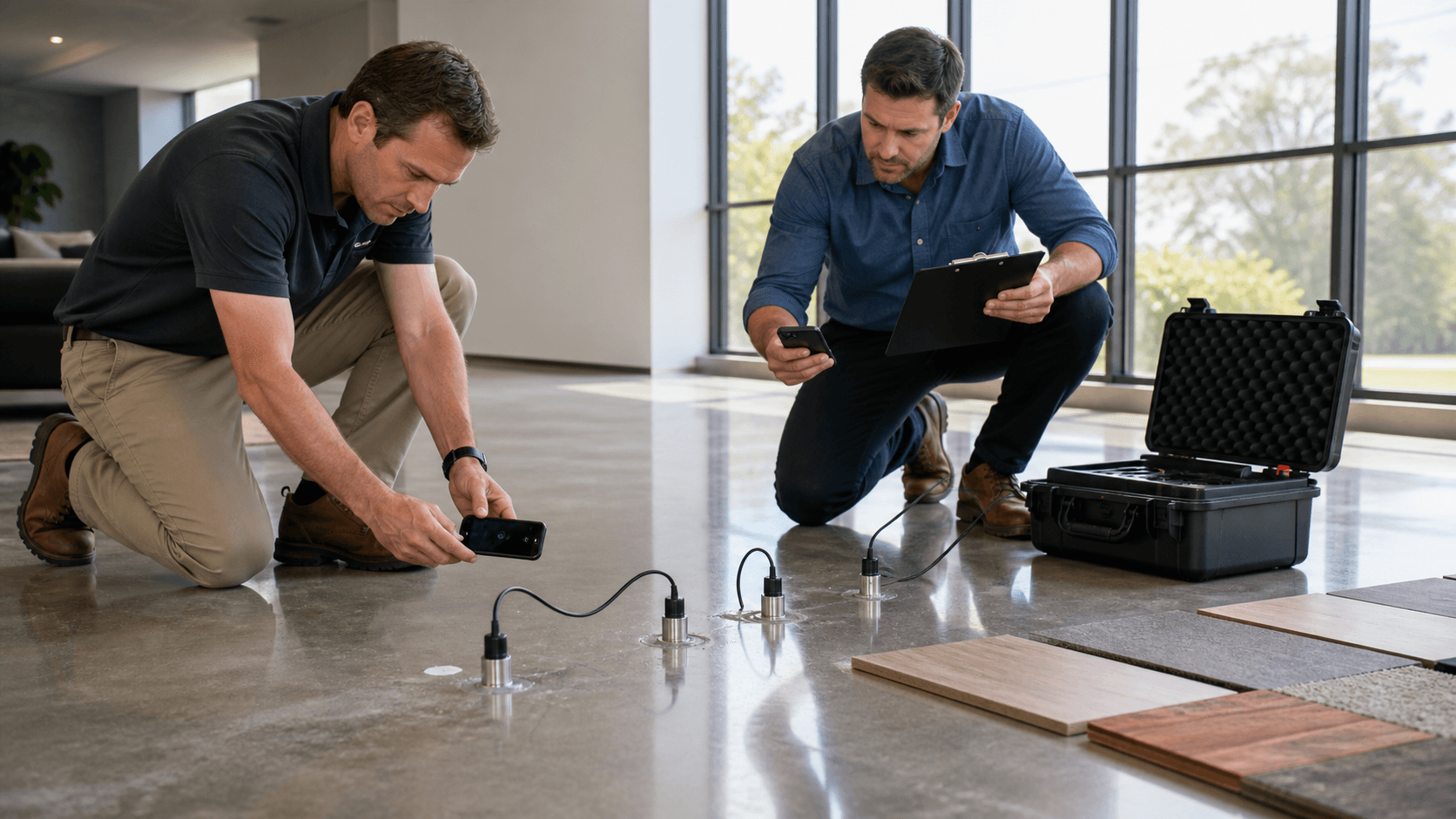
- RH sensors installed at the correct ASTM depth and spacing
- MVER testing where it is needed for the products being used
- Surface pH checks to see if conditions are friendly to adhesives
Thorough documentation is just as important as accurate readings. Good records usually include:
- Floor plans or maps that show every test location
- Photos of sensors, data, and site conditions
- Timestamped readings and clear notes
- A written report that links results to published limits
An independent specialist brings one key benefit: credibility. Their job is to measure and report, not to sell flooring or protect a single party. That makes the data easier to trust when there is any disagreement.
When testing is done early and repeated at smart points, it can even shape the project. Test results can guide choices about mix designs, vapor treatments, or schedule changes before flooring is ordered or installed. That often prevents bigger headaches later.
Steps to Eliminate Hidden Flooring Liability Now
If you are involved in projects in Santa Ana, there are simple steps you can build into your normal process to reduce risk:
- Plan for concrete moisture testing early, not at the last minute
- Require ASTM-compliant RH, MVER, and pH testing in your specs
- Ask for independent testing, not just installer notes
- Make sure all reports are complete, clear, and stored with project records
Property managers, GCs, designers, and high-end homeowners in Orange County are treating concrete moisture testing in Santa Ana as standard practice, especially during the busy summer build season. When testing is part of the standard checklist, it protects flooring investments, keeps relationships strong, and helps safeguard everyone's reputation.
At Concrete Moisture Testing Orange County, we focus on independent, ASTM-compliant RH, MVER, and pH testing for commercial and high-end residential projects. Our goal is simple: give you clear, reliable data so you can make smart decisions before the first plank or tile goes down.
Get Started With Your Project Today
Protecting your flooring investment starts with accurate moisture data from experienced professionals. At Concrete Moisture Testing Orange County, we provide precise concrete moisture testing in Santa Ana so you can move forward with confidence. If you are ready to schedule a test or have questions about your specific project conditions, simply contact us and we will help you plan the right next steps.