Stop Guessing Moisture Risk in Coastal Concrete
Concrete slabs near the Orange County coast can look dry on the surface while hiding moisture deep inside. When you are getting ready to install premium flooring, guessing on that hidden moisture is a fast way to end up with problems, blame, and lost time.
Concrete RH testing in Orange County is how we stop guessing. By measuring the relative humidity inside the slab, we can see the actual conditions that flooring and adhesives will face after installation. That gives everyone, from owners to flooring installers, a clear picture before big decisions are locked in.
In this article, we are going to walk through why coastal projects are higher risk, what RH testing really measures, how the testing process works on site, and how good data protects warranties and budgets on high-end coastal builds.
Why Coastal Orange County Slabs Trap More Moisture
Life near the ocean comes with marine air and regular humidity. Concrete feels that. Along the coast, moisture tends to linger in the slab longer than many people expect.
Some key coastal climate factors:
- Marine air and overnight fog slow drying inside the slab
- Higher ambient humidity limits how fast moisture can leave the concrete
- Cool mornings and cloud cover during June Gloom can make surfaces feel "fine" while the core is still wet
So a slab might look ready, but inside it is not there yet. Without testing, that hidden moisture stays invisible until flooring starts to fail.
Building design and slab conditions add to the problem:
- Tight building envelopes can lock humidity inside during construction
- Below-grade areas and podium decks often have limited airflow
- Vapor-retarding coverings and dense coatings trap moisture in the slab
We see it often in local projects like:
- Podium decks under luxury condos by the water
- Ground-level retail under residential in mixed-use buildings
- Polished or stained concrete floors in coastal homes
When slab moisture is ignored, the outcomes are not small annoyances. Common failures include:
- Curling or cupping hardwood
- Bubbles or raised seams in LVT and other resilient floors
- Adhesive breakdown and debonding
- Mold risk under impermeable flooring systems
On high-end Orange County properties, tearing out a failed floor is more than a cosmetic issue. It can trigger major disruption, schedule hits, and stress between owners, builders, and flooring trades.
What Concrete RH Testing Really Measures Inside the Slab
Many people have seen someone press a surface moisture meter to a slab and give a quick thumbs up or down. That tool has its place, but it does not tell the full story of long-term moisture inside the concrete.
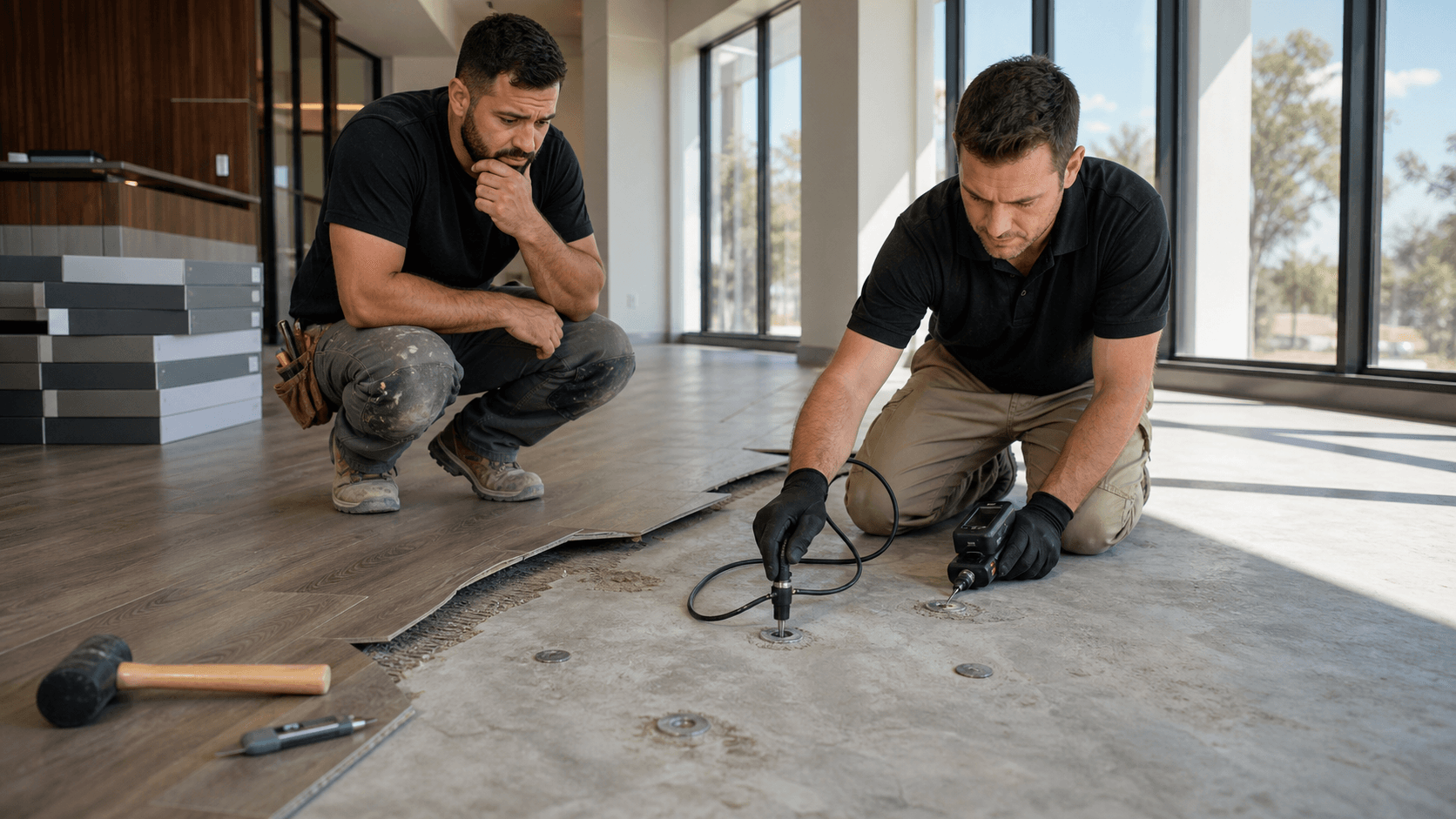
Concrete RH testing in Orange County focuses on what is going on inside the slab, not just at the surface. With in-slab probes, we measure relative humidity at a specific depth. That value is what flooring products will "feel" once a covering is installed and the system reaches balance.
Here is the key difference:
- Surface readings only show what is happening in the first thin layer
- In-situ RH per ASTM F2170 measures conditions where adhesives and flooring actually sit
ASTM F2170 is the standard that guides in-situ RH testing. It covers probe depth, hole preparation, equilibration time, and how readings are taken. Another older method, ASTM F1869, uses calcium chloride to measure moisture vapor emission from the surface. Many modern flooring warranties lean more on RH testing because it reflects in-slab conditions.
Proper RH testing is not just about owning sensors. The way holes are drilled, cleaned, and sealed, and how readings are recorded, all affect the accuracy of the results. That is why independent, ICRI-certified testing is so important for data you can rely on.
So what do RH numbers actually mean? In general:
- Many adhesives and LVT systems want readings below a certain RH, often in the 75%, 85% range
- Some products can allow higher numbers when paired with specific mitigation systems or primers
- Manufacturer-written limits always rule, and every product line is different
Accurate RH testing gives a clear pass-or-plan-ahead answer based on those published limits. No guessing, no "it feels dry."
Step-by-Step Look at RH Testing on Coastal Job Sites
On a real coastal project, RH testing is planned, not random. Before we touch a drill, we review:
- Slab age and thickness
- Location, like on-grade, podium deck, or elevated slab
- Vapor barrier details under the slab, if available
- Planned flooring and adhesive specs
From there, we map test locations. Larger commercial slabs usually need more tests, spaced out in a grid, with extra focus on:
- Areas near entries and roll-up doors
- Zones over damp soils or planters
- Below-grade spaces and podium edges
High-end homes may get fewer tests, but we still focus on high-risk zones like slab edges, areas near large glass doors, and rooms getting expensive finishes.
The field process looks like this:
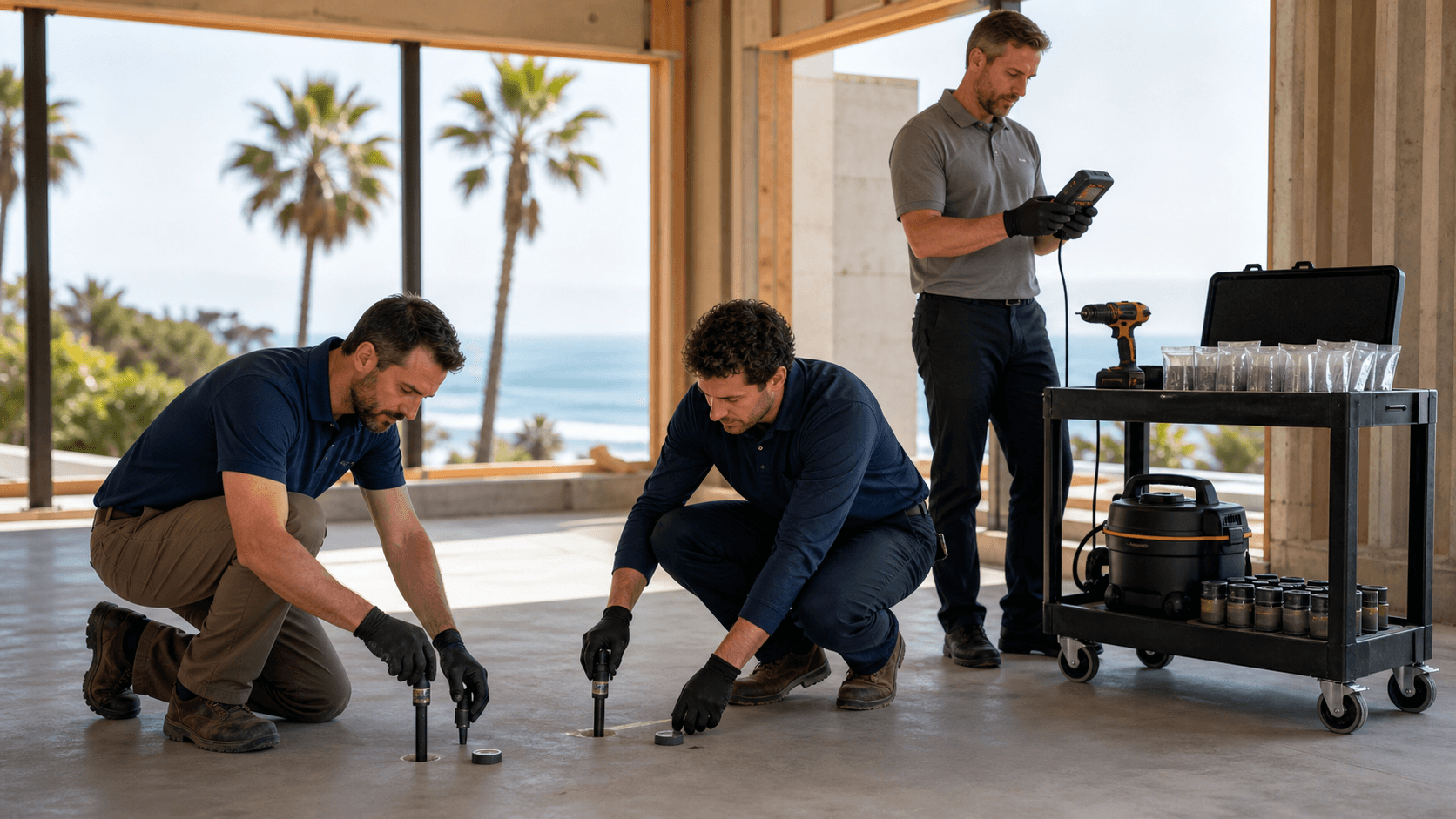
- Drill holes to 40 percent depth for on-grade and structural slabs
- Clean the holes so dust does not throw off readings
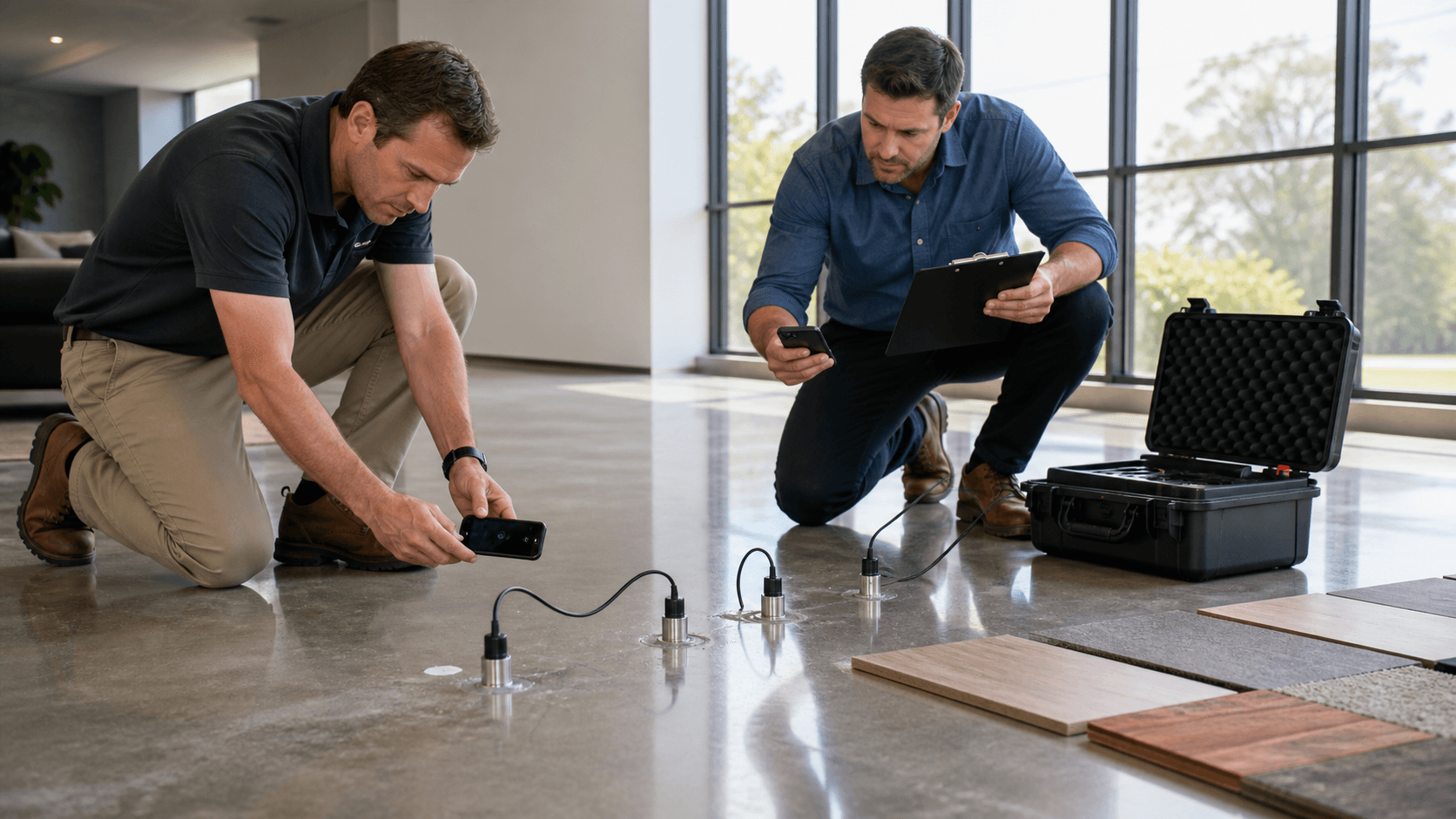
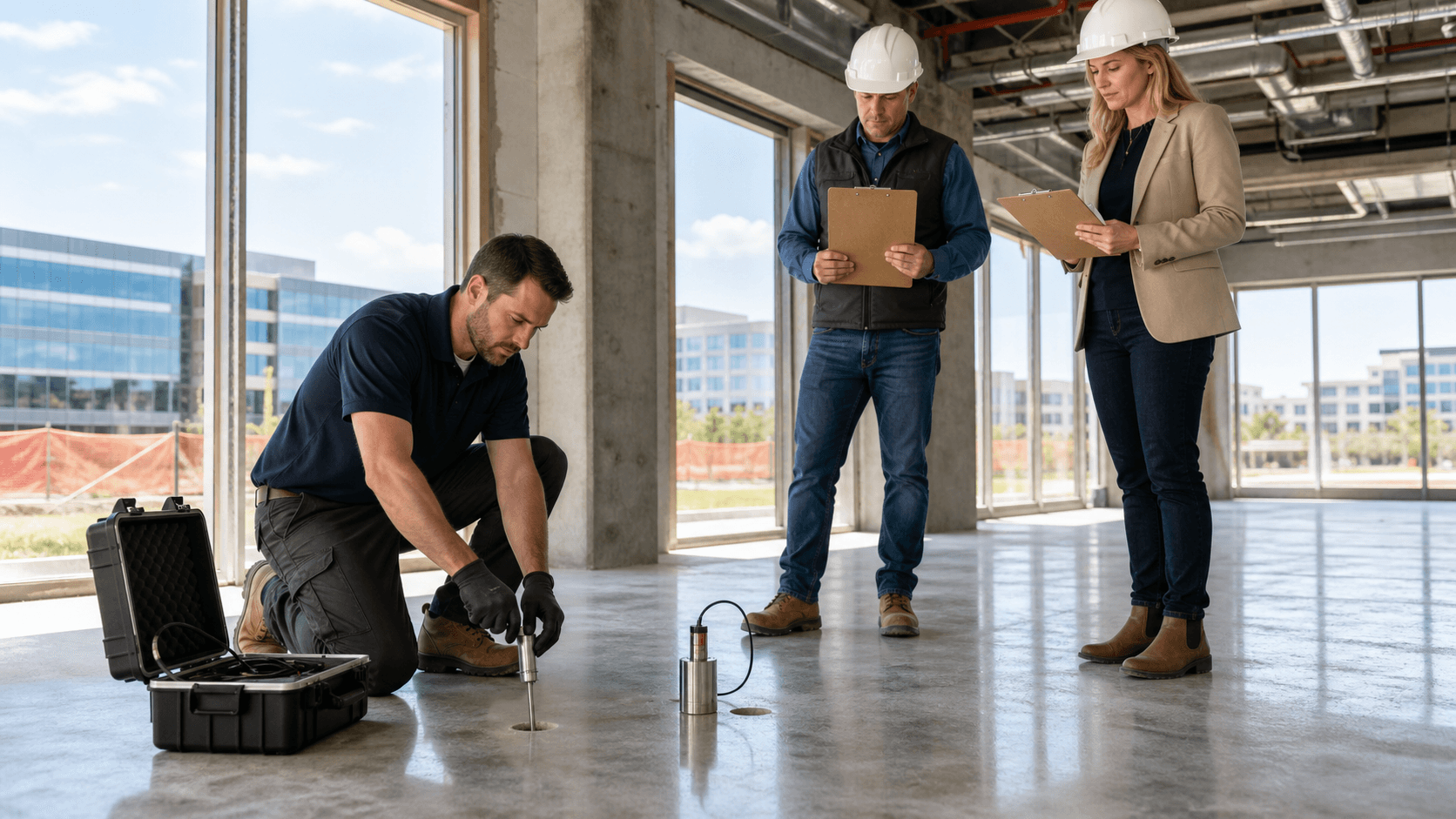
- Install sleeves, then place sensors or probes in the sleeves
- Allow required equilibration time so the air in the hole matches the surrounding concrete
Rushing this step gives readings that are not stable, which can make the slab look drier or wetter than it really is.
Once readings are stable, we log RH and temperature for each location. Those values are then compared directly to manufacturer limits for the planned flooring system.
Good documentation usually includes:
- A layout map of probe locations
- Individual RH and temperature readings
- Notes on site conditions and HVAC status
- Photos of probe locations and meter screens
Independent reporting matters here. Clear, unbiased data lets general contractors, owners, and flooring installers make decisions based on facts instead of opinions.
Protecting Flooring Warranties in Orange County Projects
Most premium flooring and adhesive manufacturers expect ASTM-compliant testing before they stand behind a warranty. Verbal comments like "it felt dry" will not help when a claim is filed.
That is why formal moisture and RH reports are so important. They:
- Show that required testing was done before install
- Attach actual RH numbers to specific areas and dates
- Provide a neutral record if questions come up later
Concrete RH testing in Orange County also helps with schedule planning. Drying takes time, especially in coastal air, and many projects are pushing for quick turnovers in summer.
Good planning builds testing into the schedule ahead of flooring install. If results show RH is still too high, there are choices:
- Allow more drying time
- Add controlled dehumidification
- Use mitigation systems that are approved by the flooring manufacturer
- Adjust product selections to match the real slab conditions
Without data, teams either take risky shortcuts or throw money at "just in case" solutions that may not be needed everywhere. Accurate RH results let you focus effort only where it is truly required, which keeps risk lower and projects moving.
How to Confidently Schedule RH Testing for Summer Coastal Projects
Summer is a busy time for Orange County builds and remodels, especially along the coast. Slabs might be poured in one season and then covered later once framing and rough work are wrapped up.
To time concrete RH testing in Orange County well, consider:
- The pour date and slab thickness
- When HVAC will be running in a steady pattern
- When flooring installation is targeted on the schedule
Testing too early, before the building is at normal service conditions, can paint an inaccurate picture. Coastal projects with open envelopes or delayed permanent HVAC may need special planning to get meaningful readings.
A reliable testing partner should provide:
- ICRI-certified technicians who know ASTM standards
- Clear recommendations on test counts and locations
- Field work that follows ASTM F2170 for RH testing
- Easy-to-read reports with RH maps, photos, and comparisons to manufacturer limits
For coastal commercial projects and high-end homes, adding professional RH testing to your standard spec turns moisture from a guessing game into a known factor. When owners, builders, and flooring contractors all share the same data, it is much easier to protect finishes, warranties, and the project budget.
Concrete Moisture Testing Orange County focuses on independent, ASTM-compliant concrete moisture, RH, and pH testing for commercial and high-end residential projects across the county. By bringing in unbiased RH testing early, you can walk into the next coastal slab install with far more confidence and far fewer surprises.
Protect Your Flooring Investment With Precise RH Testing
At Concrete Moisture Testing Orange County, we provide accurate concrete RH testing in Orange County so you can move forward with confidence on every flooring project. Our team delivers clear, actionable reports that help you avoid costly delays, failures, and disputes. If you are ready to schedule testing or have questions about an upcoming project, contact us today so we can help you plan the right next steps.