Why Irvine Projects Cannot Skip Moisture Testing
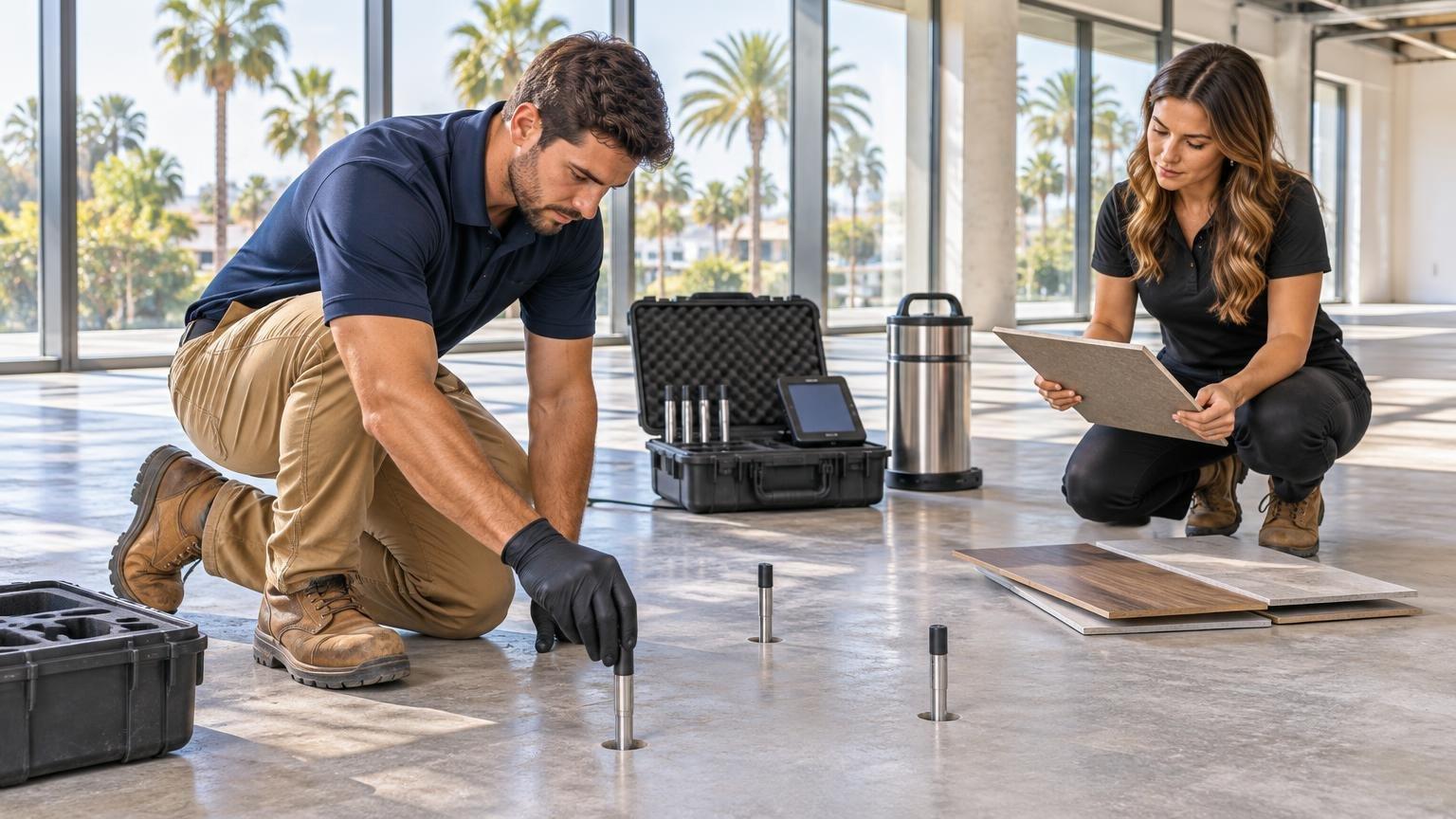
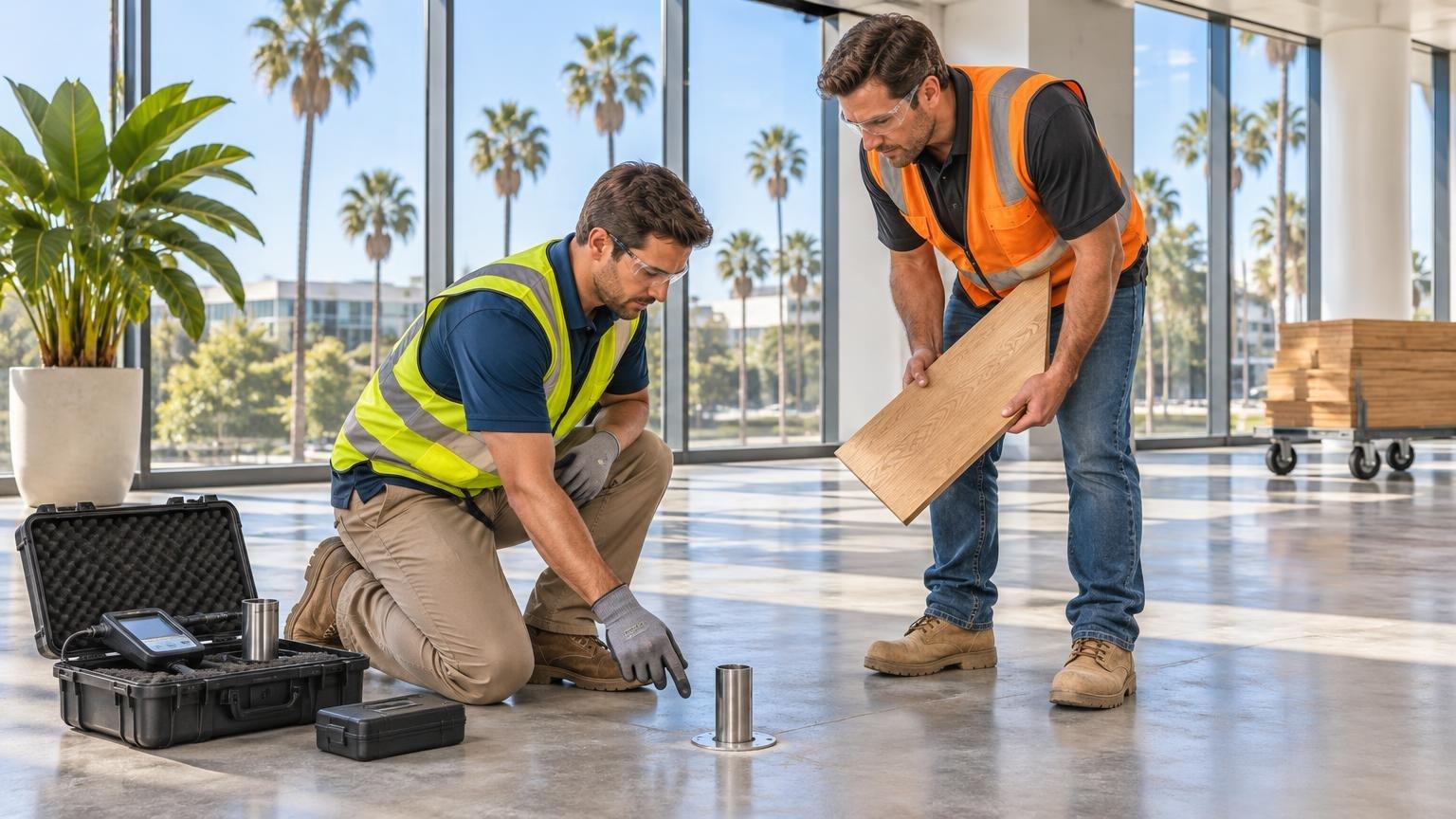
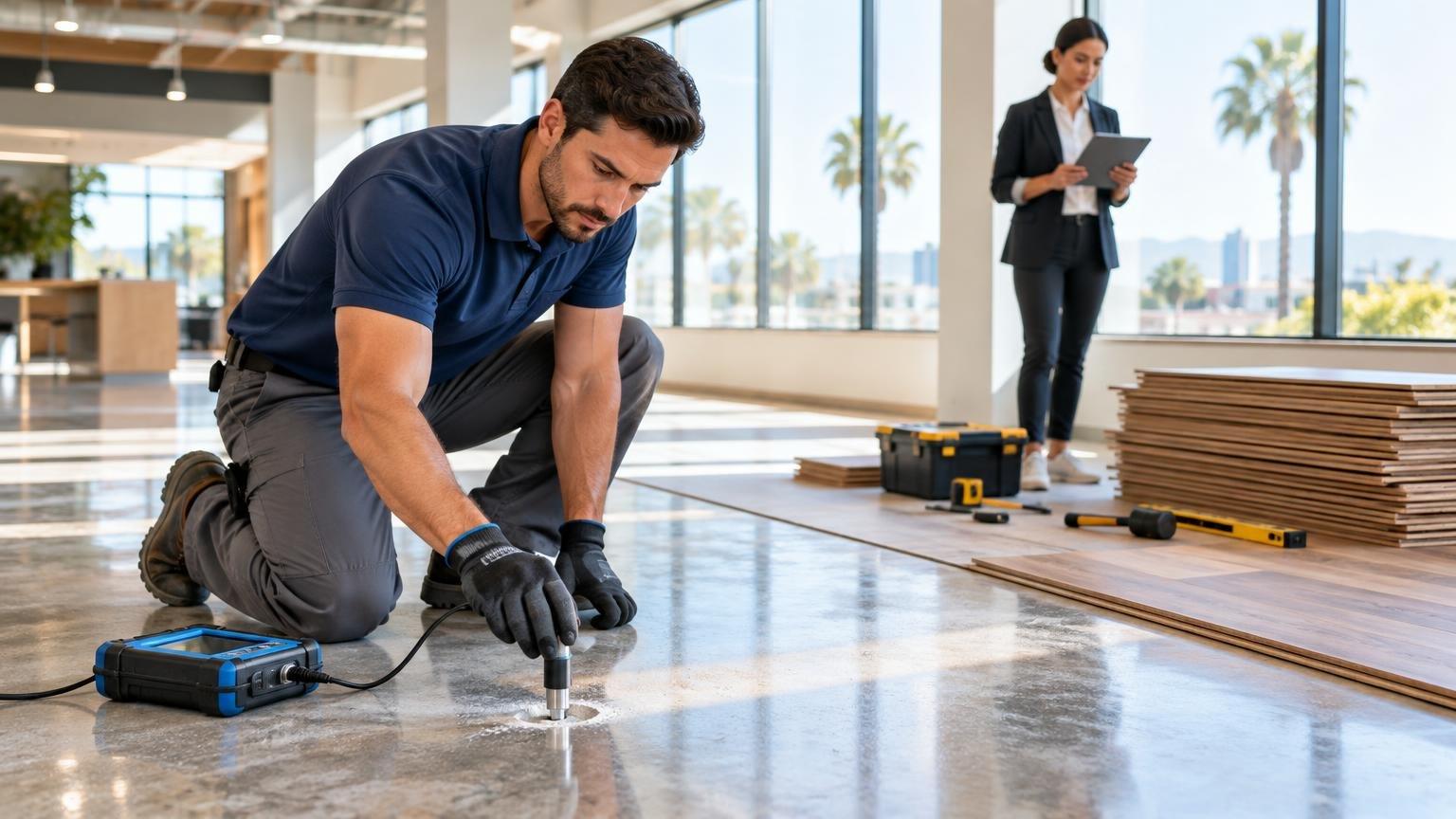
Pre-flooring moisture testing in Irvine is simple to explain. Before new flooring goes down, we check how much moisture is still in the concrete and what the pH levels look like. The goal is to see if the slab is ready for flooring or if it is going to fight the glue, finish, or product you are about to install.
Irvine might not feel like a wet place, but the mix of coastal humidity, Santa Ana winds, and seasonal rains creates tricky slab conditions. Concrete can soak up moisture, hold it, and then release it slowly over time. Even brand-new slabs that look dry on the surface can have high moisture inside.
When moisture is not checked, people often end up with:
- Flooring bubbles, cupping, or lifting
- Mold growth under flooring or base
- Strong odors and poor indoor air quality
- Tenant complaints and costly business downtime
So is pre-flooring moisture testing in Irvine something you must do, or just something smart people do? The answer lives in a mix of building codes, manufacturer rules, contracts, and real-world risk.
What Building Codes and Standards Really Require
Most building codes do not spell it out in big letters and say, you must test the concrete slab for moisture. But they usually do say that materials must be installed according to manufacturer instructions and accepted industry standards. That is where moisture testing quietly becomes part of the story.
Industry standards point straight to recognized tests, including:
- ASTM F2170 for in-situ relative humidity
- ASTM F1869 for moisture vapor emission rate
- pH testing of the concrete surface
Flooring and adhesive manufacturers often base their directions on these same standards. If the manufacturer says to confirm concrete moisture and pH are within certain limits before installing, and you skip that step, you are not really following the code requirement to install per instructions.
Here in Orange County, code officials, architects, and general contractors are more and more likely to ask for documented testing, especially on commercial and high-end residential jobs. It has become part of what they expect as normal practice.
From a practical angle, ignoring these standards can look like noncompliance when a floor fails. When that happens, people start asking for records. If there is no ASTM-compliant moisture data, the finger-pointing gets serious, and the lack of testing can become a liability issue.
When Pre-Flooring Moisture Testing in Irvine Is Effectively Mandatory
There are many situations where pre-flooring moisture testing in Irvine may not be written into the building code line by line, but it still works like a must-have step.
You will see this in places like:
- Commercial spaces with detailed specs
- Healthcare and medical offices
- Schools and education buildings
- Multi-family buildings and condos
- High-end custom or luxury homes
In these projects, the contract often calls out performance standards and references industry methods. Moisture and pH testing end up built into the process, even if they are not bolded on the front page.
Most major flooring and adhesive manufacturers also need documented moisture and pH test results before they will stand behind their warranties. If no test data exists, it becomes much easier for them to say the installation did not meet their requirements.
Lenders, insurers, and large corporate tenants also care about moisture risk. Many want proof that testing was done as part of their due diligence or risk management. For them, a failed floor is not just a maintenance headache; it can also interrupt operations and income.
Fall projects in Irvine bring another twist. After long, hot summer days and then a mix of occasional early storms, slabs can look dry and still have moisture moving inside. The surface may seem ready, but you will not know what is happening inside the concrete without proper testing.
When Testing Is "Optional" but Skipping It Is Risky
Not every project comes with a thick spec book. Smaller tenant improvements, boutique retail spaces, or custom homes without a strong spec writer might not spell out testing in clear language. On paper, it can look optional.
But skipping it brings real risk:
- Latent defects that show up months after opening
- Blame passed between general contractor, installer, and product supplier
- Warranty claims denied for lack of moisture and pH records
- Owners stuck with the full cost and disruption of replacement
Some teams try to rely on simple methods, like surface checks, plastic sheet tests, or quick readings with a handheld meter. Those tools can give clues, but they do not replace independent, ICRI-style ASTM-compliant testing.
There is a big difference between a quick pass with a meter and a documented testing program with:
- Proper probe depth and spacing
- Acclimation time for accurate readings
- Clear written results and photos
- Data that holds up in a dispute
When you compare the small step of doing proper testing to the time, hassle, and cost of replacing a failed floor in an occupied space, the idea of treating testing as optional starts to look risky.
Choosing the Right Testing Partner in Irvine and Orange County
If you decide to take moisture seriously, choosing the right testing partner matters just as much as the decision to test.
Independence is a big part of that. When the person testing your concrete does not also sell you flooring or install it, there is less pressure to lean results in any direction. You get unbiased data that supports the whole team, from the owner to the installer.
ICRI-style testing focuses on doing the work the right way, not the fast way. That includes:
- Correct drilling, cleaning, and placing RH probes in the slab
- Allowing proper time for probes to acclimate
- Running ASTM-compliant moisture and pH tests
- Organizing the findings in clear, readable reports
For Irvine owners, facility managers, and contractors, a strong local testing partner should bring:
- Experience with Orange County project types and timelines
- Familiarity with commercial, multi-family, and higher-end residential work
- Reliable scheduling and quick reporting
- A clear way to explain what the numbers mean
A good specialist does more than hand you data. They help you understand what it means, whether you can move ahead, or if you should consider more drying time or mitigation steps to protect warranties and reputations.
Protect Your Next Irvine Floor Before It's Too Late
So is pre-flooring moisture testing in Irvine optional or mandatory? On paper, it may not always be listed as a strict code requirement. In real life, if you care about warranties, liability, and long-term performance, it is almost always expected.
As fall projects ramp up, many teams in Irvine are pushing to get floors in before holiday schedules and year-end changes in occupancy. That is exactly when moisture surprises hit hardest, because nobody wants delays once finish materials arrive on site.
Pre-flooring moisture testing gives you a clear yes, no, or not yet answer based on real data instead of guesswork. When the stakes are your floor, your tenants, and your peace of mind, that small step becomes one of the smartest moves you can make.
Get Started With Your Project Today
Protect your new flooring investment by scheduling reliable pre-flooring moisture testing in Irvine before installation begins. At Concrete Moisture Testing Orange County, we provide accurate, code-compliant results so you can move forward with confidence. If you are ready to book a test or have questions about your project, simply contact us and we will respond promptly.