Stop Guessing: Time Your Moisture Tests Right
Pre-flooring moisture testing in Orange County is not a box to check at the last minute. The timing can decide if your new floor lasts for years or starts failing soon after installation. When tests are done at the wrong time, projects stall, warranties can be at risk, and everyone starts pointing fingers.
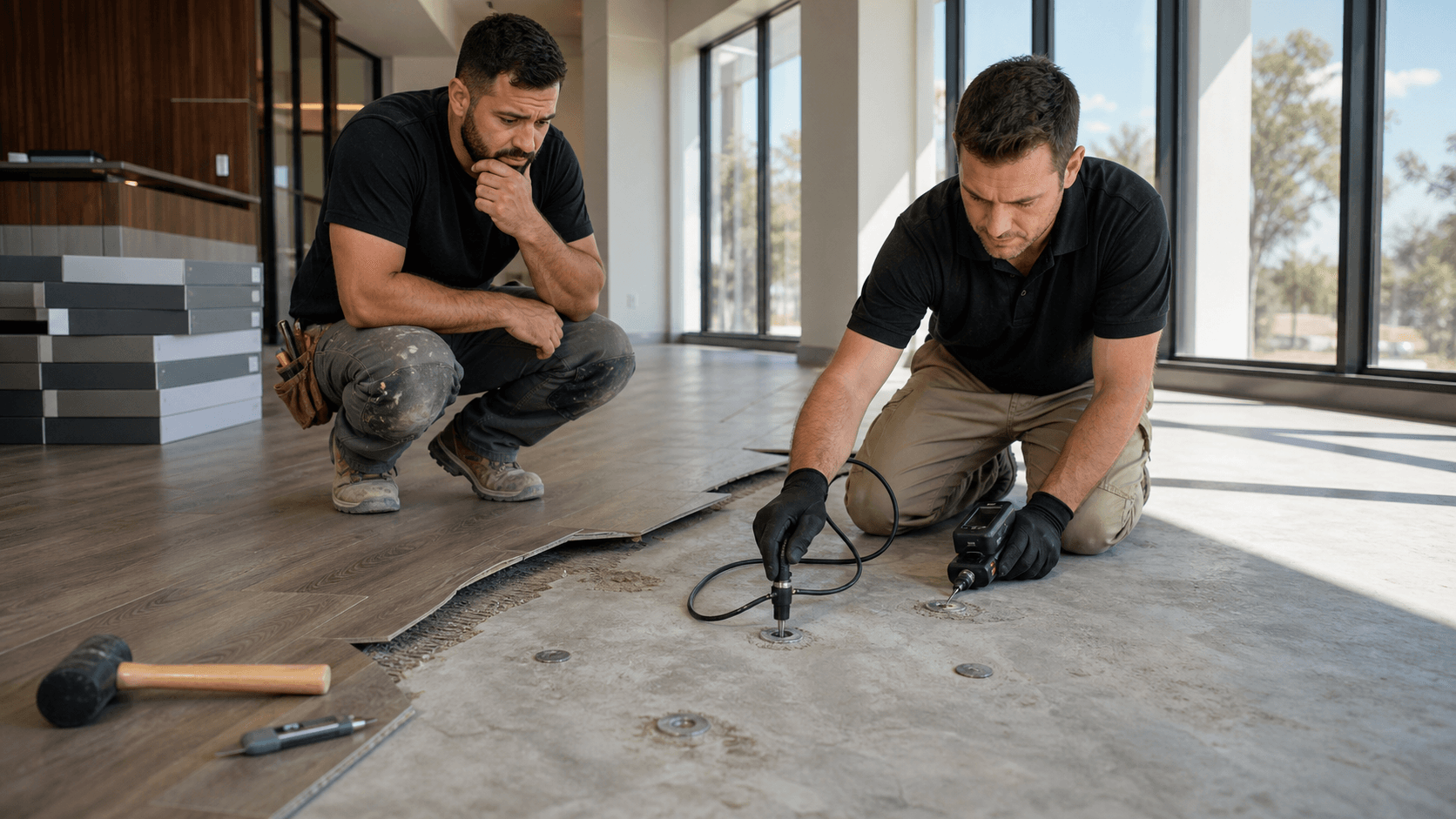
We see it often. A slab looks dry, flooring goes in, then you get buckling, cupping, bubbling, or adhesive problems. The root cause is usually hidden moisture and tests that were rushed or delayed. In Orange County, timing is even trickier because of local climate patterns, how buildings are conditioned, and the way commercial and high-end residential schedules are planned.
In this guide, we walk through when to plan your tests around slab placement, HVAC start-up, and actual flooring installation. Our goal is to help contractors, flooring installers, property managers, designers, and homeowners stop guessing and start planning moisture testing with confidence.
Why Timing Matters More Than You Think
Concrete curing and concrete drying are not the same thing. Curing is a chemical process that starts as soon as the slab is placed. Drying is about moisture slowly leaving the slab over time. A slab can look dry on top while deeper inside it is still holding a lot of moisture.
If testing is done too soon, readings often look lower on the surface, even though moisture inside the slab is still high. This can give a false sense of safety. That is why in-situ RH testing and pH testing must follow the timing steps in ASTM standards and flooring manufacturer instructions.
Poor timing can lead to:
- Misleading RH and pH readings
- Flooring installed over a wet slab
- Adhesives that do not bond correctly
- Surface issues like curling or cupping
When results are off, it can trigger:
- Schedule changes and delays
- Extra site visits and retesting
- Change orders and possible material damage
- Disputes between the GC, flooring contractor, and owner
Planning your test dates early is one of the simplest ways to protect both your flooring and your project timeline.
Ideal Testing Windows for Orange County Projects
In Orange County, we deal with warm conditions most of the year, with different humidity levels from the coast to the inland areas. That affects how moisture moves in a slab and when test results are most reliable.
For typical projects, here is how timing often works under normal conditions:
- New commercial slabs, allow an initial curing period before planning any ASTM-compliant RH testing.
- Tenant improvements on existing slabs, plan testing after demolition and patching so we are testing the actual surface that will receive the floor.
- High-end residential remodels, schedule tests once any new slab or topping has cured and the interior is enclosed and conditioned.
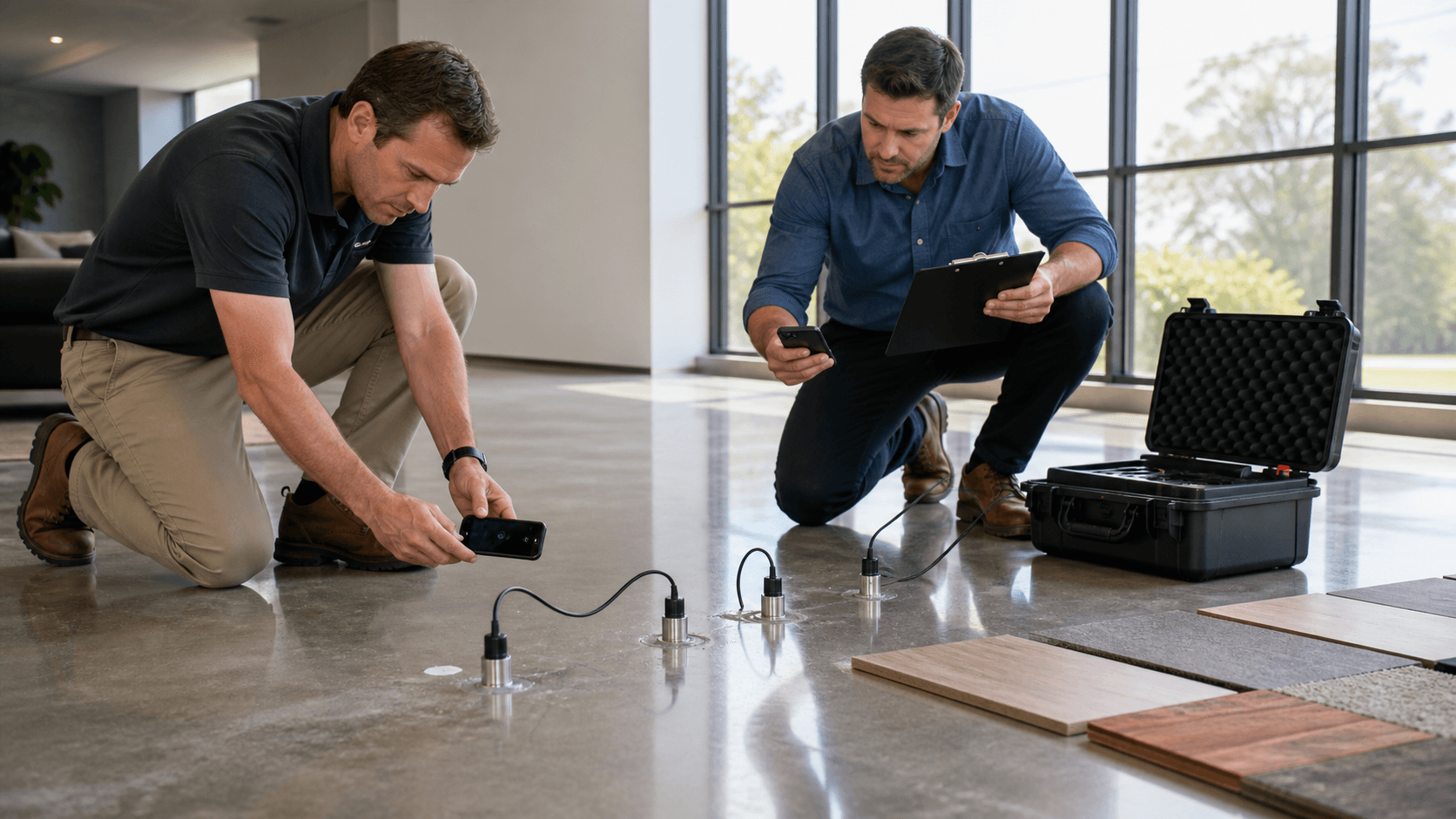
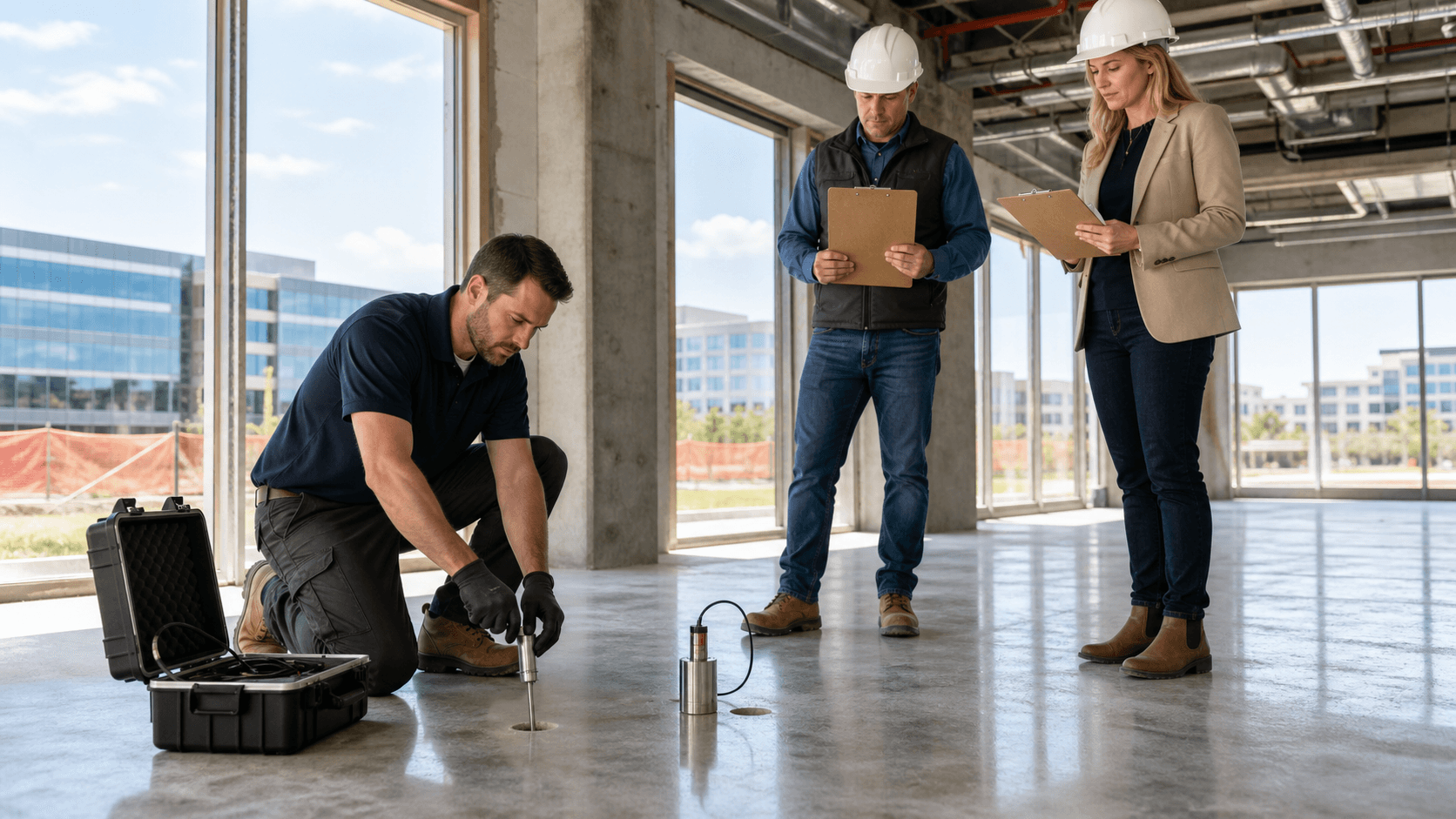
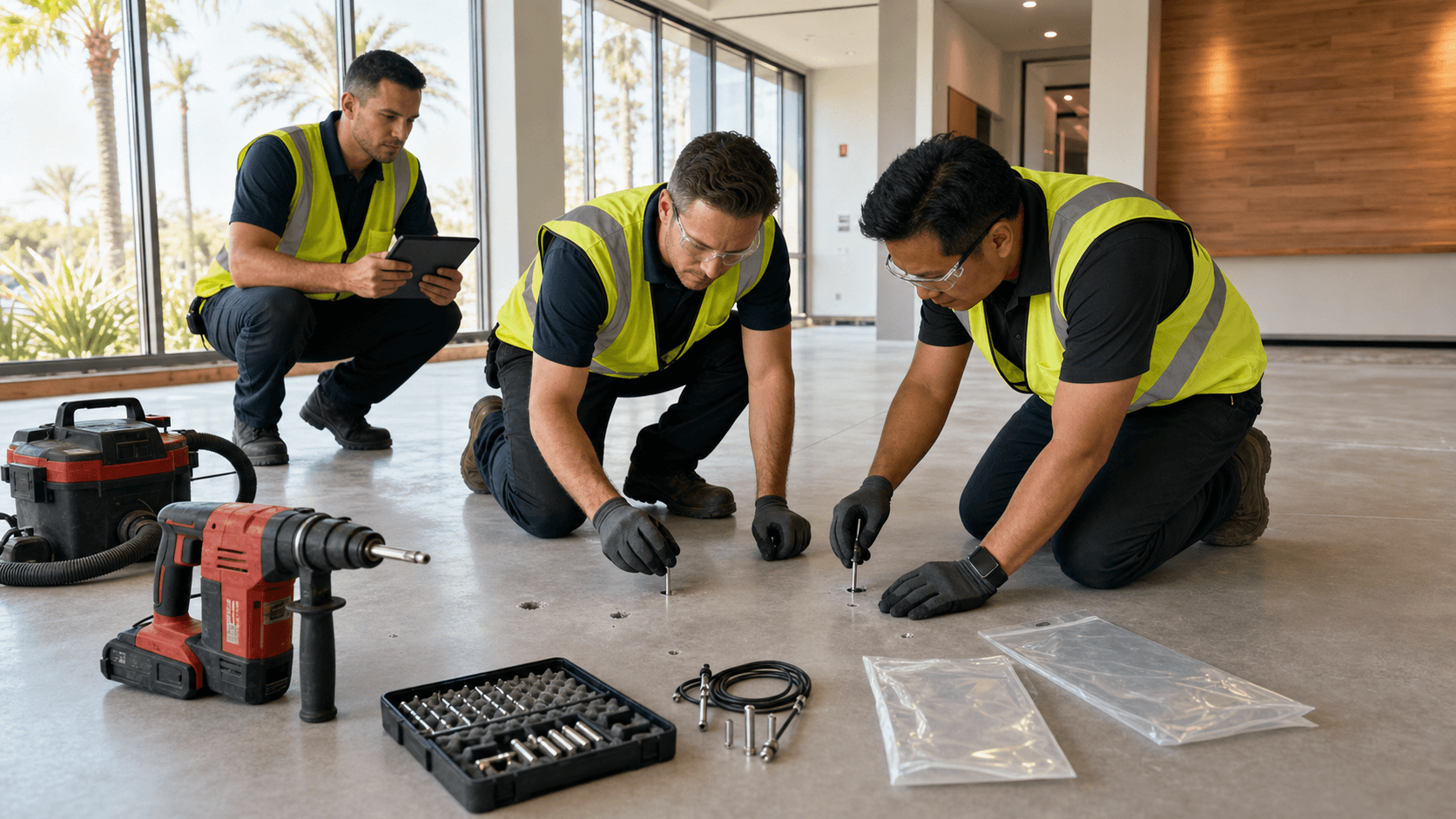
HVAC plays a huge role. For in-situ RH testing following ASTM F2170, the interior temperature and ambient relative humidity need to be at normal service conditions before and during testing. The building should be conditioned for at least 48 to 72 hours before we take readings, so the slab has time to adjust to real-life use conditions.
Local factors we see across Orange County:
- Coastal areas, higher ambient humidity can slow slab drying, even when the air feels pleasant.
- Inland areas, strong sun and warm air can dry the surface quickly, while deeper moisture stays trapped.
- Summer months, heat can make a slab skin over on top, which hides moisture below and makes timing more sensitive.
All of this means that the "right" day for testing is not just a number of days after the pour. It is also about when the building is enclosed, conditioned, and stable.
Coordinating Testing with Your Construction Schedule
The easiest way to handle timing is to plug moisture testing into your schedule early, just like you would do with inspections or major deliveries. Think of it as a key step, not an add-on.
A simple project flow might look like this:
- Slab placed and allowed to cure
- Building shell closed up, doors and windows in place
- HVAC or temporary conditioning running so the interior is at service conditions
- ASTM-compliant RH and pH tests performed
- Results reviewed with the team before flooring materials and adhesives arrive
We suggest planning backward from your target flooring installation date. Build in:
- Time for initial testing
- A buffer for retesting if readings are close to limits
- Space in the schedule for mitigation steps if needed
Clear communication is just as important as timing. It helps when:
- GCs share pour dates, enclosure dates, and HVAC start-up plans early
- Flooring contractors confirm the manufacturer's moisture limits before we test
- Owners and property managers know who is responsible for approvals and next steps once results come in
This kind of planning reduces last-minute rush decisions that can lead to moisture problems down the road.
Seasonal Factors That Affect OC Moisture Testing
Even though Orange County has a mild climate, time of year still matters. Right now in summer, the longer days and higher sun exposure can speed up surface drying. That makes slabs look ready before they truly are.
During warm months:
- Surface readings can look better than the internal RH
- Direct sun on uncovered slabs can create a dry crust on top
- Inside spaces that are not yet conditioned can trap moisture
When we move into the rainy period:
- Higher ambient humidity can slow the drying process
- Ground moisture can affect slabs on grade
- Interior conditions may need longer stabilization before testing
On top of that, Orange County has many microclimates. Beach cities have more moisture in the air, canyon areas can hold humidity, and inland communities often have hotter, drier afternoons. A testing plan that works inland might need timing adjustments near the coast.
Working with a local, independent testing specialist helps because we are used to reading conditions in these different zones and can suggest realistic windows for each type of project.
How ASTM-Compliant Testing Protects Your Schedule
ASTM standards exist to keep moisture testing consistent, clear, and defensible. For concrete slabs receiving flooring, two common references are:
- ASTM F2170 for in-situ RH testing in concrete slabs
- ASTM F710 for preparing concrete to receive resilient flooring
These and related standards include timing and site condition rules that must be met if the results are going to stand up under review. Flooring manufacturers often refer to them when evaluating warranty claims.
Independent testing brings several benefits to your schedule:
- Neutral, third-party readings that are not tied to any one trade
- Clear documentation of dates, locations, and site conditions
- Data that can support decisions about mitigation, alternate materials, or schedule changes
By planning ASTM-compliant testing early, you are less likely to be surprised a day or two before install. You can set realistic expectations with the owner and protect the relationships between everyone on the project.
Lock in Your Testing Dates Before You Pour
The best time to plan pre-flooring moisture testing in Orange County is before the concrete truck shows up, not during the week flooring is supposed to go in. When test dates are built into the schedule from the start, everyone knows what to expect.
A simple pre-flooring moisture testing calendar for each project might include:
- Target slab placement and curing period
- Estimated enclosure and HVAC start dates
- Planned testing window with a backup date
- Decision points for mitigation, alternate flooring, or schedule shifts
At Concrete Moisture Testing Orange County, we focus on independent, ASTM-compliant concrete moisture, RH, and pH testing for commercial and high-end residential projects across the county. When we are involved early, we can review your project needs, keep an eye on local seasonal timing, and help you align testing windows with your planned installation dates so your flooring has the best possible chance to perform as designed.
Protect Your New Floors With Reliable Moisture Testing
Before you invest in new flooring, let Concrete Moisture Testing Orange County verify that your slab is truly ready. Our pre-flooring moisture testing in Orange County helps you avoid costly failures, delays, and unexpected repairs. If you are ready to schedule service or have questions about your specific project, contact us today so we can help you move forward with confidence.