Specify Moisture Testing Now, Avoid Tenant Chaos Later
Moisture testing language in tenant improvement specs is not just a formality. It is one of the few things that can stop a flooring failure before it starts. When moisture testing is missing or vague, you get bubbled floors, finger pointing, and a mess right when tenants are trying to move in.
In Orange County, we see this a lot around late summer and into the end of the year. TI schedules get compressed so tenants can start operating before year-end, HVAC is not always running early enough, and interior humidity moves around. Concrete can act in ways nobody expected, and by the time anyone checks moisture, the flooring crew is already on site.
The good news is that clear, ASTM-compliant moisture testing, written into Division 03, Division 09, and flooring submittals, can keep things calm. It creates clear rules for testing, clear acceptance limits, and clear roles for everyone on the project. That is one of the easiest forms of risk control you can build into your next TI.
Why TIs Fail Without Clear Moisture Requirements
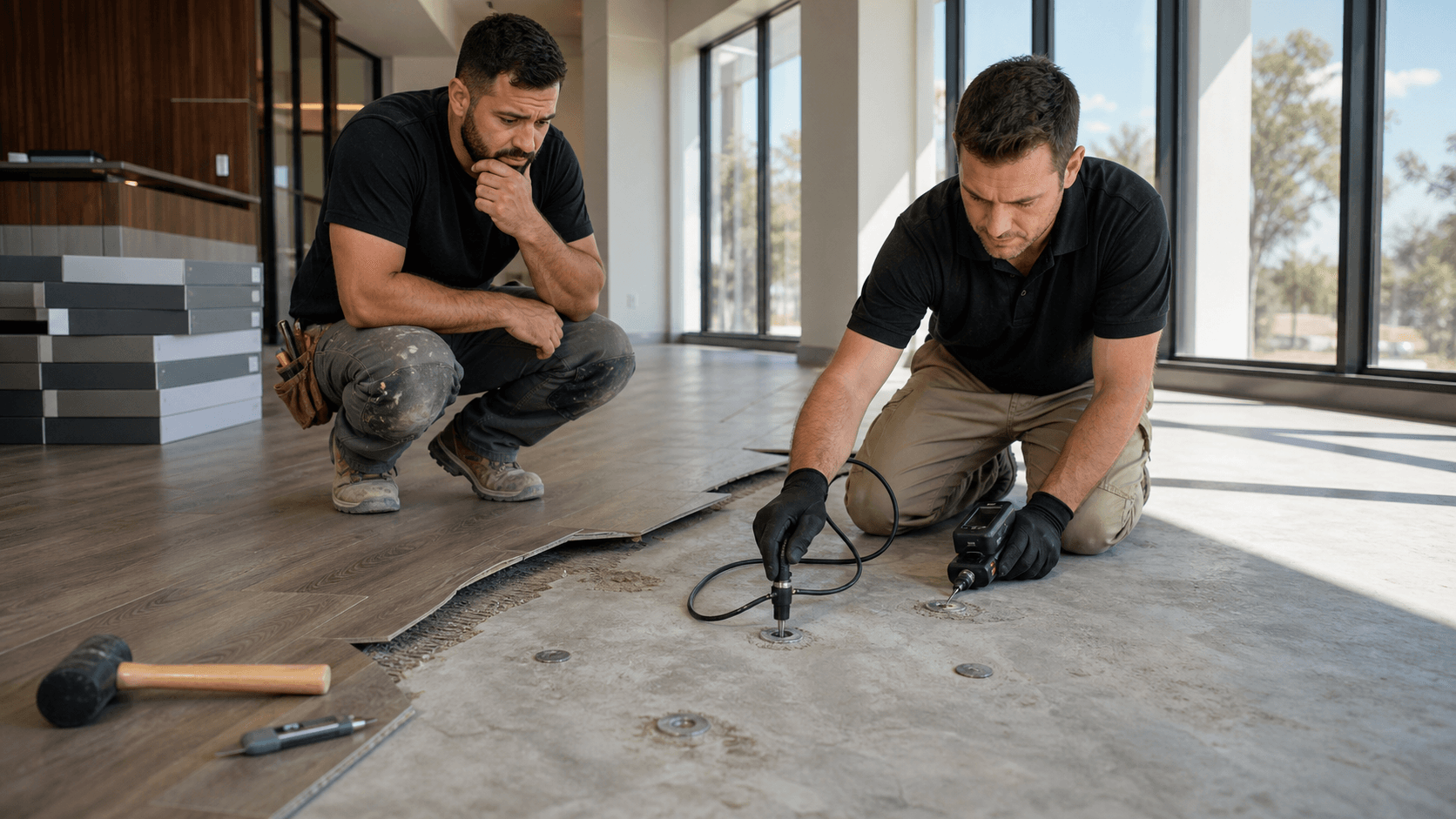
When commercial moisture testing in Anaheim and across Orange County is skipped or done loosely, the damage usually shows up in the floor, not in the spec book. We see the same patterns over and over.
Common signs that moisture testing was not properly addressed include:
- Bubbles or blisters under LVT or sheet goods
- Dark joints or cupping in wood or engineered plank floors
- Adhesive oozing through seams or pushing out at edges
- Widespread debonding, loose tiles, or hollow spots
Those results often trace back to either no testing at all, testing done too early, or testing that did not follow ASTM standards. The language that allows it usually sounds harmless:
- "Test as required"
- "Verify substrate suitability"
- "Install per manufacturer's recommendations"
- "Contractor responsible for moisture conditions"
On paper, that might seem flexible. In real life, it shifts risk down the line to the flooring installer, who often walks into the project assuming the slab is ready. When tests finally happen at installation, any high readings trigger:
- Last-minute change orders for mitigation
- Blame between owner, tenant, GC, and flooring sub
- Tension as turnover dates and move-in dates stay fixed
The legal and financial impact can be serious. Floors that fail after move-in can lead to landlord and tenant disputes, extended punch lists, occupied spaces under repair, and lost days of use while areas are shut down for replacement. All of that usually ties back to moisture questions that were never clearly answered at the spec stage.
Embedding ASTM Moisture Testing Into Division 03
Division 03 is the best place to set the ground rules for moisture testing. If the slab is new or existing, this is where you can lock in the standards everyone must follow.
Clear language in Division 03 should cover:
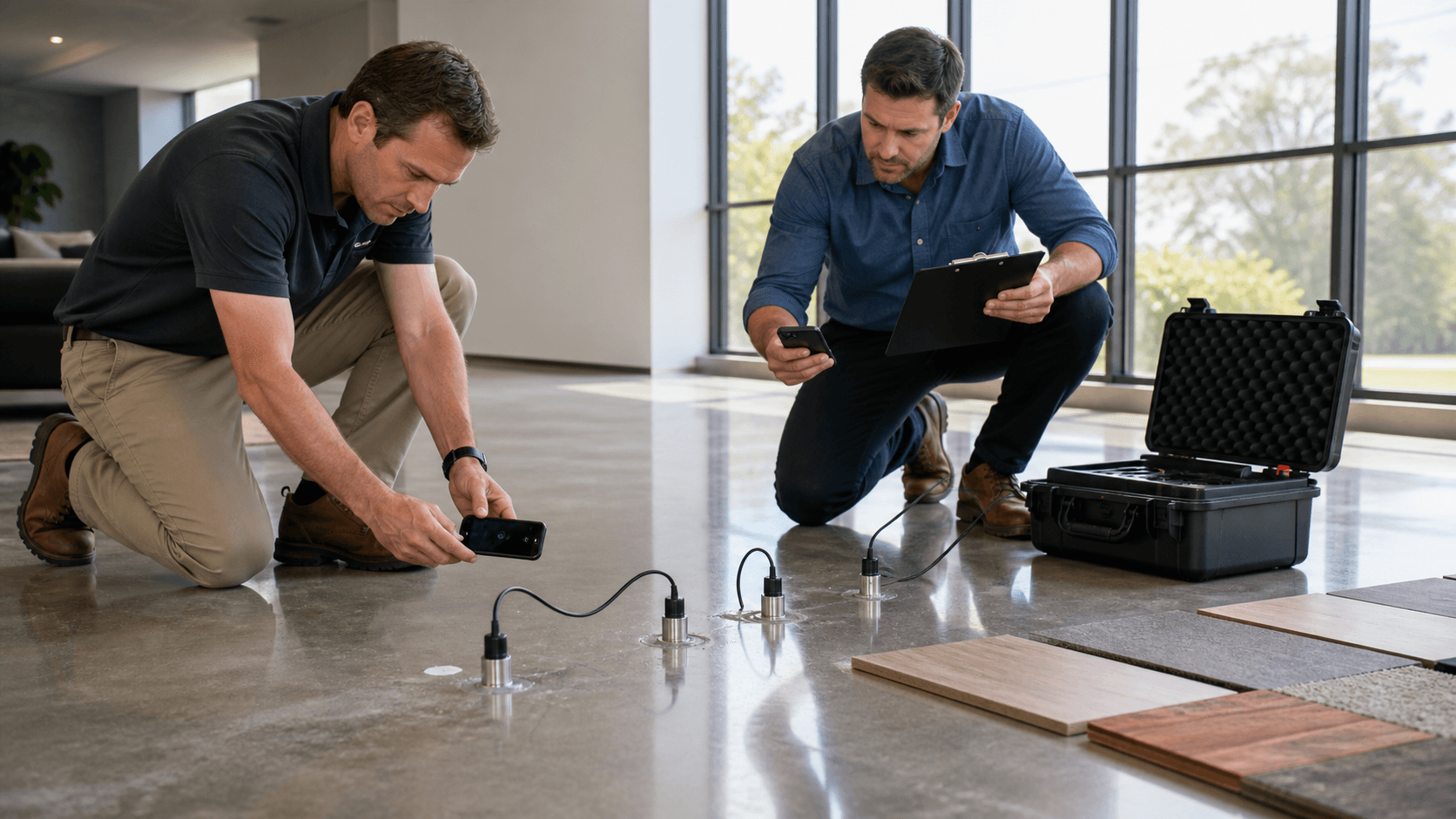
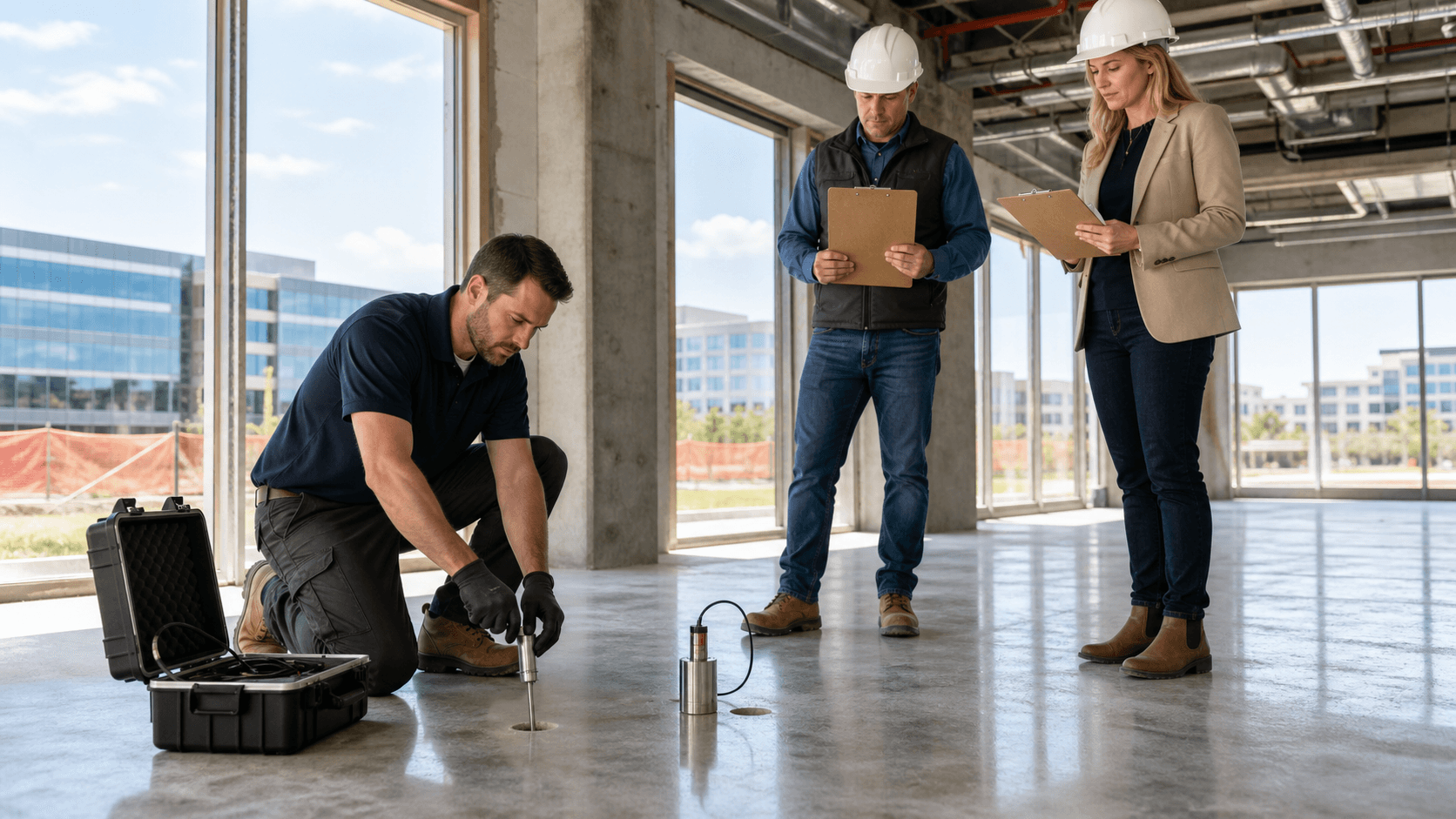
- ASTM F2170 in-slab relative humidity testing as the primary method
- ASTM F1869 moisture vapor emission rate tests when a manufacturer still requires them
- ASTM F710 as a reference for surface prep and evaluation
You also want to spell out testing conditions so that results reflect real service conditions, not a temporary snapshot. For example:
- Testing only after HVAC is operating and interior conditions are stable
- Maintaining temperature and interior relative humidity within normal occupied ranges before and during testing
- Specifying the minimum number of tests per square footage, and extra tests in areas near entries, drains, or saw cuts
- Stating that tests must be performed by an independent, ICRI-certified technician, not by the installer or manufacturer representative
Defining acceptance thresholds in Division 03 is another smart move. You can:
- Set default maximum RH levels that align with common adhesives and floor finishes
- Allow higher limits when a proven mitigation system is used
- Provide room for tenants to choose different floor finishes later, as long as they meet or improve upon those moisture limits
When you handle this in Division 03, the slab comes with known conditions and expectations before tenants pick their flooring. That keeps the project flexible, while still controlling moisture risk.
Aligning Division 09 and Flooring Submittals with Division 03
Once Division 03 sets the testing rules, Division 09 should echo them. This keeps everyone from assuming that flooring can start on any slab without questions.
In Division 09 finishes sections, you can:
- Reference the same ASTM moisture and pH testing requirements listed in Division 03
- State that flooring installers must review existing test data before mobilizing
- Clarify that no flooring is to be installed over slabs that do not meet the documented moisture limits
Flooring submittals are where requirements get real for the brands and systems actually being used. Strong submittal requirements might include:
- Manufacturer-specific maximum slab RH, MVER, and pH limits for each product and adhesive
- Approved moisture mitigation products or systems if high readings are anticipated
- Written confirmation that adhesives and floor finishes are compatible with the specified moisture and pH ranges
- Data sheets that show limitations at higher slab moisture conditions
A simple submittal checklist helps keep commercial moisture testing in Anaheim and the rest of Orange County organized. For example, you might request:
- Current moisture and pH test reports for the areas to receive flooring
- A site moisture map that shows test locations and readings
- Proposed mitigation strategies for any areas above stated limits, for review before any work starts
This alignment between Division 03, Division 09, and submittals makes it very hard for moisture issues to "hide" until the last minute.
Assigning Roles, Timing, and Documentation for TI Projects
Good language is only half the story. You also need clear roles and timing, especially on fast-track TIs.
First, decide who is responsible for ordering and paying for testing. Many project teams prefer to place testing under the owner or GC so it remains independent from flooring manufacturers and subs. Model language can:
- State that moisture testing is performed by a third-party, independent firm
- Clarify that test results are shared with owner, tenant, GC, and flooring contractor
- Prevent installers from being pressured to "make the readings work"
Timing is just as important as responsibility. On typical summer and fall TI schedules, a smart testing sequence looks like this:
- Baseline testing after the slab has cured, before major build-out, so everyone knows what they are starting with
- Confirmation testing after HVAC has been running long enough to stabilize interior conditions
- Final verification testing just before flooring is installed, to catch any late moisture spikes
Solid documentation is what protects everyone if problems appear after move-in. Good project records include:
- Stamped moisture and pH test reports for each test area
- Photos of each test location, labeled to match floor plans
- Notes on slab surface conditions, coatings, curing compounds, or visible cracks
- Copies of any mitigation product data and installation records
When this documentation is kept with the closeout package, it becomes a shared reference instead of a missing puzzle piece when disputes arise.
Putting It All Together for Your Next Orange County TI
When Division 03 and Division 09 speak the same language about moisture, TIs run smoother. Testing stops being a last-minute scramble and becomes a normal, predictable step, just like inspections or punch walks. Flooring installers arrive knowing exactly what conditions they will see, and tenants step into spaces with floors built on solid information.
For project teams planning commercial moisture testing in Anaheim and nearby cities, choosing an independent, ASTM-focused partner early is one of the smartest moves you can make. At Concrete Moisture Testing Orange County, we focus on independent, ICRI-certified testing for concrete moisture, RH, and pH, and we see every day how clear specs prevent chaos later.
Updating your standard TI spec templates before the next lease is signed helps your late-summer and year-end build-outs land on schedule. When moisture testing is written clearly into Division 03, Division 09, and flooring submittals, you give every tenant the same thing they expect from the rest of the building: a reliable, durable floor that does what it is supposed to do.
Protect Your Commercial Floors With Precise Moisture Testing Today
If you are planning a new build or flooring upgrade, now is the right time to schedule professional commercial moisture testing in Anaheim. At Concrete Moisture Testing Orange County, we use industry-standard methods to help you avoid costly flooring failures, delays, and warranty issues. Reach out today so we can review your project details, recommend the right testing approach, and provide a clear, written report. If you are ready to move forward or have questions, simply contact us and we will respond promptly.