Stop Moisture From Derailing Anaheim Build-Out Schedules
Moisture in a concrete slab can wreck a tenant build-out schedule faster than almost anything else. Floors that looked ready can suddenly bubble, curl, or lose adhesion, and the turnover date you promised starts to slip.
On Anaheim tenant improvements, commercial moisture testing is like a low-cost insurance policy for the schedule. It protects your budget, your relationship with national tenants, and your own reputation. In this post, we will walk through when, how, and why to plan commercial moisture testing in Anaheim tenant build-outs, with a special focus on late-summer projects when humidity tends to be higher and schedules are tight.
How Moisture Risks Show up in Tenant Improvements
Modern flooring systems are less forgiving than older products. New adhesives, coatings, and floor coverings often have tighter moisture limits. That means slabs that might have "worked out fine" years ago can now cause big problems if moisture is not checked.
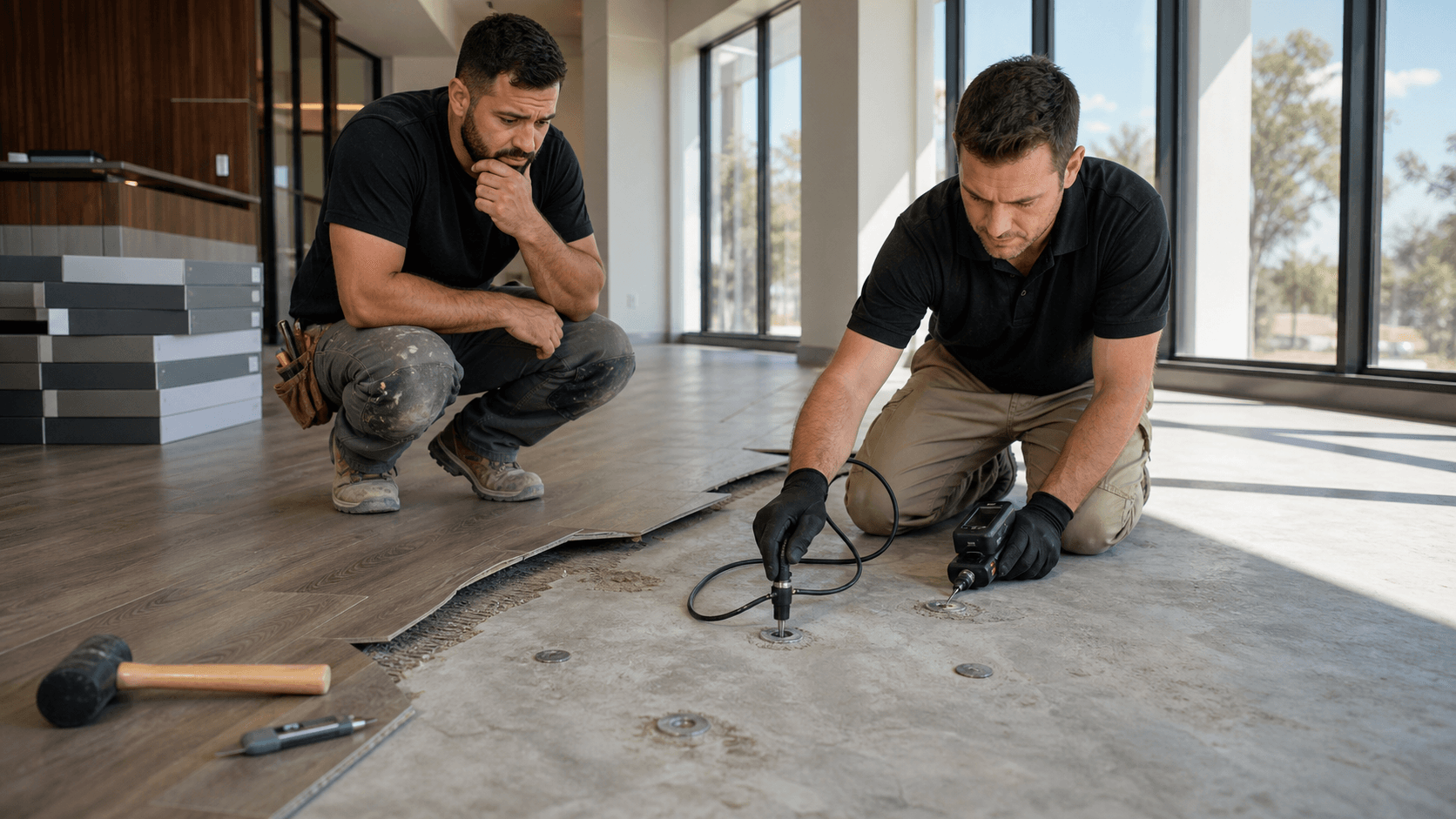
Common moisture-related issues in offices, restaurants, and retail spaces include:
- Cupping or gapping in plank flooring, especially LVT and laminate
- Adhesive failure under carpet tile or vinyl, causing loose or shifting tiles
- Bubbles or blisters in sheet goods and rubber flooring
- Discoloration and staining that owners connect to water problems
- Concerns about mold or odors in damp areas and under tight floor systems
Anaheim's coastal-influenced climate means moisture is not only about rain. Humid late-summer air can slow down slab drying, and changes in HVAC operation during a build-out can also affect the slab. Even older concrete that has been in place for years can show moisture problems when you change floor coverings or add impermeable systems like dense coatings or certain vinyl products.
That is why relying on the age of the slab or a quick visual check is risky. Moisture moves from the bottom of the slab to the top, and what you see on the surface is only part of the story.
Timing Moisture Testing Around Anaheim Build-Out Milestones
Timing is everything with concrete moisture testing. For test results to match how the floor will perform, the slab should be at service conditions. That means the space is as close as possible to how it will be once the tenant moves in.
In simple terms, the best timing is:
- HVAC running and holding a steady temperature and relative humidity
- Before final flooring selections are locked, if possible
- Before flooring materials arrive on site and before the installer mobilization
For a typical 10- to 12-week tenant build-out in Anaheim, a sample timeline might look like this:
- Week 1 to 2: Demolition, layout, and any concrete patching or trench work
- Week 3 to 4: Rough-in for trades, walls up, HVAC equipment active or near active
- Week 5 to 6: HVAC running in a stable pattern, slab cleaning, and moisture testing
- Week 7 to 8: Review test reports and confirm flooring systems or mitigation plan
- Week 9 to 10: Install moisture mitigation if required, then flooring installation
On accelerated summer schedules, give yourself extra lead time. Late-summer humidity can keep moisture levels higher in the slab. If test results show the need for a mitigation system, you will be glad you built in a window for added work instead of trying to squeeze it into the last few days before turnover.
Choosing the Right ASTM Tests for Your Flooring System
Different floor systems respond to moisture in different ways, and not all tests measure the same thing. When planning commercial moisture testing in Anaheim, it helps to understand the main ASTM test methods used on tenant build-outs.
The key tests are:
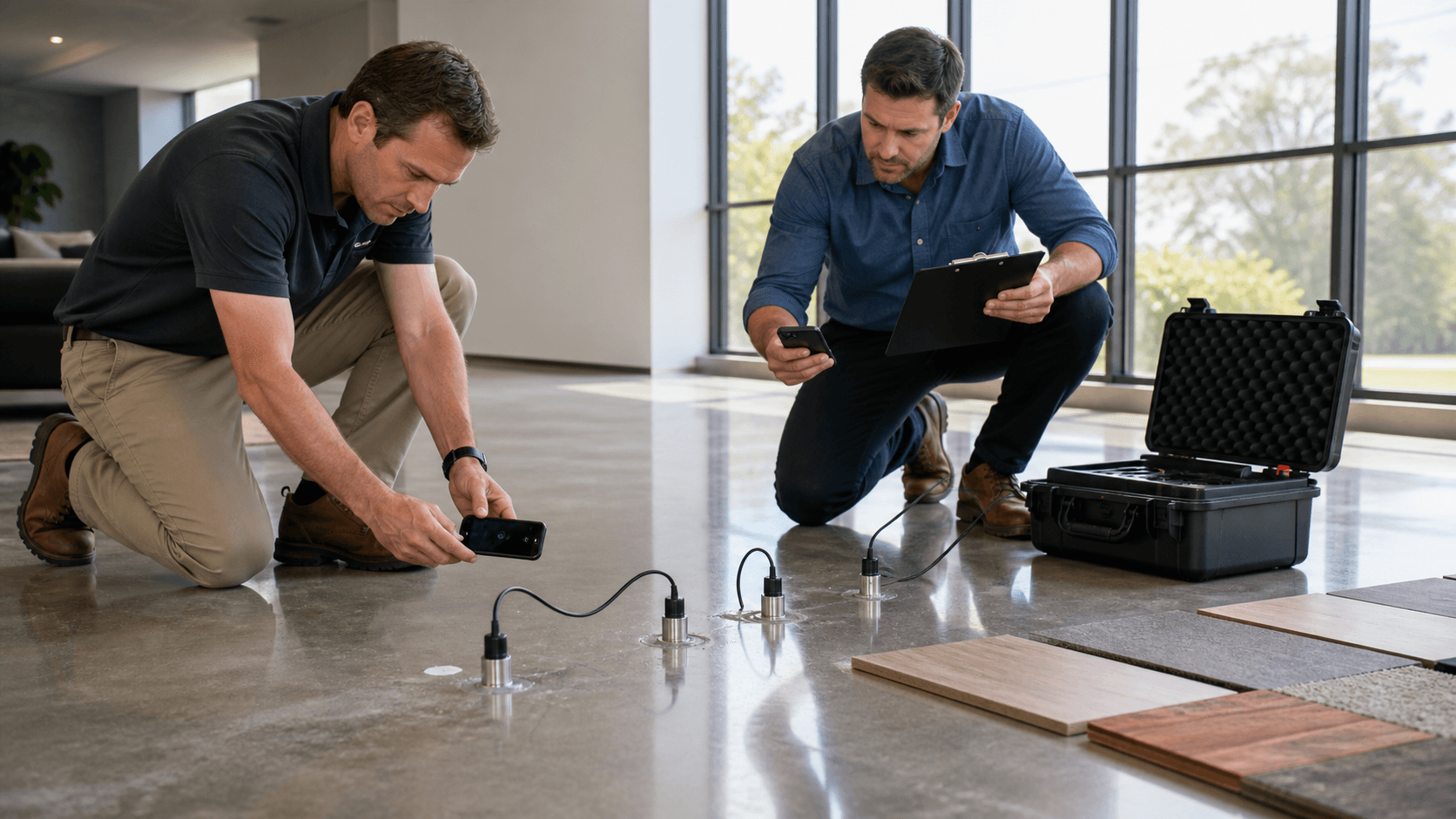
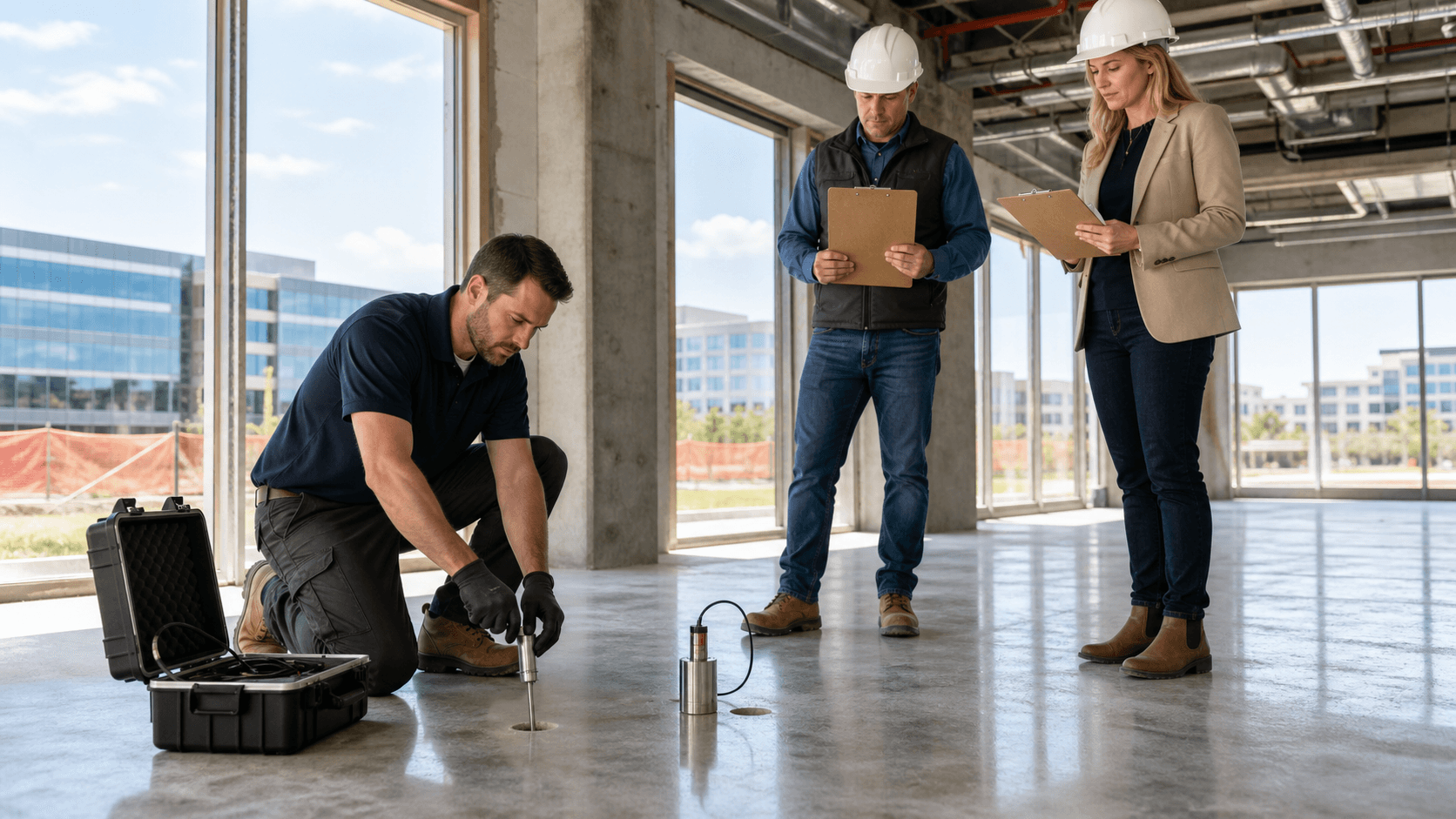
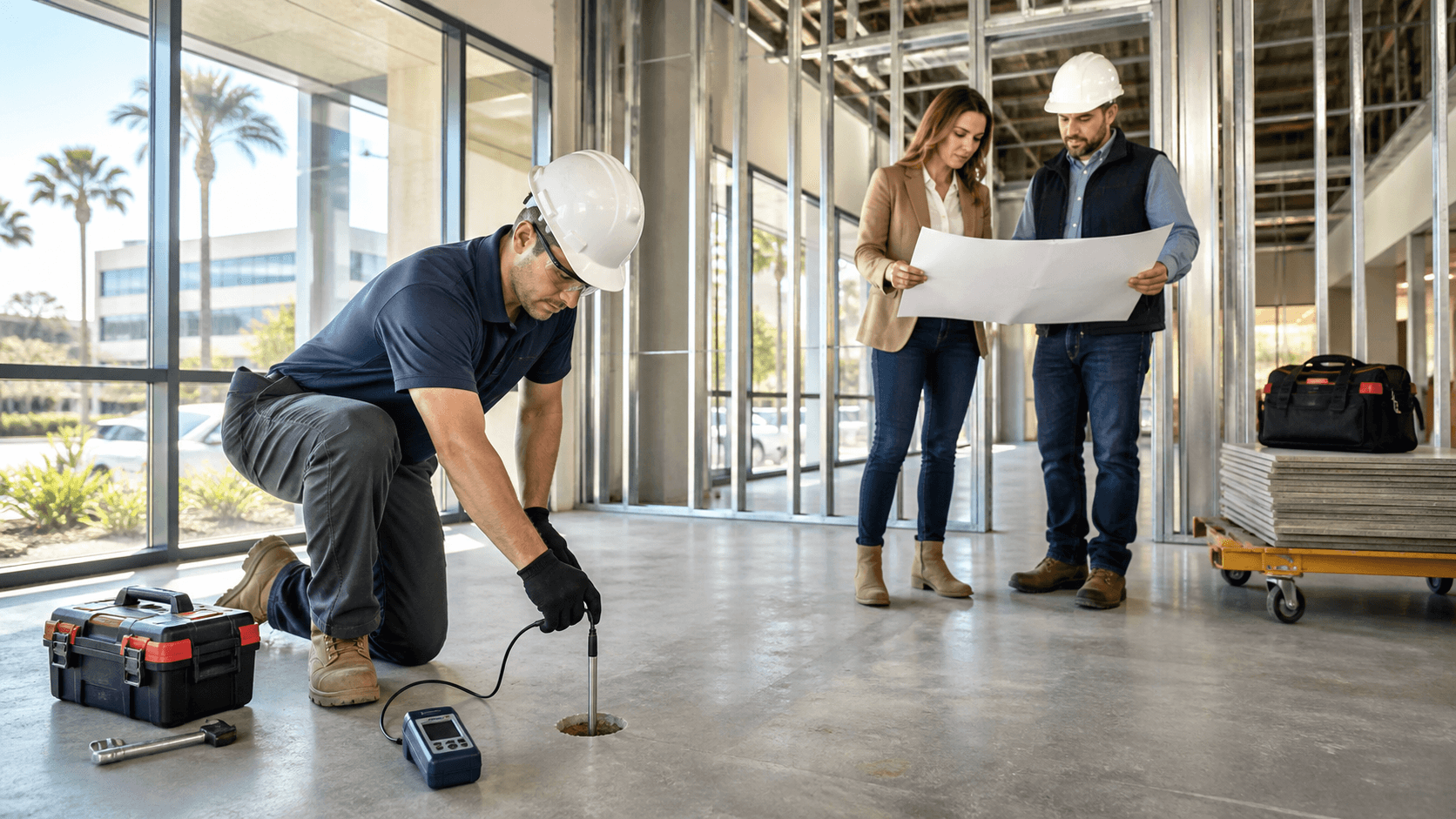
- ASTM F2170: In-slab relative humidity (RH) testing that measures moisture inside the concrete
- ASTM F1869: Moisture vapor emission rate (MVER) testing that measures surface emissions
- ASTM F710: pH testing that checks surface alkalinity before flooring installation
Matching tests to flooring types often looks like this:
- LVT and carpet tile: Usually guided by RH and pH testing, since adhesives and backing can be sensitive
- Polished concrete with coatings: RH and pH help protect coatings and sealers from peeling
- Sheet vinyl: Often requires both RH and MVER checks, plus pH, because of the tight, non-breathable system
- Sports and fitness flooring: RH and pH are key for performance and long-term bond
- Epoxy and resinous flooring: RH and pH are typically critical, given how tight these systems are
Using an independent testing firm helps keep the data unbiased. That way, you have clear, third-party results to share with owners, architects, and flooring manufacturers when everyone is making decisions and protecting warranties.
Coordinating Testing with Your Anaheim Project Team
Moisture testing runs smoother when everyone is on the same page early. General contractors, owners, architects, and flooring installers should talk about testing expectations before the project hits the halfway point.
Key planning items include:
- Which tests will be used and how many test locations are needed
- Where tests will be placed, for example at entries, restrooms, and large open areas
- What acceptance criteria apply, based on the specific flooring and adhesive manufacturers
Site prep also matters for accurate test results. Typical needs include:
- A clean slab, free of curing compounds, sealers, debris, and standing water
- Reliable power on site for equipment and data logging
- HVAC running at or near target service temperature and humidity
- Limits on recent water-based work, like wet mopping, just before testing
Clear communication after testing is just as important. Share reports with the whole team, confirm moisture and pH limits from each manufacturer, and document the decisions that follow. If you add a moisture mitigation system, record the product used and where it was installed. This kind of paper trail can be important later if warranty questions come up.
Turning Test Results Into Actionable Decisions
Test numbers are only helpful if they lead to smart choices. RH, MVER, and pH results should always be read against the actual written limits from flooring and adhesive makers, not based on rules of thumb or what worked on the last job.
If readings come back high, your options may include:
- Adjusting flooring selections to more moisture-tolerant systems when design allows
- Installing a proper moisture mitigation system that is compatible with the chosen floor
- Allowing added drying time if the schedule and space conditions can support it
Taking a data-driven approach usually means fewer callbacks, fewer floor failures, and less finger-pointing between trades. You get more predictable turnover dates, and the tenant gets a space that looks and performs the way everyone expected, without surprise repairs a few months after move-in.
Planning commercial moisture testing in Anaheim as a standard step in your tenant improvement workflow turns moisture from a guess into a known factor. It gives your team room to solve problems early, protect warranties, and keep projects on track. Concrete Moisture Testing Orange County focuses on independent, ASTM-compliant testing so your project decisions rest on clear, unbiased information, not assumptions or quick visual checks.
Protect Your Concrete Investment With Reliable Testing
If you are planning a new build or addressing moisture concerns in an existing facility, our team at Concrete Moisture Testing Orange County is ready to help you prevent costly flooring failures. Schedule professional commercial moisture testing in Anaheim so you can move forward with confidence and clear documentation. We provide prompt scheduling, detailed reports, and straightforward communication tailored to your project timeline. Have questions or need a quote fast? Just contact us and we will walk you through the next steps.