When In-House Concrete Testing Puts Anaheim Projects at Risk
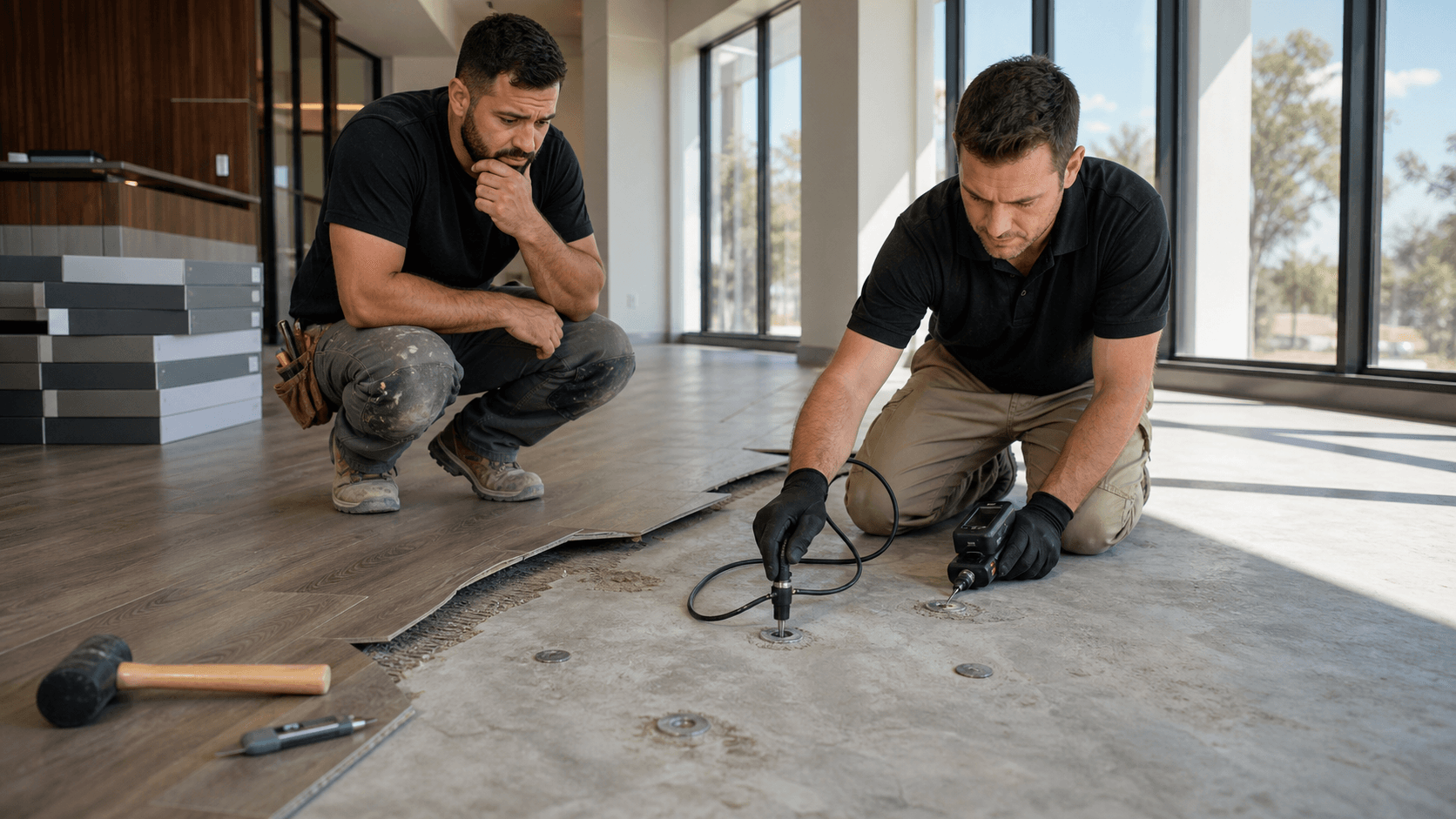
Concrete floors in Anaheim should not fail a few months after installation. When they do, hidden moisture in the slab is often the reason. The flooring looks dry on the surface, the crew does quick tests, and everyone feels safe to move ahead. Then the new floor cups, bubbles, or peels, and fingers start pointing in every direction.
Our warm coastal climate adds one more layer of risk. Marine layer mornings, higher summer humidity, and long daylight hours can trick people into thinking the slab is ready just because the surface looks dry. Add fast-track schedules and pressure to open buildings before key move-in dates, and you have the perfect setup for missed moisture problems.
That is why more people are asking a hard question: are in-house concrete moisture tests really enough to protect warranties, finishes, and reputations, or is independent concrete testing in Anaheim now a smart standard for serious projects?
Hidden Limitations of in-House Moisture Testing
In-house testing feels easy and convenient. The crew already knows the site, they have a meter in the truck, and they want to keep things moving. The problem is that convenient does not always line up with correct.
One big issue is how often ASTM standards are skipped or used the wrong way. For example, tests like:
- ASTM F2170 for in-slab relative humidity
- ASTM F1869 for moisture vapor emission rate
- Surface checks used only as a quick screen
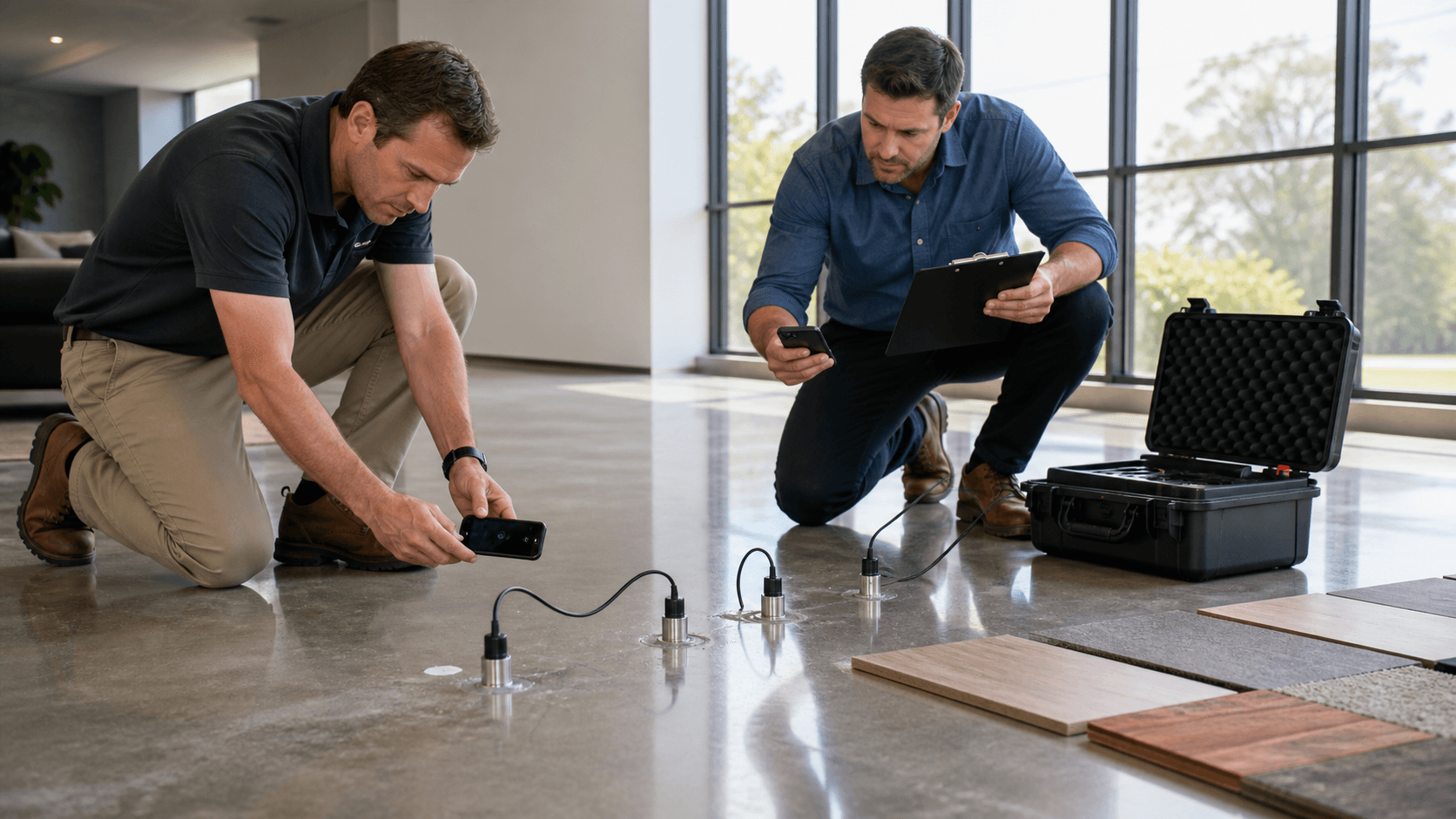
If testing does not follow the right depth, number of tests, spacing, and wait times, the readings can look safer than they really are. A slab might pass at the surface while deeper moisture is still trying to move up into the floor system.
There are also training and calibration gaps. Many in-house testers are talented builders, superintendents, or facility staff, but they are not focused full-time on concrete moisture. Common issues include:
- Handheld meters that have not been calibrated or replaced in a long time
- Probes installed at the wrong depth or not allowed enough time to equilibrate
- Test locations chosen for convenience, not to reflect the full slab
Another quiet risk is pressure and bias. When the same team that installs the floor also tests the slab, it is hard to separate schedule pressure from data. Someone may be trying to hit a turnover date, close out a job, or avoid extra steps like mitigation. Even if everyone means well, there can be a strong push to read the numbers in the best possible light instead of the most accurate one.
Why Independent Concrete Testing in Anaheim Changes Outcomes
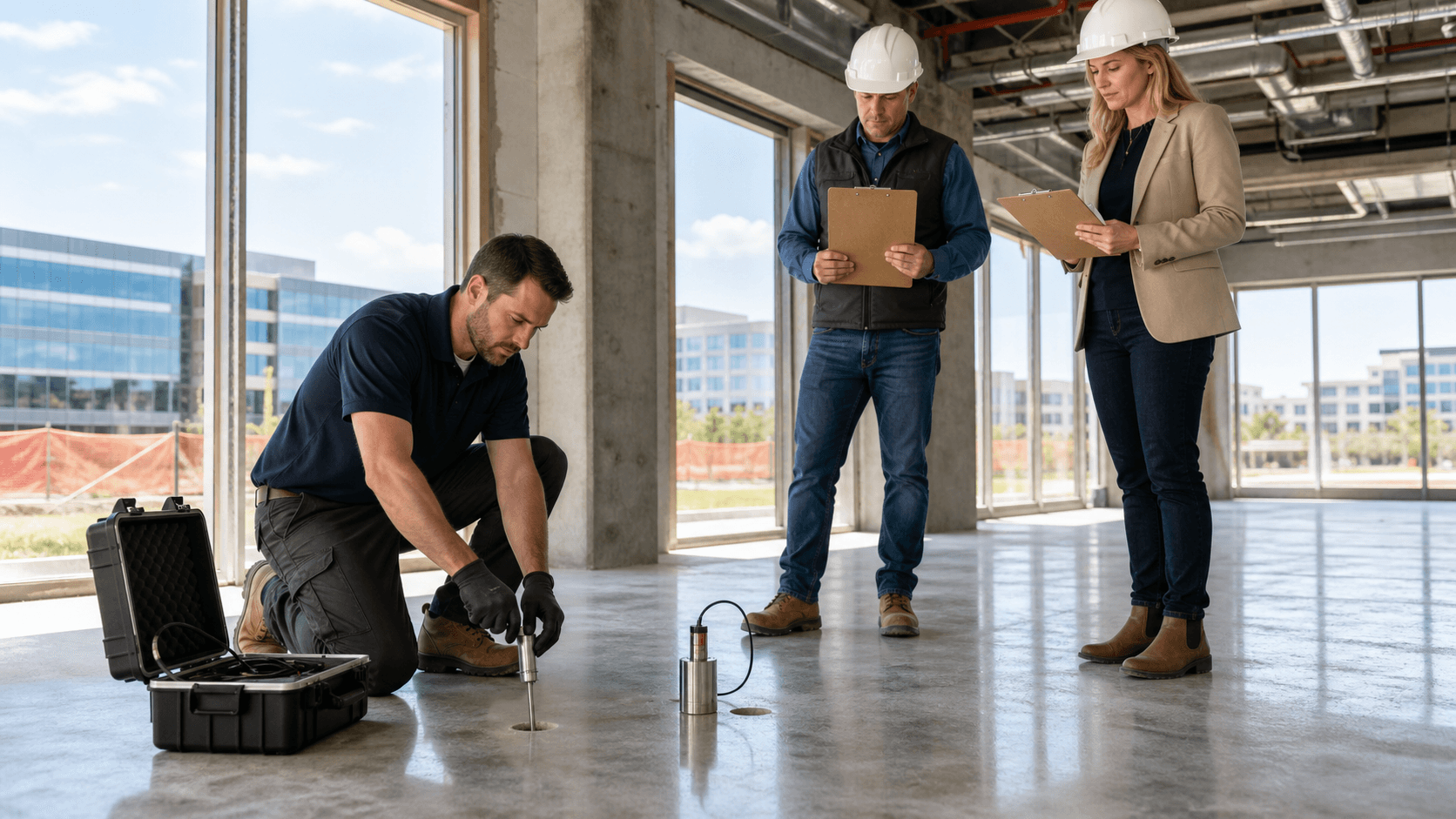
Independent testing changes the conversation. When data comes from a neutral third party, it carries a different level of trust. It is not there to please the owner, the general contractor, or the flooring installer. It is there to show what is actually happening inside the concrete.
True third-party data helps:
- Remove arguments about whether a reading was done correctly
- Give owners and construction teams shared facts instead of opinions
- Support flooring and adhesive warranties with clear, documented records
Independent testers are also focused on more than just the raw numbers. They think about mix design, vapor barriers, curing method, saw cuts, and the building environment. They look at how local climate patterns affect the slab over time. That way the test results are not just a pass or fail, they become a plan.
With deeper diagnostic insight, teams can:
- Set realistic install dates for flooring instead of guessing
- Decide early if mitigation will be needed, before trades stack up
- Choose products that match the slab conditions and risk profile
Many manufacturers now expect detailed, ASTM-compliant records before they even review a claim on a problem floor. Independent concrete testing in Anaheim gives those records more weight, because the data is not coming from the same people who had money or time at stake in the install.
Comparing in-House Versus Independent Testing Costs
At first glance, in-house testing seems cheaper. Someone already on payroll spends a few hours with a meter and the project moves ahead. The hidden cost shows up when that reading misses a moisture issue buried deeper in the slab.
One failure can quickly overshadow any early savings. Moisture-related flooring problems can lead to:
- Floor removal and replacement
- Mold concerns inside adhesives or under finishes
- Lost use of rooms or entire areas during repair
- Tough conversations between owners, GCs, and subs
The cost of time, stress, and dispute can be far higher than the cost of doing independent testing up front. For commercial spaces, healthcare buildings, schools, and high-end homes, the floor is not just a finish. It supports daily operations, brand image, and comfort for everyone using the space.
Independent testing helps clarify who carries what risk before a problem starts. Clear, ASTM-based reports can be written into contracts and project files, so each party understands the condition of the slab at key milestones. When roles are defined early, there is less finger-pointing later, and project managers can spend their energy moving forward instead of arguing about the past.
Summer Slabs in Anaheim Need Extra Attention
Summer slabs in Anaheim come with their own set of traps. Long, bright days and warm surfaces can make concrete dry fast at the top while deeper layers still hold significant moisture. When tests only check the surface or are done too soon, they miss that hidden moisture that eventually reaches the flooring.
From early June through late summer, we often see:
- Coastal influence in the mornings, with marine layer humidity
- Warm, dry afternoons that create a crust of drier concrete on top
- Building interiors that are not yet fully conditioned
Owners and GCs often feel strong pressure during this period. Projects need to finish before late-summer move-ins, tenant improvements, or school and office reopenings. That is when people are most tempted to skip a few steps, shorten drying time, or rely on a single test method.
An independent testing partner can help set a smarter plan from the start. By coming in early, even before the pour, they can:
- Review mix expectations and vapor barrier plans
- Map out when and where tests should happen
- Coordinate testing with HVAC start-up and flooring install dates
With that kind of planning, moisture checks become part of the schedule instead of a last-minute scramble. This lowers stress for the whole team and gives a clearer path to a successful floor.
Take Control of Your Next Slab with Independent Data
If you build or manage projects in Anaheim or around Orange County, it may be time to rethink how you handle concrete moisture. In-house testing has its place as a quick screen, but relying on it alone can put expensive floors and important relationships at risk, especially when timelines are tight and finishes are high value.
Independent concrete testing in Anaheim offers something schedules and opinions cannot replace: objective, ASTM-based data that everyone can trust. When that data is gathered and interpreted by a focused, third-party specialist, owners, GCs, and flooring teams gain a shared view of the slab. That shared view makes it easier to protect warranties, choose the right products, and keep projects moving without surprise failures.
Concrete Moisture Testing Orange County focuses on independent, ASTM-compliant concrete moisture and RH testing for commercial and high-end residential flooring projects in our area. We help project teams read what the slab is really telling them, before the flooring goes down, so they can protect their investment, their clients, and their reputation on every Anaheim slab they build.
Get Started With Your Project Today
If you are planning a new flooring installation or need to diagnose a moisture issue in existing concrete, our team at Concrete Moisture Testing Orange County is ready to help you move forward with confidence. Learn more about our specialized independent concrete testing in Anaheim to get accurate, unbiased data before you make costly decisions. To schedule a service or ask questions about your specific project conditions, simply contact us and we will respond promptly.