Seasonal Concrete Moisture Testing in Newport Beach Marine Climates
Concrete in Newport Beach never really gets a break. It sits in salt air, fog, and steady humidity almost every single day. That moisture in the air can move in and out of a slab, even when the surface looks dry. If you are planning new floors in a commercial space or a high-end home, seasonal concrete moisture testing in Newport Beach is one of the smartest ways to protect that investment.
We want to walk through how the local marine climate affects your slab, why surface dryness can fool you, and how timing your tests around seasons and project schedules keeps warranties safe. Our goal is simple: help you understand what is happening inside the concrete so you can make calm, confident decisions before flooring goes down.
Why Newport Beach Seasons Change Your Slab
Newport Beach does not swing between weather extremes, but the seasons still matter for concrete. The local pattern of marine layer in the morning, sun in the afternoon, and moisture in the evening means your slab is constantly taking in and releasing moisture. Over time, that can keep in-slab relative humidity (RH) and pH higher than you expect.
For flooring projects, that quiet, steady coastal climate can be tricky because:
- Salt air and ocean humidity slow natural slab drying
- Fog and marine layer keep surfaces damp more often
- Mild temperature swings hide how slowly moisture moves inside the slab
Summer and fall are popular times for remodels, tenant build-outs, and flooring upgrades. Schedules get tight, stores want fresh interiors before the holiday crowds, and residential projects often push hard to finish before big family events. Without seasonal concrete moisture testing in Newport Beach, it is easy to assume the slab is ready simply because the calendar says it should be.
Even on a "dry" coastal day, the slab can still hold elevated RH and high pH that quietly threaten adhesives, finishes, and warranties. Independent testing gives you documented proof of conditions, instead of guesses and hope.
How Marine Air Impacts Concrete Moisture Levels
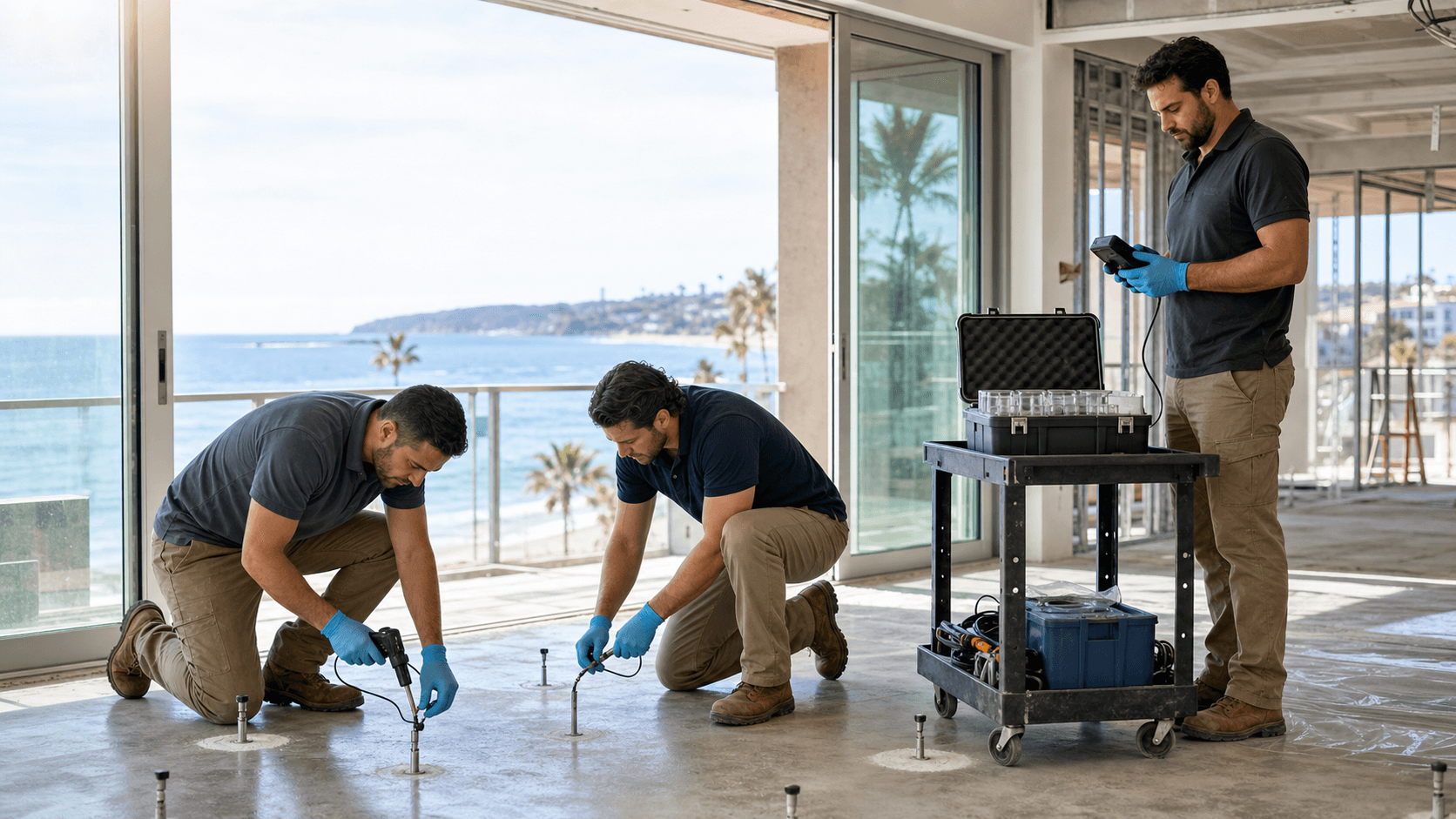
The closer you get to the harbor, bayfront, or ocean-front, the more the concrete "breathes" with the sea air. Marine air brings steady humidity that slows evaporation. That means slabs near the water often dry more slowly than similar slabs in inland parts of Orange County.
Here is what that looks like in practice:
- The surface may look dry and even feel warm from the afternoon sun
- Non-invasive meters may show low numbers near the top of the slab
- Deep inside the concrete, RH can still be too high for many flooring systems
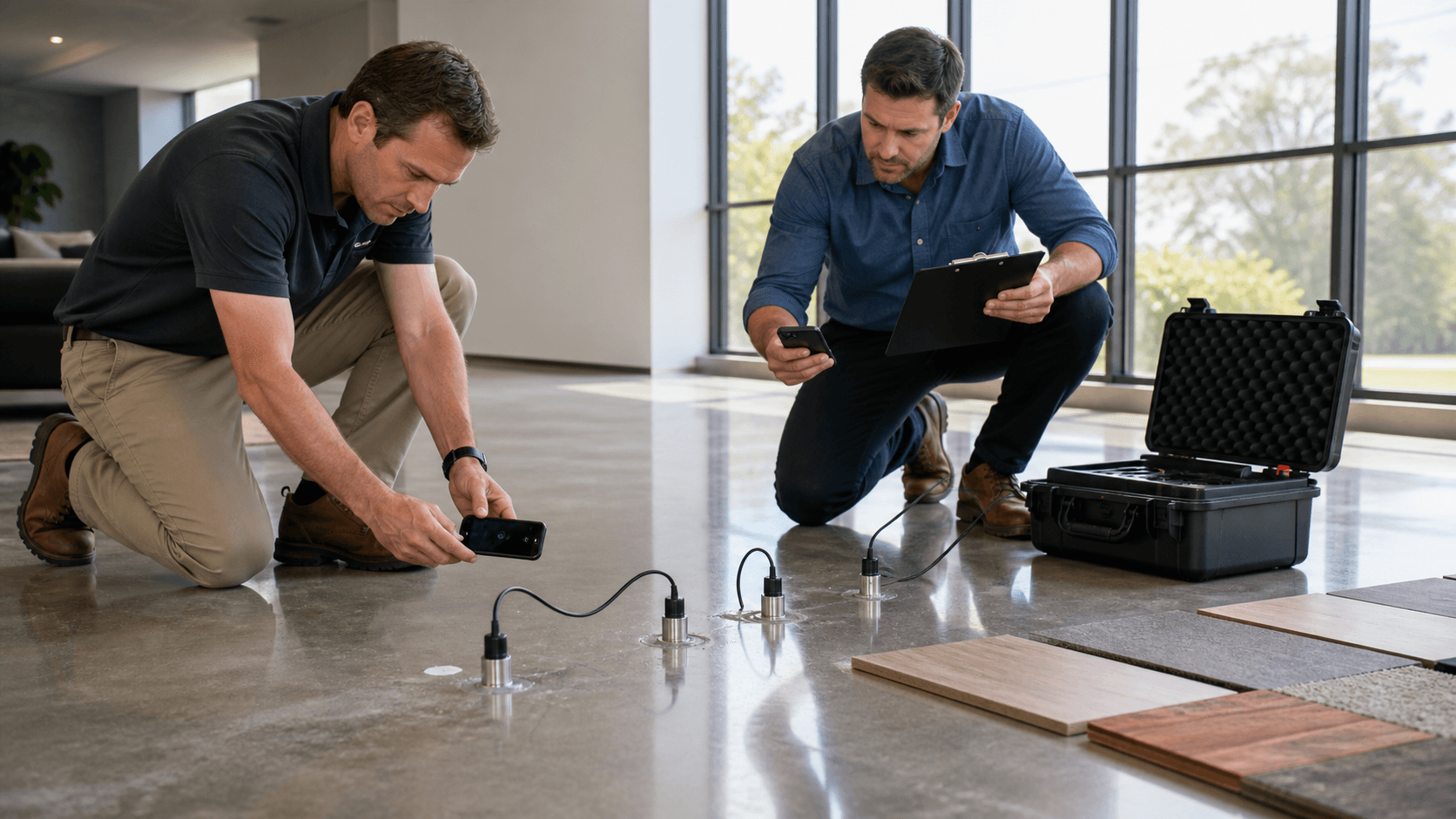
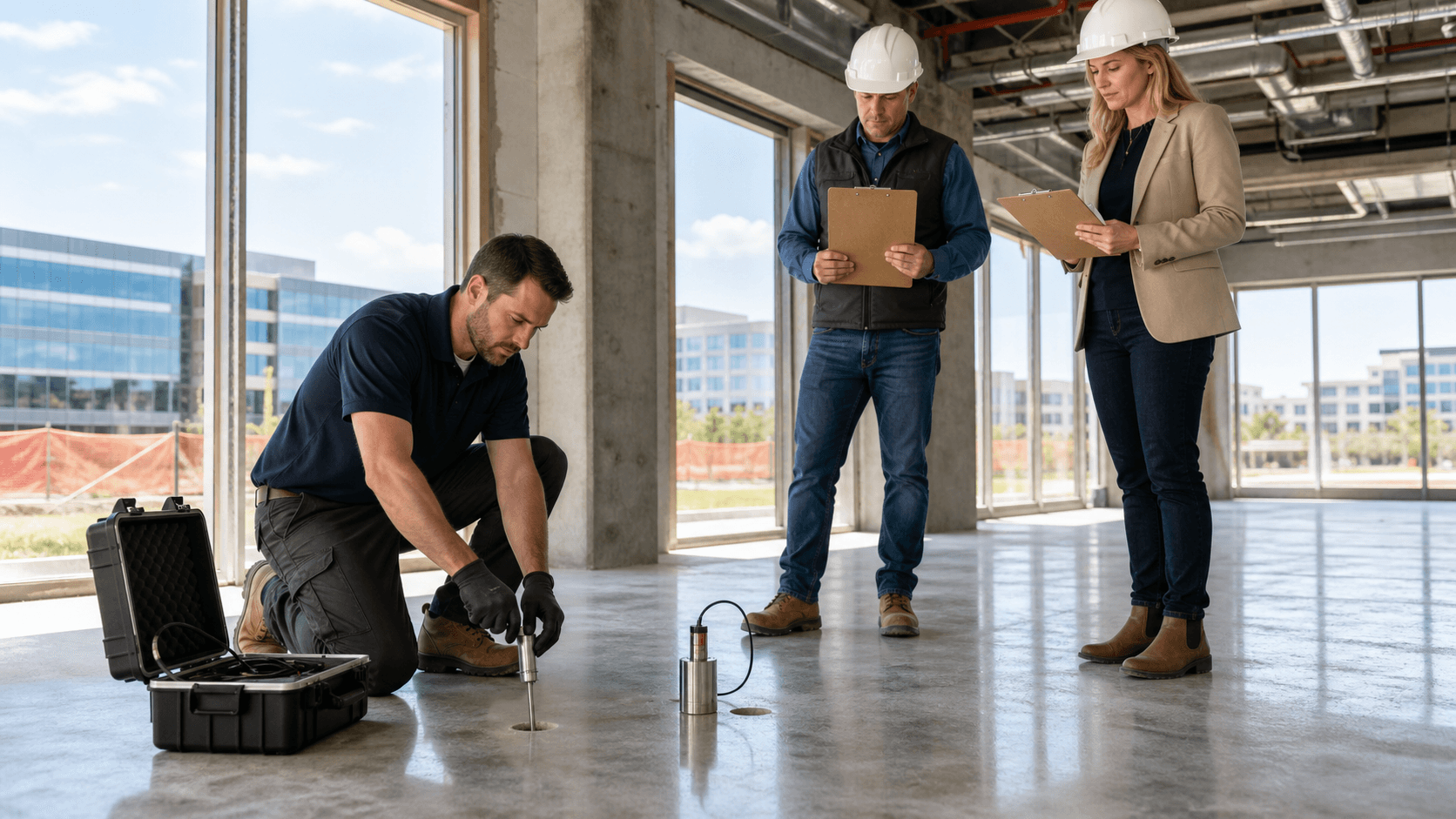
This is why ASTM-compliant in-slab relative humidity and pH testing matter so much. Only by measuring inside the slab, at the right depth and in the right locations, can you see the actual conditions your adhesives and finishes will face over time. Surface checks alone cannot show how much moisture is still trying to move upward.
Buildings in Newport Beach close to the water often have:
- Slower slab drying after a new pour
- More risk of moisture vapor emission under tight floor coverings
- Greater need for independent concrete moisture testing in Newport Beach before final flooring decisions
Without that third-party testing, each stakeholder is relying on feel, quick tools, and best guesses. That is a lot of risk for high-value flooring.
Summer and Fall Flooring Projects in Newport Beach
From late spring through early fall, construction and renovation work ramps up. Commercial tenants refresh spaces, retail centers upgrade finishes, and luxury homes push to complete flooring before busy social seasons. With longer daylight and active schedules, it feels like the perfect time to install floors.
Here is the catch: warmer weather can dry the surface faster, while the interior of the slab is still holding on to moisture. The top half-inch may seem perfect, but deeper RH can still be too high. If decisions are based only on:
- Visual checks
- Touch tests
- Handheld non-invasive meters
you can get a false sense of readiness. Then, months after installation, you might see cupping, bubbles, adhesive softening, or staining.
To stay ahead of that, it helps to plan ASTM-compliant moisture, RH, and pH testing several weeks before your scheduled installation date. That time cushion gives room to:
- Review test reports with your project team
- Adjust product selection if needed
- Decide on any moisture mitigation steps
- Shift the schedule instead of rushing into a risky install
This kind of planning is especially helpful in busy summer and early fall project windows, when even a short delay can ripple through an entire job.
Planning Seasonal Testing Around Newport Beach Weather
Newport Beach has patterns you can count on: morning marine layer, drier afternoons, and damp nights most of the year. Then there are periods with Santa Ana conditions, when offshore winds bring drier air. These shifts can affect test readings, drying rates, and how your slab behaves once the building is conditioned.
For better test planning, consider:
- New slabs: Plan initial testing after the concrete has had reasonable curing time, then schedule ASTM F2170 and related tests when the building is as close as possible to its normal operating condition.
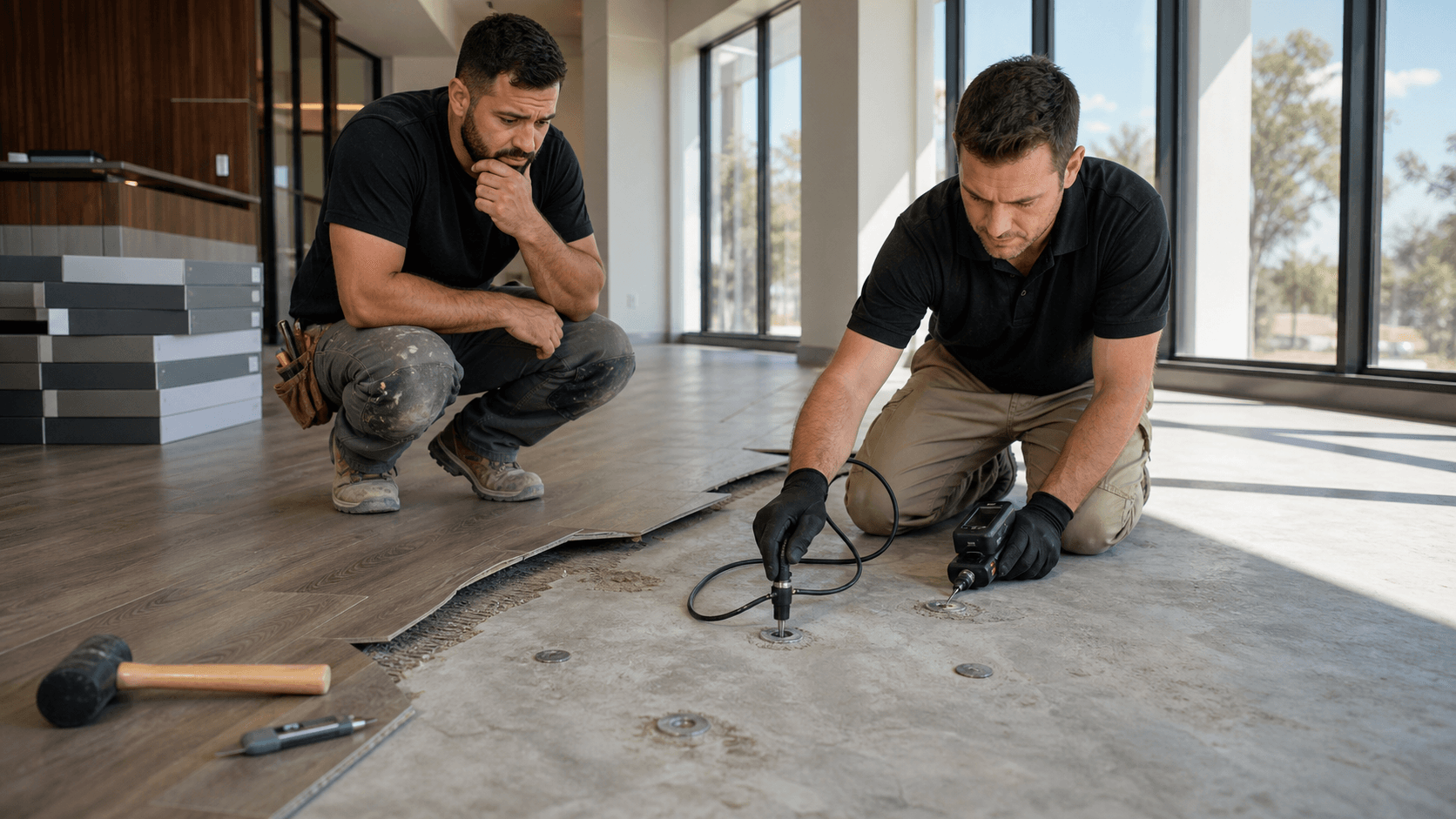
- Existing slabs: For remodels, test in stages, such as pre-demo to understand baseline conditions, post-demo to see the exposed slab, and again pre-install to confirm the final state.
- Large projects: On big commercial or multi-unit luxury sites, phased testing across different areas helps track how conditions shift as HVAC systems come online or as seasonal humidity changes.
Some teams like to test shortly after the marine layer lifts and the building has been under typical HVAC operation for a while. Others may plan repeat tests before and after a stretch of Santa Ana conditions to see how the slab responds. The key is to treat moisture testing as part of project planning, not a last-minute checkbox.
Why Independent ASTM Testing Protects Your Warranties
When flooring problems show up, everyone looks for answers. Adhesive manufacturers want to know the slab conditions at the time of install. Flooring manufacturers want proof that their guidelines were followed. Owners and GCs want to understand what went wrong and who is responsible.
Independent, ASTM-based testing provides shared facts. Common methods include:
- In-slab relative humidity testing under ASTM F2170
- Moisture vapor emission testing under ASTM F1869, where appropriate
- Concrete surface pH testing to check compatibility with adhesives and finishes
With third-party documentation, your team can make informed decisions about moisture mitigation systems, adhesive selection, and installation timing, especially in moisture-prone marine settings like Newport Beach. The data is not tied to any one installer or product line, so it carries weight with:
- Property owners and facility managers
- General contractors and construction managers
- Flooring installers and specifiers
- Manufacturers reviewing warranty claims
For high-value commercial and residential projects near the water, that shared trust in objective test results can prevent long disputes and help everyone move faster toward real solutions if an issue appears later.
Next Steps to Schedule Seasonal Testing in Newport Beach
Seasonal concrete moisture testing in Newport Beach works best when it is built into the project plan from the start. For summer and fall flooring installations, many teams look ahead on the calendar and mark testing dates well before install day, so results are ready when key choices need to be made.
At Concrete Moisture Testing Orange County, we focus on independent, ASTM-compliant concrete moisture, RH, and pH testing for commercial and high-end residential projects across Orange County, including the marine pockets of Newport Beach. When you are ready to talk through your site conditions, project type, and timing around local coastal weather, we can help you choose the right test methods and schedule.
Using professional concrete moisture testing in Newport Beach turns the unique marine climate from a guessing game into a set of documented conditions. With the right data in hand, every flooring decision becomes clearer, and your investment is better protected for the long run.
Get Started With Your Project Today
Protect your flooring investment by scheduling professional concrete moisture testing in Newport Beach before you install or repair your floors. At Concrete Moisture Testing Orange County, we provide accurate, detailed reports so you can make informed decisions and avoid costly moisture-related failures. If you are ready to move forward or have questions about your specific project, contact us and we will help you set up a convenient appointment.