Hidden Warning Signs in Your Concrete Slab
Concrete RH testing in Orange County is all about what is happening inside the slab, not just on the surface. RH means relative humidity. It tells us how much moisture is trapped in the concrete at the depth where flooring will live. In our area, we have a mix of coastal humidity and hotter inland zones, so slabs dry in uneven ways that can fool even experienced crews.
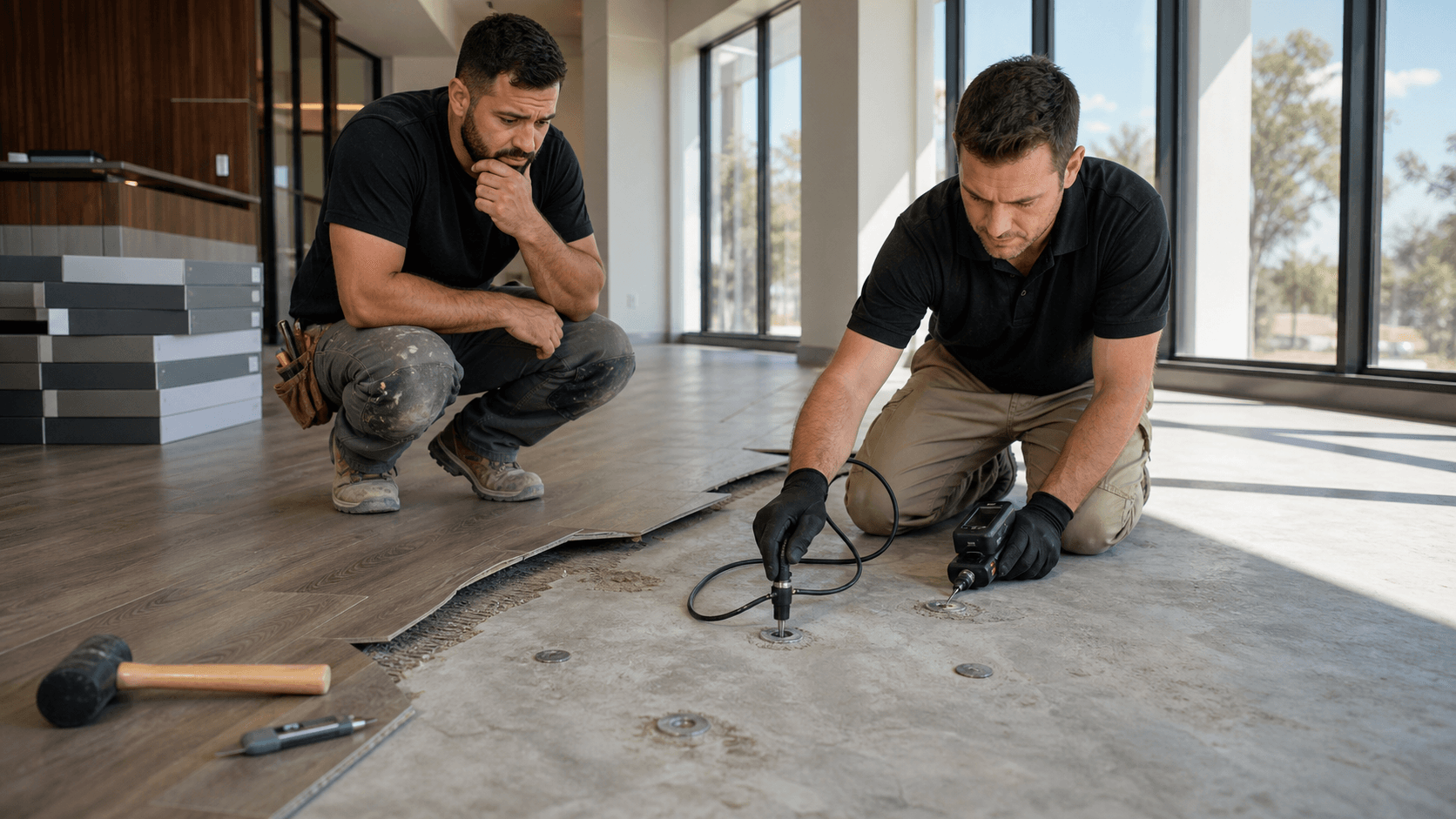
A slab can look light, smooth, and "dry" on top, but still hold high moisture deep inside. That hidden moisture tries to escape through your new floors. When it does, it can damage luxury vinyl, hardwood, carpet tile, and epoxy. Adhesives can soften, boards can move, and coatings can lose bond.
The real risk is not just a bad-looking floor. When ASTM-compliant testing is skipped, you increase the chance of:
- Flooring failures that require removal and replacement
- Business downtime while spaces sit closed for repairs
- Denied warranties when manufacturers ask for test reports you do not have
This is why checking the slab with proper RH testing before installation matters so much in our climate.
When Your Project Timeline Puts You at Risk
Fast projects are common in Orange County. Tenant improvements, quick retail build-outs, and new offices are often pushed on tight schedules. Everyone wants flooring in as soon as possible so the space can open or a move-in can happen on time.
The problem is that concrete does not care about your schedule. In summer, especially in July and August, heat can dry the top of the slab quickly. This creates a "false dry" surface. It feels dry to the touch, but deeper in the slab, moisture can still be too high for many floor systems.
Watch for timeline red flags like:
- Accelerated move-in dates that shrink the normal drying window
- Back-to-back trades that offer no breathing room between concrete placement and flooring
- Pressure from owners or tenants to install floors right away, even when conditions are unknown
When these things show up on your schedule, it is a sign that concrete RH testing in Orange County should be part of the planning. Testing gives you real numbers, not guesses, so you can make timing choices with less stress.
Visual Clues Your Slab Is Trapping Moisture
Sometimes, the slab tries to tell you it is holding moisture. You may see obvious surface clues or strange behavior from existing floors. These are warning signs that the conditions below the surface are not right.
On bare or lightly finished concrete, pay attention to:
- Darkened or damp-looking areas that do not dry out
- Efflorescence, a white powdery residue on the surface
- Curling or lifting at joints or saw cuts
- Damp or musty odors when the space is closed up
If flooring is already installed, other clues can appear:
- Adhesive failures, where tiles move or feel loose
- Bubbles, blisters, or hollow sounds in resilient floors or epoxy
- Cupping, crowning, or gaps in wood flooring
- Stains or discoloration coming through seams or coatings
When you see these things, it usually means the problem is already expensive. At that point, you are often looking at removal, cleanup, and reinstallation. Proactive concrete RH testing in Orange County before flooring goes down costs far less than repairing moisture damage after the fact.
Project Types That Should Never Skip RH Testing
Some spaces are simply higher risk when it comes to concrete moisture. These projects have more at stake, stricter expectations, or more sensitive flooring products.
High-risk project types include:
- Medical offices, where hygiene and smooth floors matter
- Retail spaces and showrooms with large open floor areas
- Restaurants and food service areas with frequent cleaning
- Offices and co-working spaces with a mix of floor finishes
- High-end homes using wood, luxury vinyl, or polished concrete finishes
Certain conditions on the job site also raise the need for testing:
- On-grade slabs in contact with the ground
- Below-grade spaces like basements or partially buried rooms
- Areas built over vapor-retarding membranes or in tight building envelopes
- Coastal or pool-adjacent properties where humidity and water exposure are common
Manufacturers of premium products and specialty adhesives often require specific RH and pH levels in the slab. RH testing shows the internal moisture condition, while pH testing checks if the concrete is too alkaline for the adhesive or flooring system. Having these tests done and documented helps support flooring warranty terms and helps everyone stay aligned with product requirements.
How Professional RH Testing Protects Your Investment
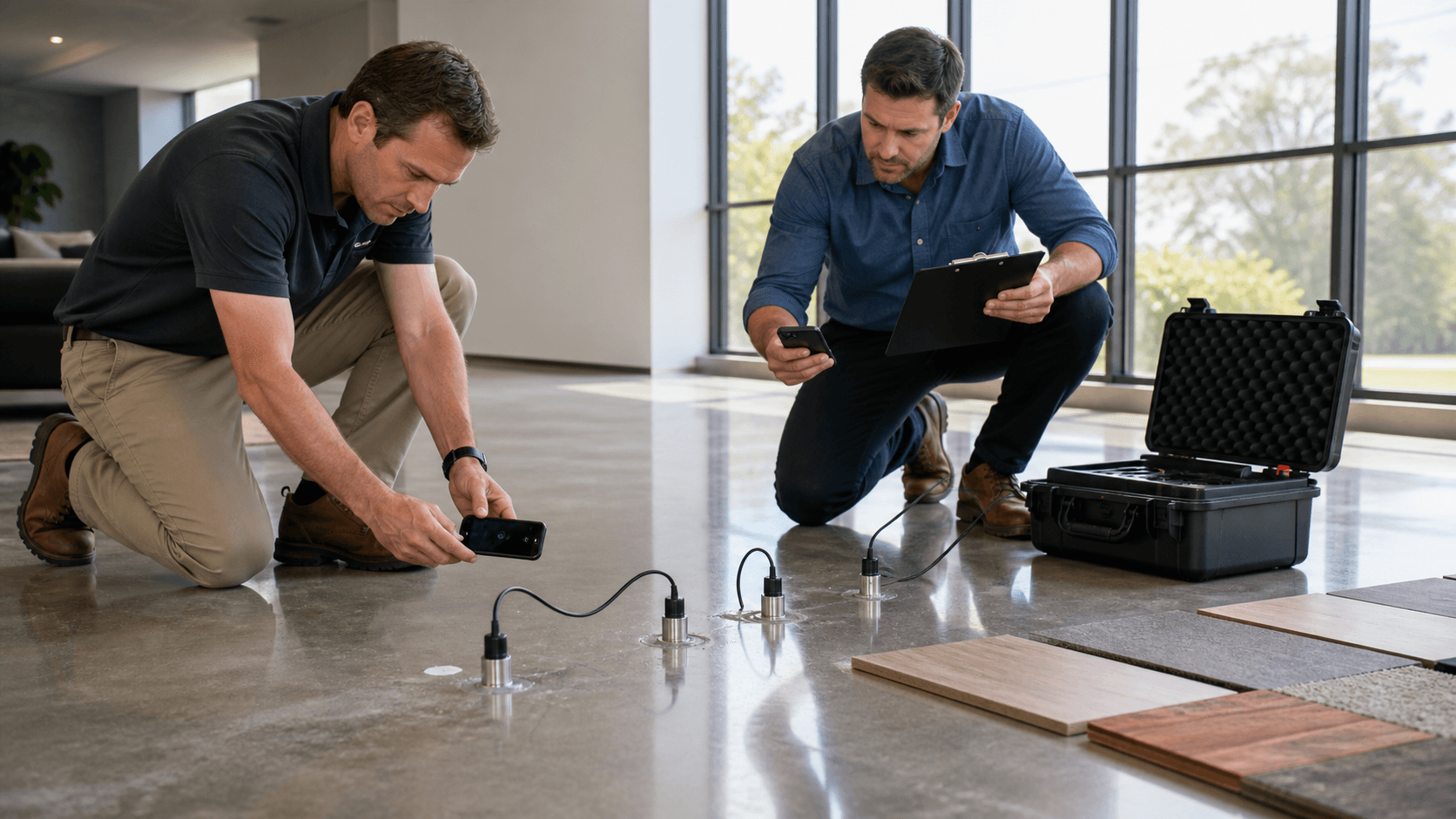
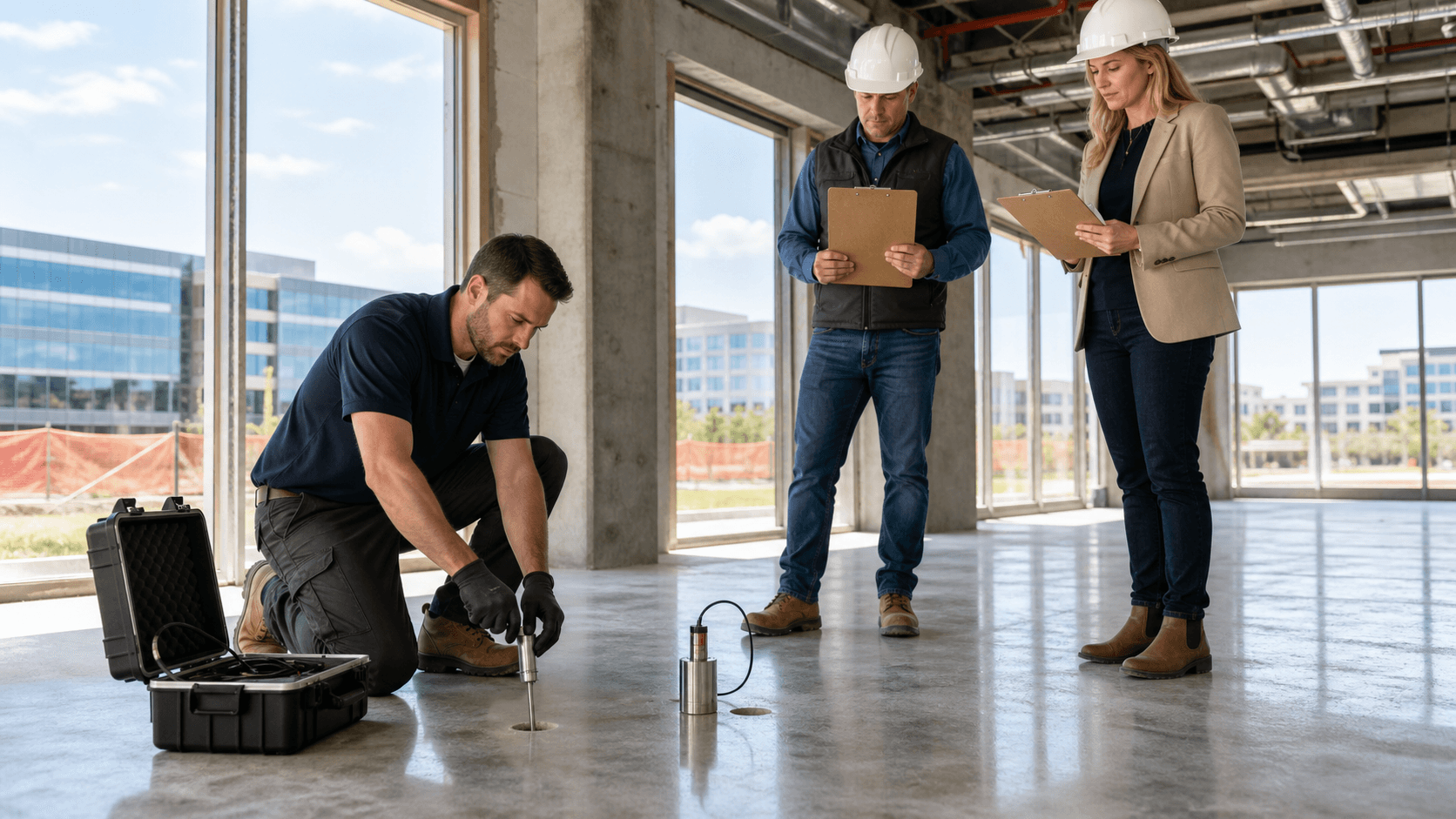
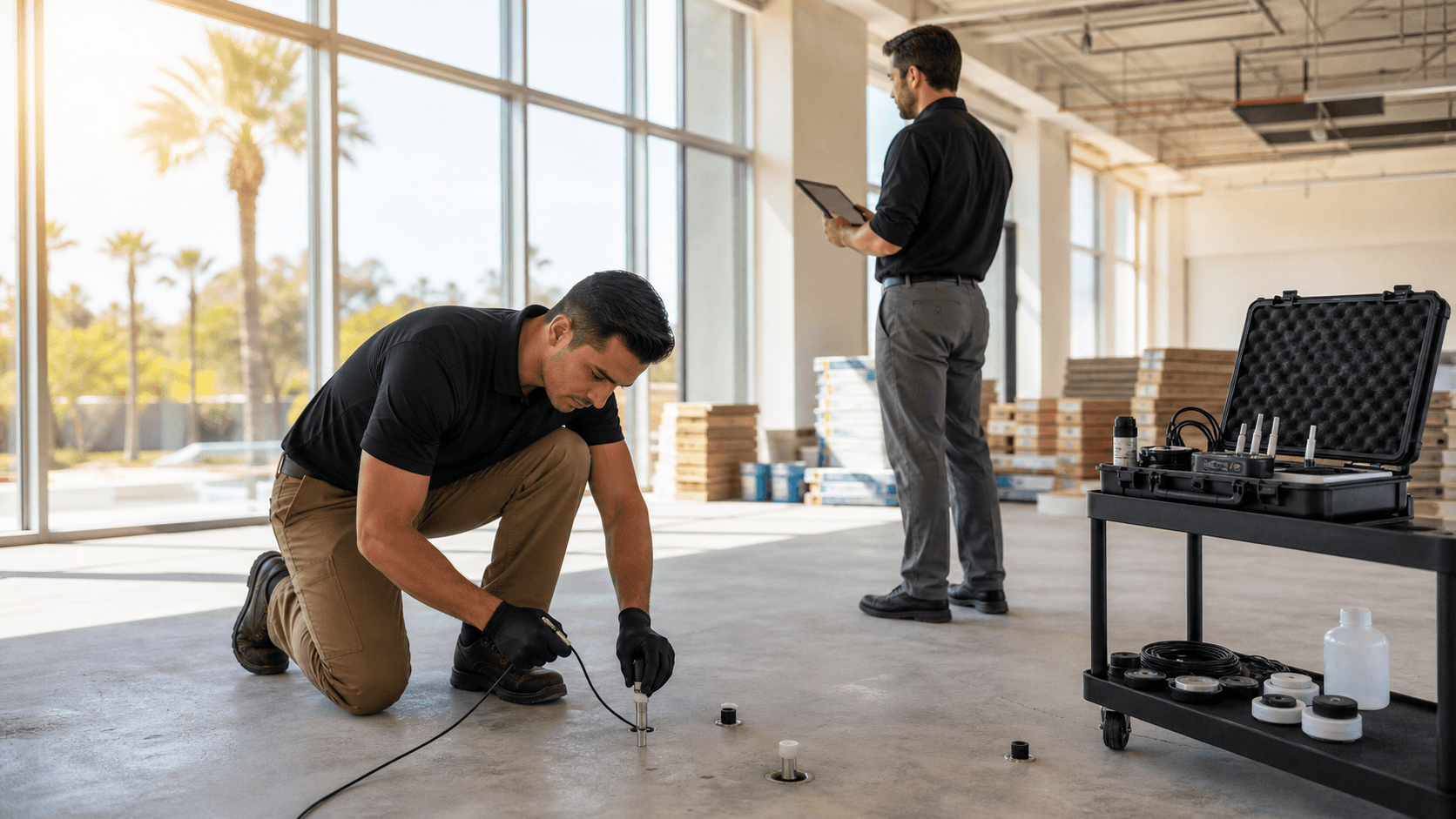
Independent concrete RH testing is a structured process, not a quick guess with a surface meter. Proper ASTM-compliant testing involves:
- Drilling test holes to the correct depth based on slab thickness
- Placing RH probes or sensors in those holes at representative locations
- Allowing time for the probes to acclimate inside the concrete
- Recording readings, conditions, and locations in clear documentation
We also pair RH testing with pH testing of the concrete surface. Together, these test results give a clearer picture of how ready the slab is for flooring and which products are likely to perform well.
When testing is performed by an independent third-party, it reduces finger-pointing if things do not go as planned. General contractors, flooring installers, and manufacturers all look at the same data. For owners, property managers, and contractors, this means:
- More predictable schedules based on real drying conditions
- Fewer callbacks and flooring complaints after move-in
- Better long-term performance of the flooring system as a whole
In Orange County, where commercial and high-end residential spaces demand reliable, attractive floors, this level of information can protect both your timeline and your reputation.
Take Control of Moisture Risk Before You Install
Concrete will continue to release moisture until it reaches balance with its environment. You can either wait and hope, or test and know. The smarter choice is to plan concrete RH testing in Orange County early, right around the time your schedule shows when finishes will begin.
By talking through project plans in advance, you can line up testing with the rest of your work, instead of squeezing it in at the last minute. That helps you spot moisture risks before flooring arrives on site, not after it has been installed and a problem appears.
At Concrete Moisture Testing Orange County, we focus on independent, ASTM-compliant concrete moisture, RH, and pH testing for commercial and high-end residential projects. Our goal is simple: give your team clear, reliable information so your flooring system has the best chance to perform the way it should. In our climate, waiting for visible moisture problems to show up is almost always more stressful and more expensive than confirming slab conditions before any floor goes down.
Protect Your Floors With Reliable Moisture Insights Today
If you are planning a new flooring installation or dealing with existing slab issues, our expert team at Concrete Moisture Testing Orange County is ready to help. We provide precise concrete RH testing in Orange County so you can move forward with confidence and avoid costly failures. Reach out today to discuss your project and schedule service, or contact us with any questions about your concrete moisture conditions.