How Independent Concrete Testing Keeps Irvine Contractors Safe
Flooring failures are one of the fastest ways for a good project to turn into a headache. A slab looks dry, everyone feels rushed, the flooring goes in, and a few months later the phone starts ringing about bubbles, cupping, or stains. Fingers point at the installer, the general contractor, the product, the adhesive, and nobody wants to pay for rip out and replacement.
Independent concrete testing in Irvine breaks that cycle. With objective data on slab moisture, internal relative humidity, and pH, you are not guessing or trusting a quick surface check. You have numbers, photos, and a clear record before a single plank or roll of material is installed.
We see independent, ASTM-compliant testing as a low-cost form of insurance for contractors. It protects profit, keeps schedules honest, supports warranty claims, and helps you keep good relationships with owners and project teams. In the next sections, we will look at the hidden risks, how third-party testing reduces liability, the role of ASTM standards, and how timing tests around local conditions keeps your jobs safer.
Hidden Moisture Risks Under Irvine Job Sites
On paper, a concrete slab in Irvine might look like it should dry quickly. The weather is generally mild, the sun is out a lot, and there is no snow or ice to slow things down. But job sites do not dry on paper. Local climate quirks can trap moisture in your slab longer than anyone expects.
Here are a few factors that work against you:
- Coastal influence and marine layer that keep surfaces cooler and slow evaporation
- Morning fog and higher ambient humidity on some days
- Enclosed buildings without full HVAC running during construction
- Occasional heavy winter rain periods that soak the slab early in the schedule
Inside the concrete, moisture can stay locked in even when the surface feels dry. Common problems include:
- High internal RH that does not match what a surface meter shows
- Moisture vapor emission rates that exceed what flooring products allow
- High pH levels, which means alkaline water can move up into adhesives and flooring
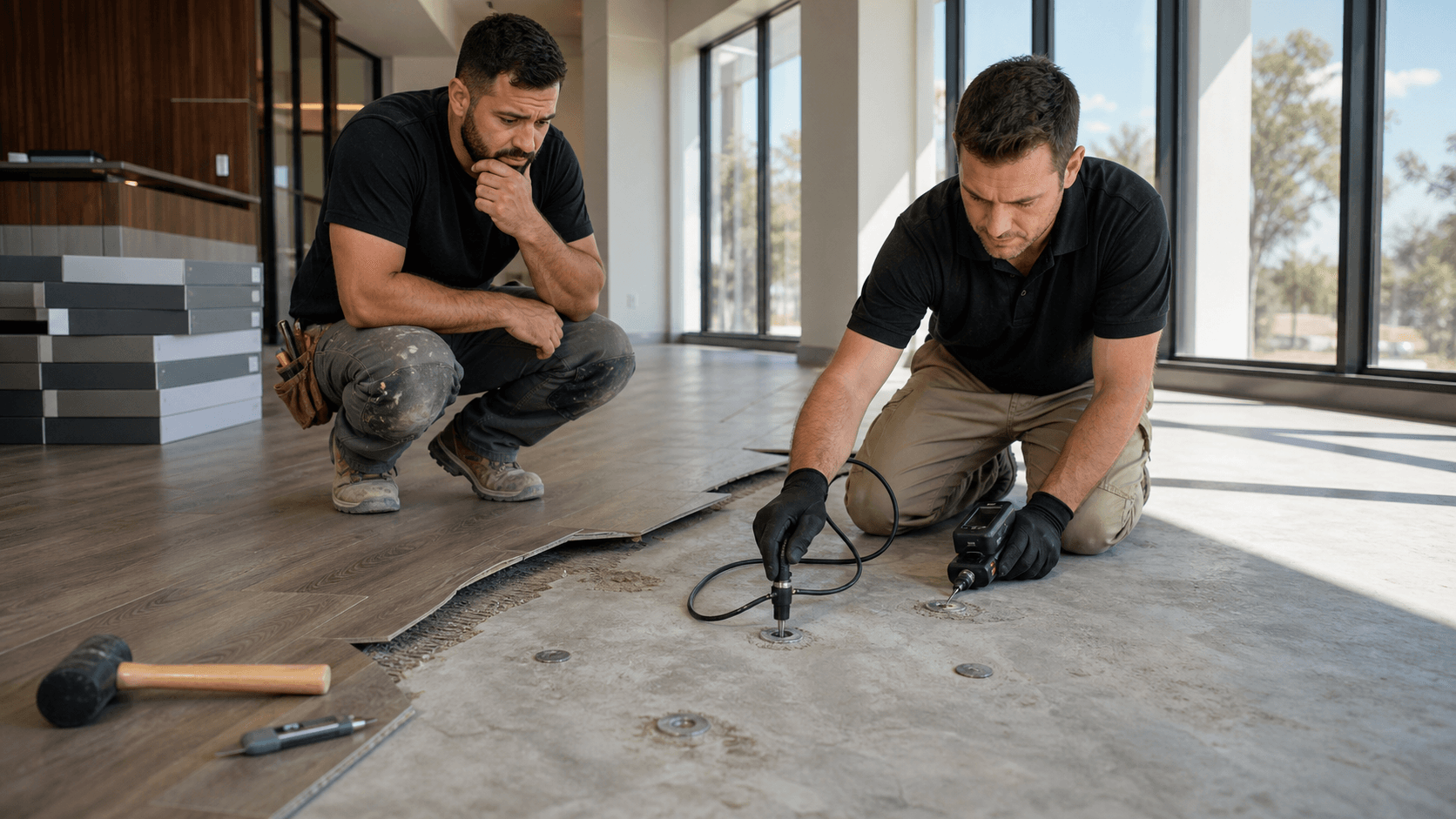
When flooring goes down over a slab that is not ready, the damage might not show right away. Over time you might see:
- Cupping or curling of wood and plank products
- Bubbles or blisters in sheet goods and coatings
- Adhesive softening, oozing, or full bond failure
- Discoloration, staining, or white crystals at seams
- Odor, mold risk in underlayments, and indoor air complaints
Without proper testing, blame often lands on the contractor who touched the floor last. The installer or GC gets pulled into long conversations and claims about issues that actually started with slab conditions nobody checked. Pre-installation concrete data is your first line of defense.
Why Independent Concrete Testing in Irvine Reduces Liability
Some teams rely on quick checks done by the installer or someone on the crew. Maybe it is a plastic sheet taped to the slab, a handheld meter, or just a "looks good, feels dry" call. These checks might catch major problems, but they rarely hold up when money is on the line.
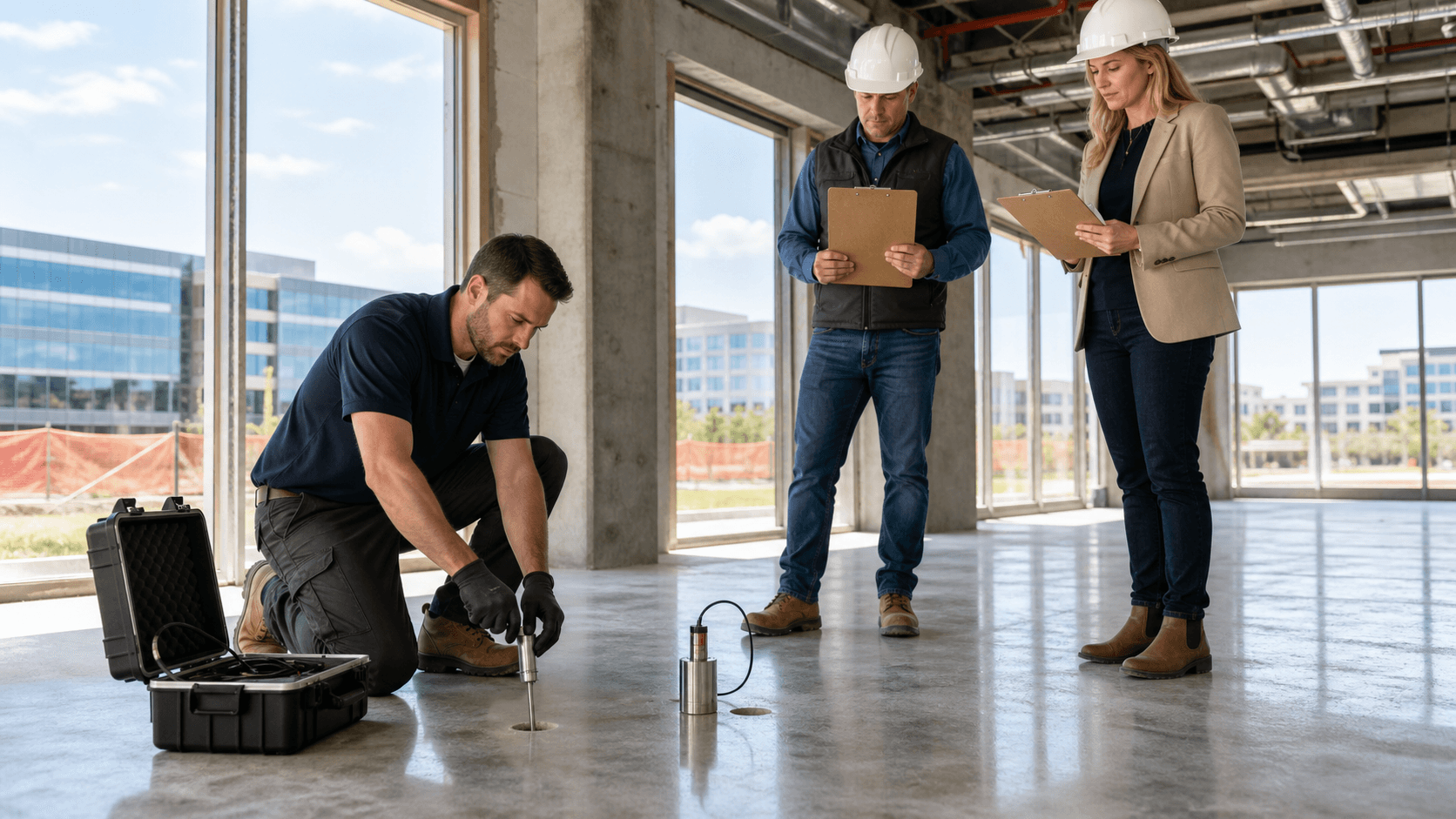
Independent concrete testing in Irvine is different. A neutral third party has one job: follow the standards and report what the slab is really doing. That separation matters.
Independent reports help you:
- Separate workmanship issues from substrate conditions
- Prove that the slab was within or outside product limits on test day
- Decide if it is smart to move forward or insist on more drying time
- Show owners and GCs that your decisions were based on data, not guesswork
When a flooring failure shows up later, everyone looks for someone to pay for the fix. Having ASTM-compliant test documents gives you something solid to stand on. You can show that slab moisture and pH were tested and recorded before installation, and that you made decisions based on written standards and product guidelines.
Because third-party testers are not paid to speed up the schedule or push product, their findings carry weight. Their neutrality supports your credibility and can calm heated conversations when a problem comes up months after closeout.
ASTM Standards That Protect Your Flooring Warranties
Most commercial flooring and adhesive manufacturers do not just suggest testing, they expect it. Their warranties often depend on proof that the slab was tested using specific ASTM methods before installation.
Some of the key standards you will see in specs and product data sheets include:
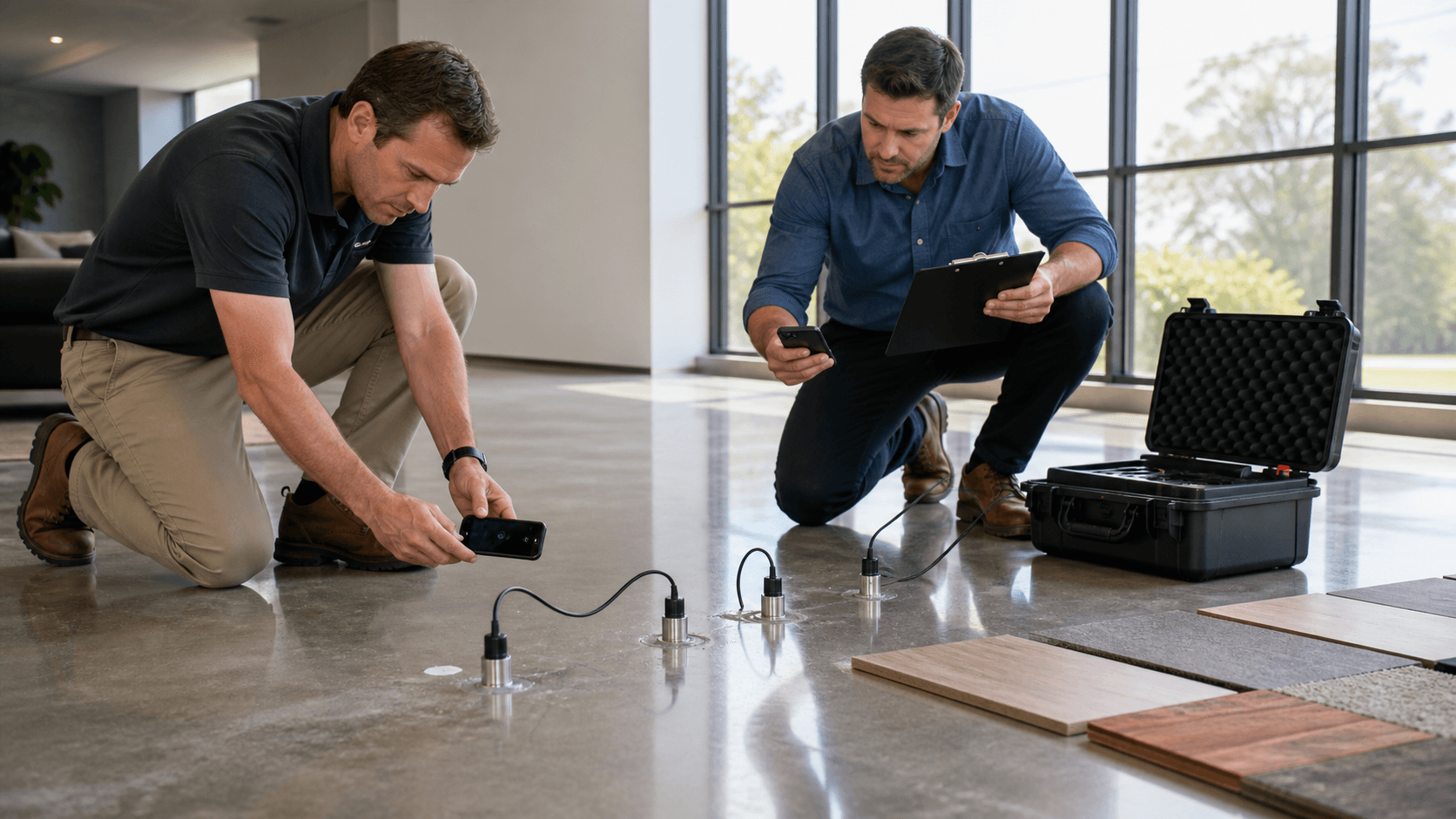
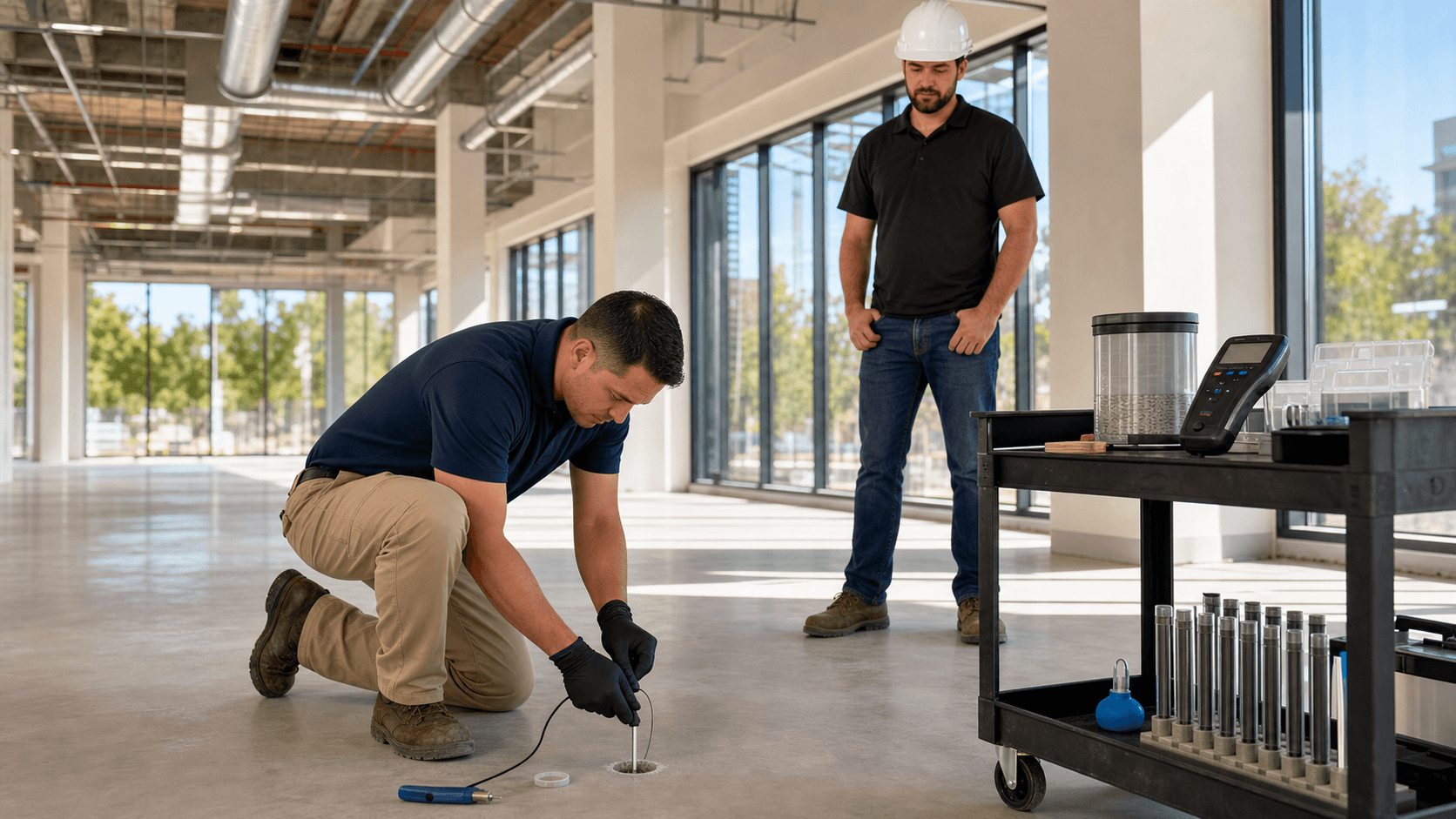
- ASTM F2170 for in situ relative humidity testing inside the slab
- ASTM F1869 for moisture vapor emission rate when a calcium chloride test is specified
- ASTM F710 for concrete floor preparation before resilient flooring
Manufacturers write these into their instructions for a reason. When a warranty claim is filed, one of the first questions is often, "Do you have test results that follow the standards we listed?" If the answer is no, it gets much easier for them to push the claim away.
Independent testing helps in a few ways:
- Correct methods that follow the actual ASTM procedures
- Calibrated equipment that matches what standards call for
- Written reports that include locations, times, and conditions
- Clear pH readings that line up with adhesive and flooring limits
Timing is just as important as method. Tests should be taken when the building is at or close to normal service conditions, with HVAC running and doors and windows closed as they will be later. Third-party testers focus on this, because they know it has a big impact on the readings and on how manufacturers view the results.
Scheduling Tests Around Irvine Construction Seasons
In Irvine and across Orange County, construction timelines often speed up in late spring and summer. Owners want projects wrapped up before big moves, tenant changes, or holiday periods. That is exactly when slabs can still be giving off more moisture than your flooring can handle.
Seasonal shifts bring:
- Longer daylight hours and more activity on site
- Coastal fog and marine layer that keep humidity higher at certain times
- Enclosed interiors where moisture hangs in the air without full ventilation
All of this affects how fast a slab really dries. That is why planning your testing is just as important as picking the right flooring.
Good rules of thumb for timing include:
- Slabs have reached design strength, not just "walkable"
- Roofs, windows, and exterior doors are in place
- Permanent HVAC is running close to the way it will during normal use
Practical scheduling tips that help contractors stay protected:
- Build testing time into your contracts and schedules from day one
- Set honest expectations with owners about how long concrete needs to dry
- Use independent test reports to back up any needed changes in sequencing or product choice
When everyone knows that testing will happen at a certain stage, there is less pressure to cut corners, and far fewer surprises right before flooring install.
How Concrete Moisture Testing Orange County Backs You up
We work locally with Irvine contractors on commercial and high end residential projects, and we focus on one thing: concrete moisture, RH, and pH testing. Our role is to give you clear, independent information about the slab so you can make better decisions and protect your work.
Our services include:
- ASTM-compliant in situ RH testing inside the slab
- Surface moisture and pH testing appropriate for flooring prep
- Unbiased written reports that are easy for GCs, installers, and owners to read
- Plain language explanations so the whole team understands what the numbers mean
We stay independent so that our reports stand on their own. We do not install flooring, and we are not tied to any product line. That keeps our focus on accurate data, clear documentation, and practical guidance that contractors can lean on when questions or claims come up later.
Independent concrete testing in Irvine is not just about passing an inspection. It is about protecting your reputation, your relationships, and every finished floor you leave behind.
Get Started With Precise Concrete Testing Today
If your project schedule or flooring warranty depends on accurate moisture data, Concrete Moisture Testing Orange County is ready to help. Our certified technicians provide reliable independent concrete testing in Irvine so you can make confident decisions before you install. Tell us about your project timeline and site conditions, and we will recommend the right testing approach and schedule. To request a quote or book an appointment, simply contact us.